
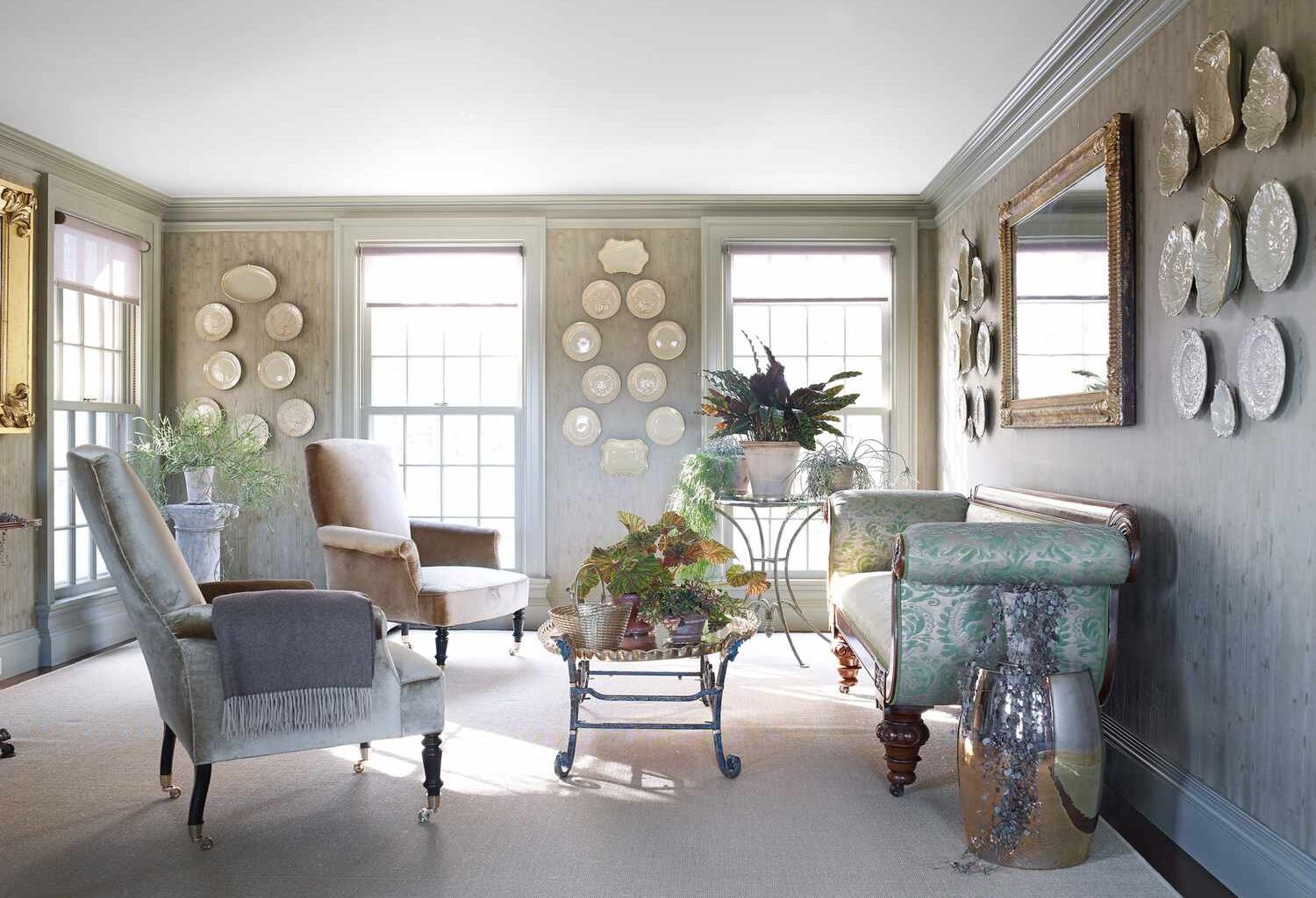
It can sometimes feel exhausting trying to keep up with never-ending trend cycles. Fashion is particularly notorious for this issue, but interior design can be just as cyclical—and, in turn, wasteful. Every year, a slew of newly minted trends rise to the fore, taking over homes with catchy names like grandmillennial or barbiecore.
For homeowners, it’s an overwhelming feeling. What looked beautiful in your living room six months ago can quickly be deemed outdated or out of touch. So is there a surefire way to design a home with timelessness in mind? Fortunately, there are a few trends and aesthetics that have endured for decades, and that aren’t going anywhere.
Vintage Elements
Credit: Noe Dewitt
Nothing brings charm to a home quite like vintage design elements. Whether it’s something you found at a thrift store or a rare piece that you stumbled upon at a flea market, these décor pieces bring personality and texture to any room in your home.
“It works across every aesthetic, from the contemporary to the traditional, and it instantly makes a space feel lived in and personal,” says Bethany Gale, interior design director at Stonehill Taylor. “There’s something grounding about owning a piece of history.”
Pieces with history also perfectly balance more contemporary design elements. A blend of old and new can make a space come to life; now that more and more people are comfortable diving into secondhand shops, vintage elements are increasingly rising to the fore.
Natural Materials
Credit: Studio SNNG
Some of the most celebrated designers of the last century have gravitated toward natural materials time and time again, from George Nakashima’s elephantine, raw-edge wood tables to Vicenzo di Cotiis’ recent experimentations with slabs of marble and stone.
“[Natural materials] age gracefully and ground interiors with authenticity,” says Sarah Broughton, co-founder of Rowland+Broughton. Some of these elements may wax and wane slightly in popularity as the years pass—dark woods may be more in-demand than lighter woods, for example—but your home will never look passé if you rely on natural materials and textures.
“The core idea of using authentic, tactile finishes has endured,” says Katie McPherson, associate principal at Meyer Davis. “It creates spaces that feel personal and timeless, rather than trend-driven.”
Layered Minimalism
Credit:
Kara
Minimalism as we once knew it may be fading out of style, but another version of this aesthetic will always endure. For many years, a stark, white-on-white minimalism was heralded as the pinnacle of organization and aspirational interiors. Now, people are turning back towards layered minimalism—a more timeless take that never really went away.
This approach maintains some of the hallmarks of minimalism: clean lines, subtle color palettes, and minimal clutter, but with a bit more personality and nuance. “Its warm palettes, open sight lines, and focus on art and personal collections continues to resonate,” says Broughton.
Indoor Outdoor Spaces
Credit: Laure Joliet
When the Covid-19 pandemic hit, we began to rely on our outdoor spaces more than ever. In the years following, many added porches, decks, and other indoor-outdoor refuges to their homes. In truth, it’s a look that’s always been desirable—especially in certain locales.
“The seamless integration of indoor and outdoor remains especially relevant in mountain and coastal environments, where architecture and landscape are designed to blur together,” says Broughton.