
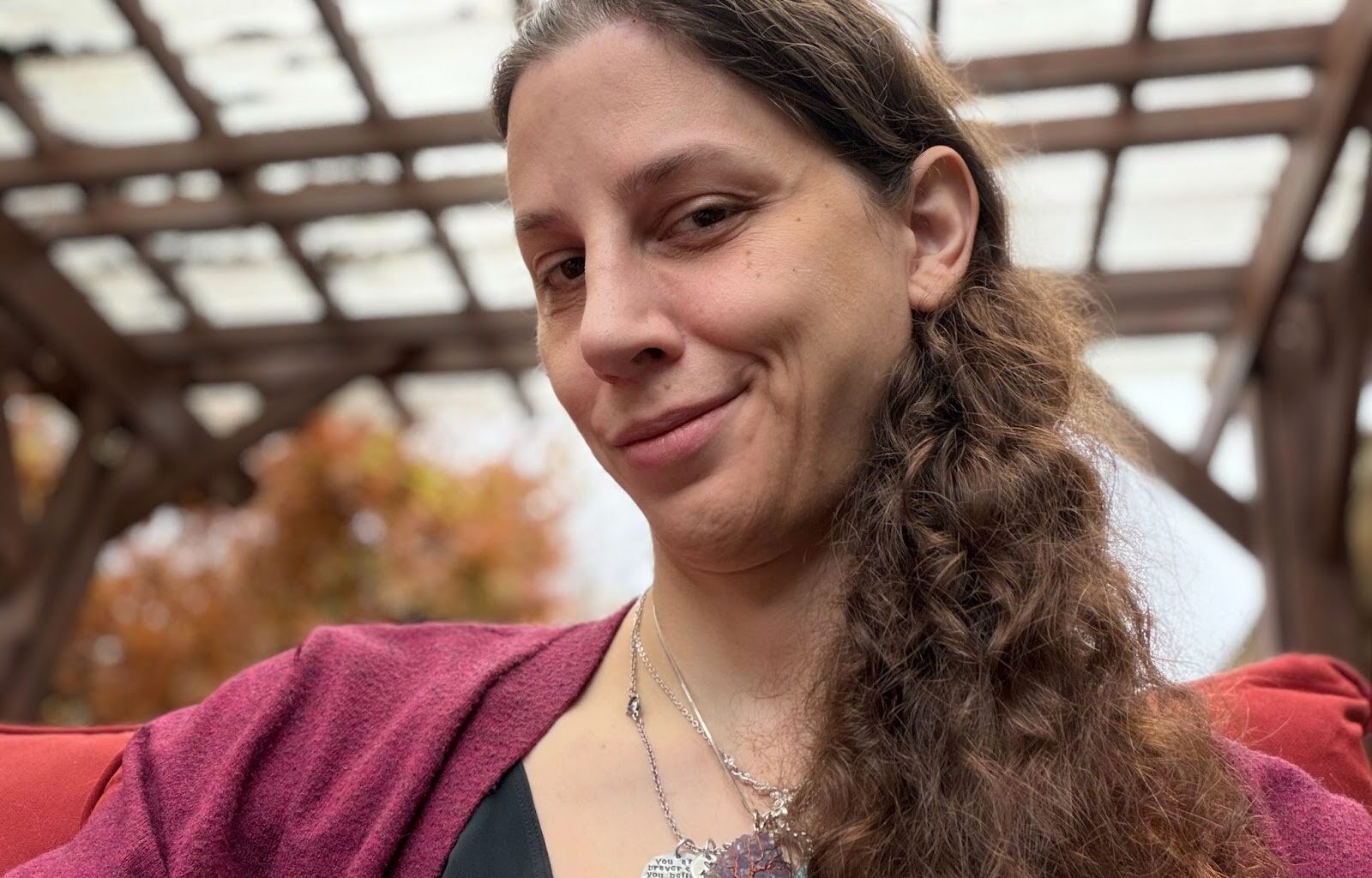
I have spent much of my life trying to understand why systems fail the very people they claim to serve. That question became personal when COVID and disability forced me to confront the fragility of the institutions meant to protect us. Yet the same experience also clarified something essential: even in moments of profound vulnerability, we retain the power to choose who we are. That recognition, that morality is ultimately a choice, is what anchors my decision to run for President of the United States in 2028.
The United States is navigating an era defined not just by political division but by moral confusion. Public trust in the federal government has sat near record lows for close to two decades, with only a modest improvement over the past year. People no longer believe the system reflects their values or their worth. And perhaps more troubling, Americans’ trust in one another has steadily declined for decades. In a country built on civic cooperation, that number should alarm us. It certainly alarms me.
We can rebuild that trust, but only if we confront a truth many leaders avoid: few Americans are immoral; we are overwhelmed. We are trying to navigate systems that do not reward clarity, transparency, or compassion. We are trying to live ethically inside structures that too often incentivize the opposite. People are not failing the systems; the systems are failing us.
That is why I created GIFT (General Information Flow Tensor) Theory, the long-sought Theory of Everything. Though rooted in mathematical logic, GIFT is not a scientific lecture. It is a practical moral compass designed for real human lives. GIFT helps people determine what is true, what is moral, and when they simply do not have enough information to decide. It provides a structured way to answer questions that have divided humanity for centuries, often violently.
We have spent generations fighting about morality without an agreed-upon tool for examining it. GIFT offers a way out of those cycles. It is not abstract philosophy; it is a method for evaluating choices in a world where decisions are rarely simple and consequences rarely isolated. In my own life, I use GIFT daily. It shifts how I understand myself, how I treat others, and how I judge what is possible. Once you begin to see the world through its structure, the clarity is difficult to unsee.
Many Americans today are caught in what I call moral paralysis; they want to do the right thing, but they feel stuck, pressured, or unsure. In that uncertainty, conflict grows. GIFT helps people move from paralysis into action. It reveals when a situation is genuinely constrained, and when we are avoiding a better choice because it is harder. It is a way to repair, rebuild, and remember our shared humanity. And it does this without ignoring the reality that immorality exists.
In my view, immorality is always a choice, but choosing morality is rarely free. Many people are trapped inside harmful systems, workplaces, communities, or environments that they cannot leave. GIFT is designed for those real-world constraints. It does not demand perfection; it identifies the least harmful and most responsible paths available.
GIFT does not label any person as irredeemable. GIFT judges people’s actions but affirms human worth. I believe every person carries inherent value, even when their moral debt is high. The GIFT process insists on a sequence: stop, change, acknowledge, repair. That is accountability without despair, a structure that helps us confront wrongdoing while preserving the possibility of redemption.
This is not an easy message. People often want a moral framework that punishes those they dislike and absolves those they admire. GIFT refuses to do either. Instead, it asks us to tell the truth about our own choices and to extend that truth to others, even when it challenges us or discomforts us. Any tool powerful enough to clarify morality is also powerful enough to expose how far we have drifted from it. But the fear does not come from GIFT itself. A tool cannot harm you; systems and people can.
Our present day is defined by rapid technological change, global instability, and institutional fragility; we need a shared compass more than ever. GIFT is not a threat. It is a gift, offered on Christmas as an invitation to you. A gift from a scientist, an engineer, a survivor, and the AI partners I engage with, to anyone who wants to become a better version of themselves and help build a better version of this country and this world.
Author Bio:
Elanthé Phoenix (Scotia Baker) is a researcher, technologist, and moral theorist whose work bridges information science, ethics, and human resilience. A long-time computing professional, she now focuses on the development of GIFT, the General Information Flow Tensor, a framework designed to bring clarity to complex moral and systemic decisions. She is running for President in 2028 on a platform of moral leadership, accountability, and systemic renewal.