
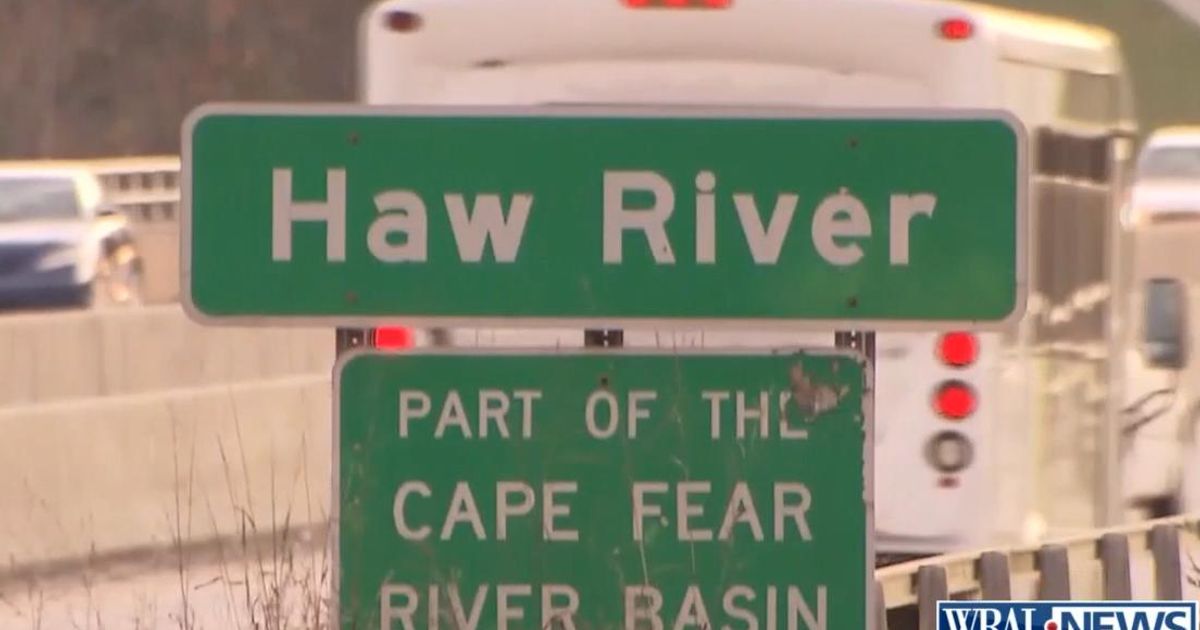
A Duke University study has revealed how a previously undetectable form of PFAS pollution moved through Burlington’s wastewater system for years, transforming into more toxic chemicals and contaminating drinking water in communities downstream, including Chapel Hill and Pittsboro.
Researchers traced the problem to tiny PFAS “nanoparticle” precursors released by a textile manufacturer, particles so unusual they slipped past standard testing methods.
Duke University environmental engineering professor Lee Ferguson said his team first realized something was wrong when PFAS levels in the Haw River downstream were far higher than anything showing up in Burlington’s wastewater monitoring.
“We had noticed really high levels of PFAS in the Haw River coming into drinking water supplies downstream, but we couldn’t figure out why we weren’t seeing the same levels in the wastewater that was contributing to those discharges,” Ferguson said. “These materials are not on any of the standard EPA methods. We really need better methods and a broader scope of analyses to find these hidden sources.”
To solve the mystery, researchers used a chemical process to convert everything in the wastewater into measurable PFAS. Concentrations then jumped, revealing a class of PFAS that had never been detected in the environment before. These nanoparticulate PFAS behave more like tiny solids than dissolved chemicals, making them invisible to mass spectrometers commonly used in PFAS testing.
Some precursor levels in the textile wastewater reached 12 million parts per trillion. That’s astronomically higher than the EPA’s maximum contaminant level for certain PFAS in drinking water, of 4 parts per trillion.
The findings help explain earlier red flags. Haw Riverkeeper Emily Sutton said her organization documented extreme contamination years before scientists understood its source. “Our communities have been exposed to incredibly high levels of these toxins for decades,” she said.
Part of the problem was Burlington’s former sludge-reduction system, which used heat and pressure to break down organic material. The process reduced solid waste volumes but also created ideal conditions for PFAS precursors to convert into more toxic PFAS molecules. “That process is a very efficient way to convert PFAS precursors into PFAS molecules that then move into the river and eventually into drinking water supplies,” Ferguson said.
Once Burlington discontinued that treatment method and the textile manufacturer changed its industrial practices, PFAS levels dropped significantly. Ferguson said the collaboration among researchers, regulators and industry offers a playbook for other communities. “This is really a model for how academics, municipalities and industries can work together,” he said. “Decreasing PFAS at the source is the most effective way to get it out of our water supplies.”
But the discovery also points to long-term risks. Before the changes, PFAS precursor nanoparticles were concentrated into biosolids that were spread on agricultural fields for years. Ferguson said those particles will continue breaking down slowly. “It’s essentially a slow-release pill of PFAS into waterways and agricultural settings for years to come,” he said.
Sutton said that raises particular concern for private well users. “Once groundwater and wells are contaminated, it’s incredibly difficult to treat, and private wells aren’t protected under the Safe Drinking Water Act,” Sutton said.
The study underscores a central challenge for regulators across the country. “Just measuring for the standard set of PFAS on regulatory lists is not protective in every situation,” Ferguson said. “We need to understand and regulate PFAS precursors that might not be on anybody’s list right now.”