
Home » EUROPE » Hungary Achieves Record-Breaking Year In October 2025 With Over One Million Visitors Driving Tourism Revenues To Unprecedented Heights And Paving The Way For Future Growth
Published on
November 29, 2025

Hungary’s tourism sector has experienced remarkable growth, with nearly 1.7 million visitors in October 2025, reflecting a significant 11% rise in both domestic and international arrivals. This surge is driven by strong demand for both leisure and business travel, fueled by targeted government initiatives and strategic investments. As the country continues to break records, the implementation of infrastructure projects and financial support for small tourism businesses ensures Hungary’s sustained appeal on the global stage, solidifying its position as a leading European destination.
Hungary’s tourism sector continues to experience remarkable growth, with both domestic and international visitors flocking to the country in increasing numbers. Recent data from Hungary’s Central Statistical Office (KSH) shows that nearly 1.7 million guests stayed in the country in October 2025, marking an 11% increase compared to the same month last year. Visitors spent a total of 3.8 million nights in commercial accommodations, reflecting a 10% rise from October 2024.
Tourism in Hungary has been on a record-breaking streak throughout 2025. From January to October, a total of 16.8 million guests booked 40.5 million nights at accommodations across the country, with both domestic and international tourism showing strong increases. This impressive performance highlights Hungary’s growing appeal as a tourist destination, a trend the government aims to sustain and build upon.
In a bid to maintain this momentum, the Hungarian government has introduced several initiatives aimed at supporting the tourism sector. Through the Kisfaludy Tourism Loan Centre, small tourism businesses are now eligible for low-interest loans at a fixed rate of 2.5%. This program is designed to bolster the competitiveness of local operators, ensuring they can continue to thrive amidst increasing demand. Additionally, the government is investing heavily in infrastructure projects to further enhance Hungary’s attractiveness as a travel destination.
Over 1,000 billion forints are earmarked for development projects around Budapest’s Liszt Ferenc International Airport. These projects include expansions to Terminal 3, the construction of a rail link, and the creation of a new six-lane road that will connect the airport directly to the heart of Budapest. These developments are part of Hungary’s broader vision to double passenger traffic at the airport by 2035, which will further boost inbound tourism and strengthen the country’s global appeal.
Domestic tourism has also seen impressive growth. In October 2025, 821,000 Hungarian residents stayed at accommodations within the country, marking an 11% increase from the previous year. Foreign tourism has been equally strong, with 833,000 international visitors representing a 12% year-on-year increase. These figures highlight the broadening appeal of Hungary to a diverse range of travellers.
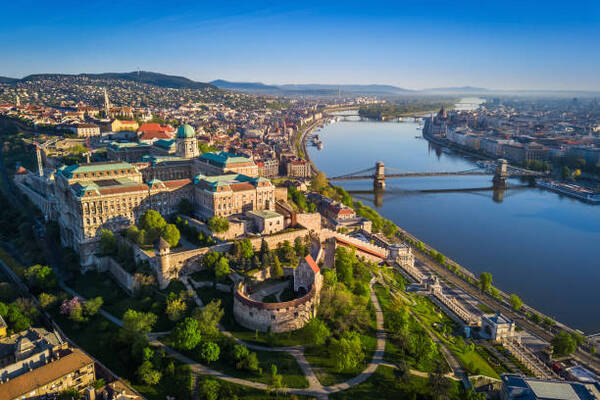
Budapest remains the focal point of Hungary’s tourism, accounting for 44% of the country’s total tourism traffic. The capital city recorded around 1.7 million guest nights in October, a 14% increase compared to the same period in 2024. This surge in visitor numbers reflects the city’s continuing success as a major European destination, known for its rich history, vibrant culture, and a dynamic tourism industry.
Accommodation providers in Hungary generated more than 104 billion forints in revenue in October, marking a 14% increase in nominal terms. Meanwhile, restaurants and catering services saw their earnings climb to 186 billion forints, up more than 10% from the previous year. This growth in revenue reflects the increasing economic contribution of tourism to Hungary’s broader economy.
Looking at the first ten months of 2025, Hungary’s tourism performance remains strong. With 16.8 million guests visiting the country—an increase of nearly 7% compared to the same period in 2024—Hungary has firmly established itself as an attractive destination for both leisure and business travellers. Guest nights during this period reached 40.5 million, a 4% increase from 2024, further solidifying the sector’s growth.
The Hungarian government continues to prioritize tourism development, launching initiatives like the KTH Start loan program. This new initiative offers working capital and investment loans to small tourism enterprises, with amounts ranging from 1 million to 10 million forints at a fixed 2.5% rate. This program is designed to support smaller operators and ensure the long-term competitiveness of Hungary’s tourism industry.
The government’s focus on infrastructure development, particularly around Budapest’s airport, is part of a broader strategy to further enhance Hungary’s global tourism profile. With an ambitious goal of doubling passenger traffic at Liszt Ferenc International Airport by 2035, Hungary aims to position itself as a key hub for international visitors. The planned developments will help to accommodate the increasing number of tourists and improve the overall travel experience.
Tourism remains a crucial driver of Hungary’s economy, contributing over 13% to the country’s GDP and supporting nearly 400,000 families. The Hungarian government is confident that the new measures, including the loan programs and infrastructure investments, will strengthen the sector’s competitiveness and further elevate Hungary’s appeal as a top travel destination.
The continuous growth in tourism in Hungary is a testament to the country’s rich cultural heritage, vibrant cities, and welcoming atmosphere. With both domestic and international travel increasing, Hungary is well-positioned to maintain its status as one of Europe’s most dynamic and attractive tourist destinations in the years to come.
