
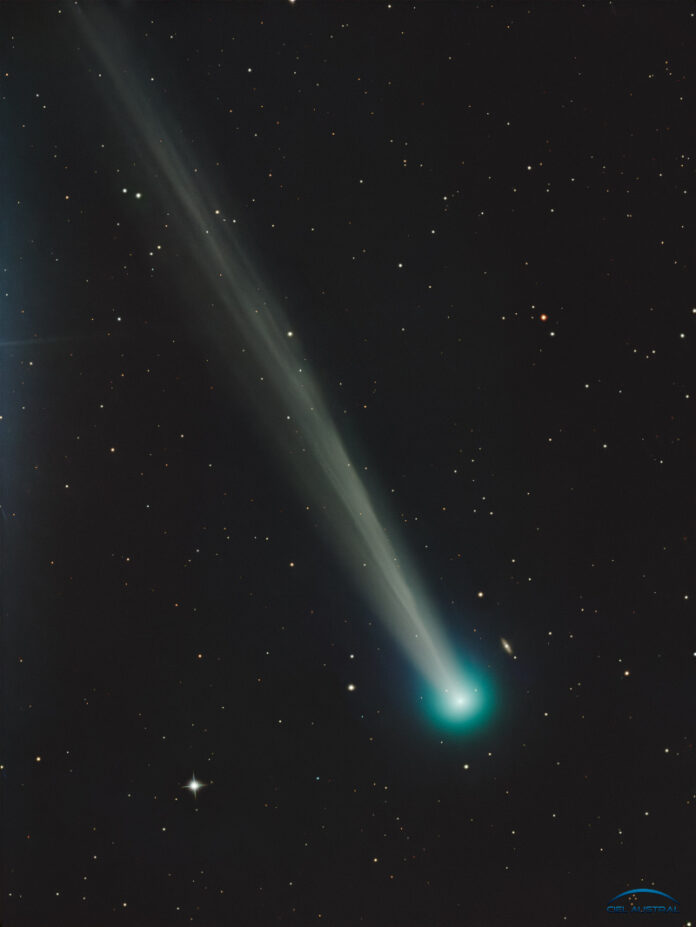
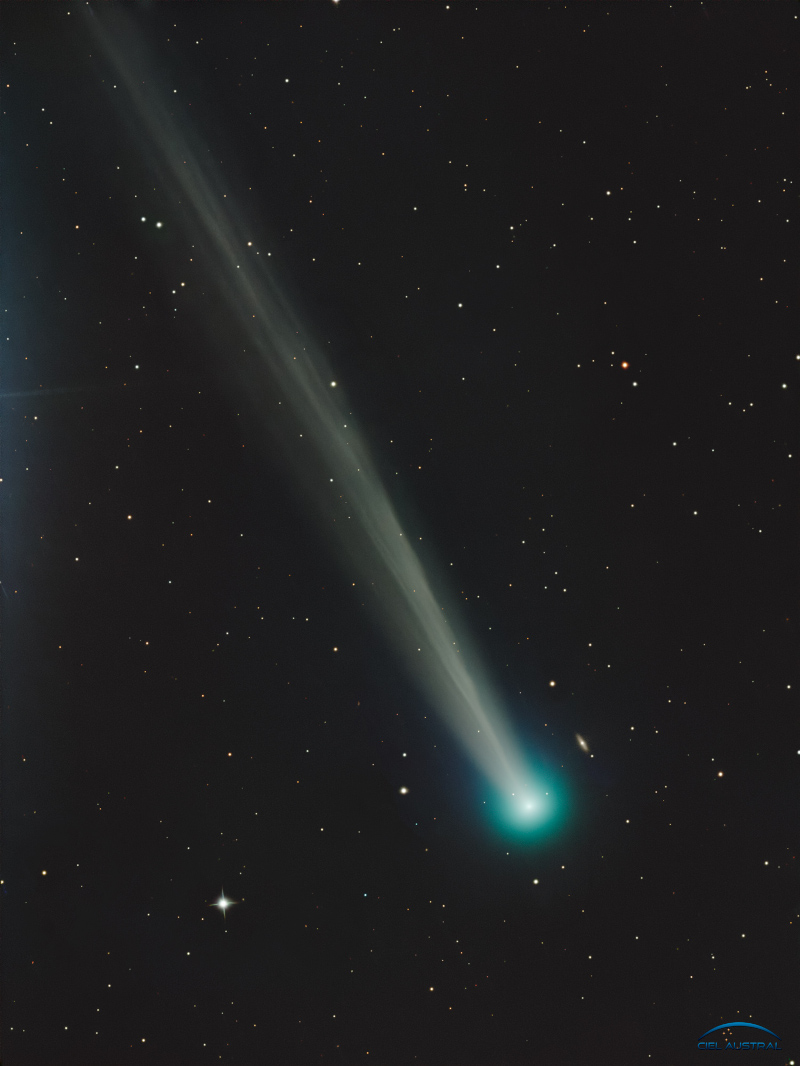
 Image of comet C/2025 R2 (SWAN) also known as SWAN25B discovered on September 11. First spotted by Vladimir Bezugly in images from the SWAN instrument on the sun-staring SOHO spacecraft.
This bizarre orbital convergence, featuring two comets with impossible sunward tails, may herald a new, unnerving chapter in planetary astrophysics.
USA HERALD – The convergence of three independently discovered comets—all exhibiting the striking, anomalous green coma characteristic of diatomic carbon excitation—is already a notable event in 2025. However, the observation of comet C/2025 R2 SWAN developing a sunward-facing tail, an “anti-tail,” strategically mirroring the signature of interstellar object 3I/ATLAS, pushes this astronomical moment past the point of mere curiosity into the realm of profound scientific and perhaps existential urgency.
These two comets, now flanking our planet in their orbits, share a characteristic that challenges fundamental models of solar-wind interaction: a tail of ionized material streaming toward the sun, rather than away from it, in direct opposition to the P/R force dictated by solar radiation pressure.
This deviation is the very core of the hypothesis put forward by geophysicist Stefan Burns and others, suggesting 3I/ATLAS—and now R2 SWAN—may be something akin to a “plasma organism“ capable of manipulating its own orbital and electrical environment.
Previous articleThe “Toy Box Killer” Torture and Murder: The Crimes of David Parker RayNext articleGrowing Anomalies Around 3I/ATLAS Present New Evidence for Avi Loeb to Elevate Its Loeb Scale Rating 
With over 20 years of experience in the legal and insurance sectors, Samuel applies his profound legal acumen to investigate and accurately report on the facts.