
If there’s a moment that marks the breakdown of bipartisan consensus in the United States on Israel, it likely came on March 3, 2015. That was the day Prime Minister Benjamin Netanyahu did something unprecedented for the leader of a foreign nation—especially one that is both a close ally and a beneficiary of American support: he addressed Congress in Washington to openly oppose the sitting U.S. president, Barack Obama, who at the time was just over a mile away in the White House.
Netanyahu fiercely opposed the Iran nuclear deal that Obama was finalizing and used every tool at his disposal to try to derail it. The Republican Party eagerly enlisted in his effort, inviting him to speak against the Democratic president they loathed—without coordinating with the White House. Only a few dozen Democrats boycotted the speech, which ultimately failed to prevent the signing of the agreement. But the long-term impact on U.S.-Israel relations is now being felt—most notably in the political tremors shaking the highest-ranking Democrat in Congress: Chuck Schumer.
10 View gallery
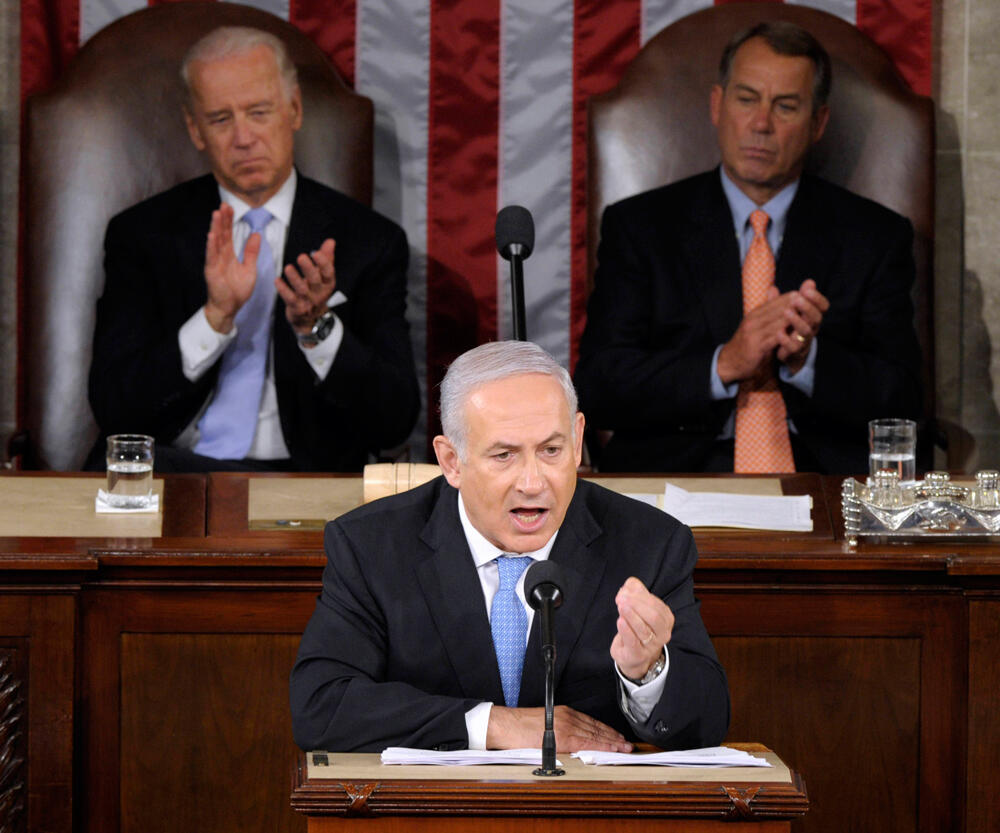
Prime Minister Benjamin Netanyahu addresses a joint session of the US Congress, March 3, 2015
(Photo: AP)
Schumer, one of Israel’s staunchest supporters in congressional history and a senior figure in 21st-century Democratic politics, voted against the Iran deal in 2015. At the time, the move cost him nothing politically; just a year later, he became the Senate Democratic leader. But beneath his feet, the ground was beginning to shift. A decade later, it’s threatening to swallow him.
More and more Democrats are criticizing Schumer openly, and several members of the House of Representatives have recently called for his removal as Senate minority leader. A New York Times poll found that Schumer’s approval rating among voters in his home state of New York is at its lowest point in decades. A man whose career was built on unwavering support for Israel is now being pushed aside by a new generation within his party—a generation raised in a racially diverse, internet-connected America, whose image of Israel is largely shaped by the Netanyahu era and whose patience with Israel has worn thin.
This shift has been years in the making, rooted primarily in Netanyahu’s strategic decision to align Israel with the Republican Party. Without the events of October 7 and everything that followed, the current political wave might have been delayed. But now the storm is here—and very real.
10 View gallery
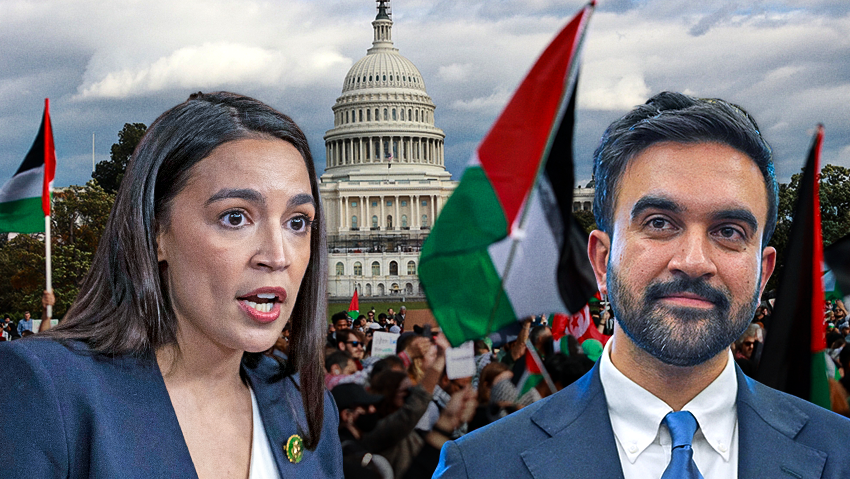
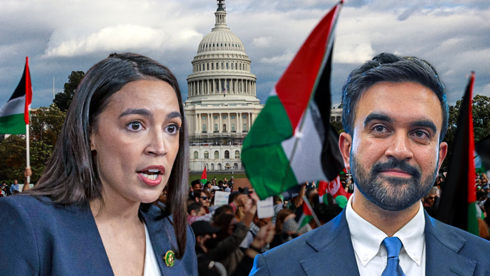
Alexandria Ocasio-Cortez, Zohran Mamdani
(Photo: Shutterstock, AP Photo/Jacquelyn Martin, AP Photo/Evan Vucci)
The victory of Zohran Mamdani in New York’s mayoral race is likely the first time an openly anti-Israel candidate has won a major election in the United States. That it happened in the city with the largest Jewish population outside Israel—where support for Israel was once a political necessity—is a resounding alarm bell.
The next phase is already on the horizon. Several pro-Israel Democratic members of Congress from New York are expected to face primary challengers in next year’s midterm elections—opponents who have built their political identities on sharp criticism of Israel.
Congressman Adriano Espaillat, who represents parts of northern Manhattan and the Bronx, is likely to face Darializa Avila Chevalier, an activist who helped organize anti-Israel protests at Columbia University. In her campaign launch video, she asked: “Why should we let Adriano Espaillat vote to spend billions on bombs overseas, when we’re struggling to afford rent and groceries right here in New York City?”
10 View gallery
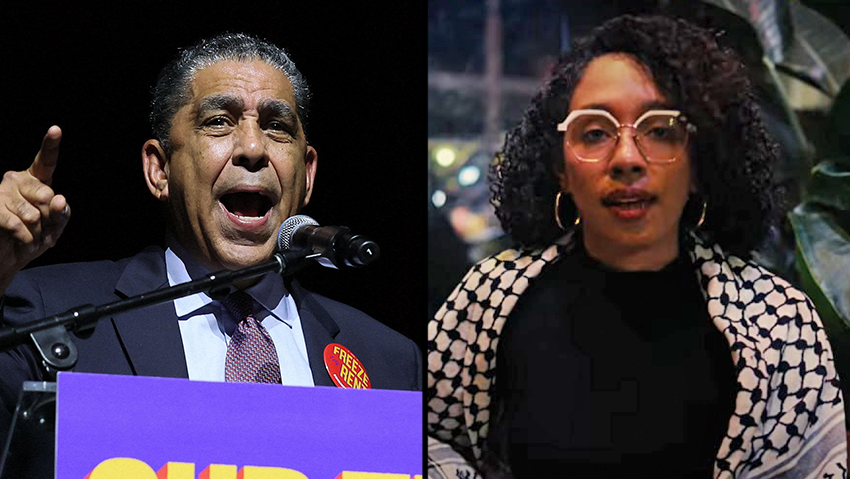
Adriano Espaillat, Darializa Avila Chevalier
(Photo: Michael M. Santiago / GETTY IMAGES NORTH AMERICA / AFP)
Another race pits Representative Ritchie Torres, a vocal supporter of Israel from the Bronx, against Michael Blake. When Blake launched his campaign, he posted: “I am ready to fight for you and lower your cost of living while Ritchie fights for a Genocide. I will focus on Affordable Housing and Books as Ritchie will only focus on AIPAC and Bibi. I will invest in the community. Ritchie invests in Bombs.”
Representative Dan Goldman, a Jewish Democrat representing parts of Brooklyn and Manhattan, may also face multiple challengers. One is New York City Council member Alexa Avilés, a harsh critic of Israel. “There is no denying that U.S. taxpayer dollars are undergirding what is happening: the utter destruction of Gaza,” she told the New York Times. “You can now run for even higher office, as mayor of New York City, and say these things head-on.”
In a policy paper submitted to the Democratic Socialists of America—an organization affiliated with Mamdani—she wrote that the U.S. “needs to stop supporting colonialism, from San Juan to Gaza.”
10 View gallery

Dan Goldman, Alexa Avilés
(Photo: Reuters)
Another possible challenger to Goldman is New York City Comptroller Brad Lander, a Jewish progressive closely aligned with Mamdani, despite their disagreements on Israel. Lander represents a significant segment of liberal American Jewry: he is a vocal critic of Netanyahu and Israel’s current government but remains a Zionist who believes Israel should exist as a Jewish state.
What all the new primary challengers have in common is that they wield AIPAC — the powerful pro‑Israel lobby in U.S. politics — as a genuine red flag. “He takes money from the very institutions that are making life harder for New Yorkers here — institutions like landlords, AIPAC and corporate PACs — and turns the other way when our rents are being raised, when we’re being priced out of our communities,” said pro‑Palestinian activist Chevalier, speaking of her opponent, Representative Espaillat, in an interview with The New York Times.
Blake, running against Representative Torres, points out that since 2022, Torres has received $1.2 million in contributions from AIPAC. If Torres runs in next year’s primaries, Blake argues, he’ll have to decide whether to keep accepting money from an organization that the American left now detests.
10 View gallery
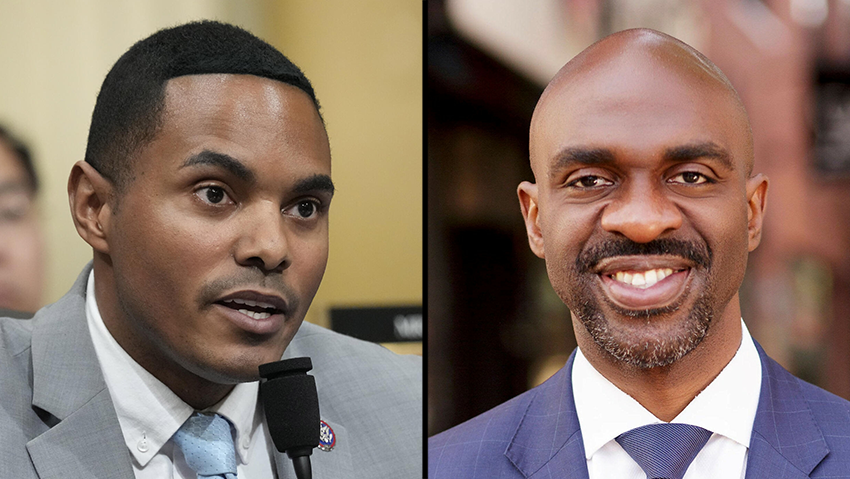
Ritchie Torres, Michael Blake
(Photo: AP Photo/Alex Brandon)
The criticism, however, comes with its own hypocrisy: according to The New York Times, five years ago—in the last primary when he lost to Torres—Blake actively lobbied AIPAC for contributions and even emphasized in his memo that he supported U.S. military aid to Israel, boasting of his visits there. AIPAC spokesman Adam Harris said Blake accomplished a “180‑degree reversal” on his Israel stance, a change that surprised the organization. Blake says the shift was driven by the Gaza war: “It’s no different than what we’ve seen in terms of people shifting as it relates to other conflicts, like the Iraq War.”
Representatives Torres, Espaillat and Goldman — all representing districts with large Jewish populations — may be insulated from the primary challenge, but the shift in how many Americans view the Middle East is unmistakable.
Recent polls by The New York Times and Siena College show that 44 percent of registered voters in New York City now express greater sympathy for Palestinians than for Israel, compared with only 26 percent favoring Israel. About 51 percent said criticism of Israel is not inherently antisemitic — a line repeated often by Mamdani and one that helped him win roughly one‑third of the Jewish vote in the election.
10 View gallery
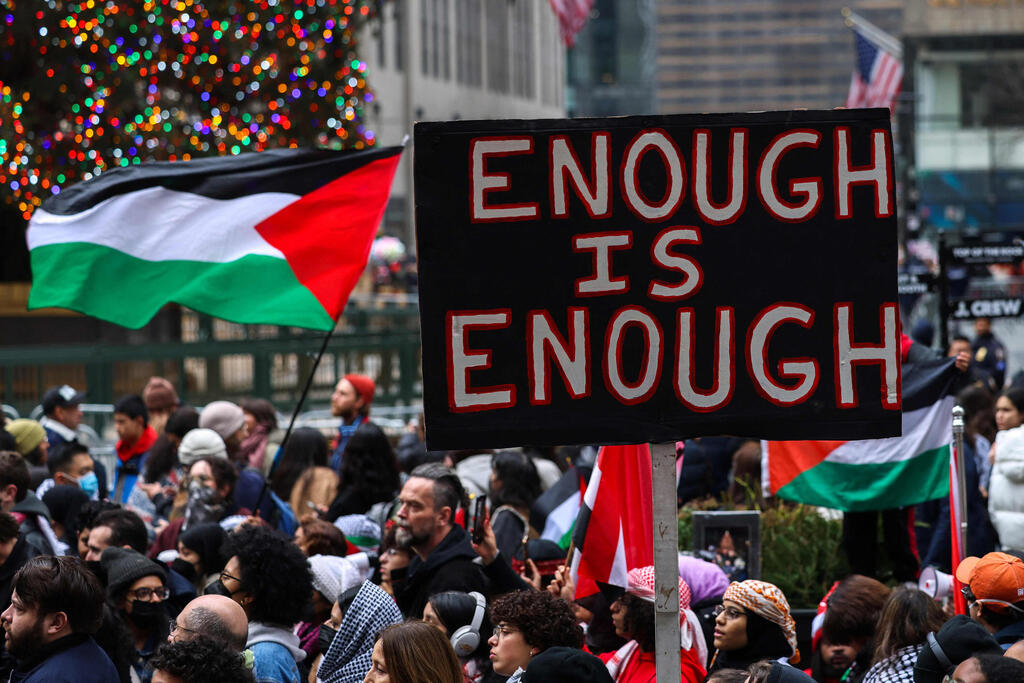
Pro-Palestinian demonstration in New York
(Photo: Charly TRIBALLEAU / AFP)
Mamdani may represent a unique city constituency, and it would be a stretch to claim his success reflects the entire U.S. But the shift is real and noticeable. In the same week he won in New York, 43‑year‑old Katie Wilson won election as mayor of Seattle. Her victory, surprising on its own, was quieter—Seattle isn’t New York, and Wilson is a white Christian woman. Yet she shares Mamdani’s views on Israel.
This sweeping shift against Israel is not limited to the progressive younger wing of the party — it is part of a broader transformation within the Democratic Party, reminiscent of what happened to the Tea Party movement roughly 16 years ago. Just months after Barack Obama’s landslide election win in 2008, the Republican base erupted in anger. What emerged was a new force that called itself the Tea Party — drawing on images from the 1773 Boston Tea Party that helped ignite America’s independence.
Although it appeared to be a grassroots reaction to the Great Recession and concern about U.S. national debt, the Tea Party was funded by prominent conservative donors such as brothers Charles and David Koch, and backed by established organizations. It appeared almost immediately after America elected its first Black president. Some protests under its banner featured racist rhetoric, and many supporters spread false claims that Obama was not born in the U.S. (and was therefore ineligible for the presidency).
10 View gallery
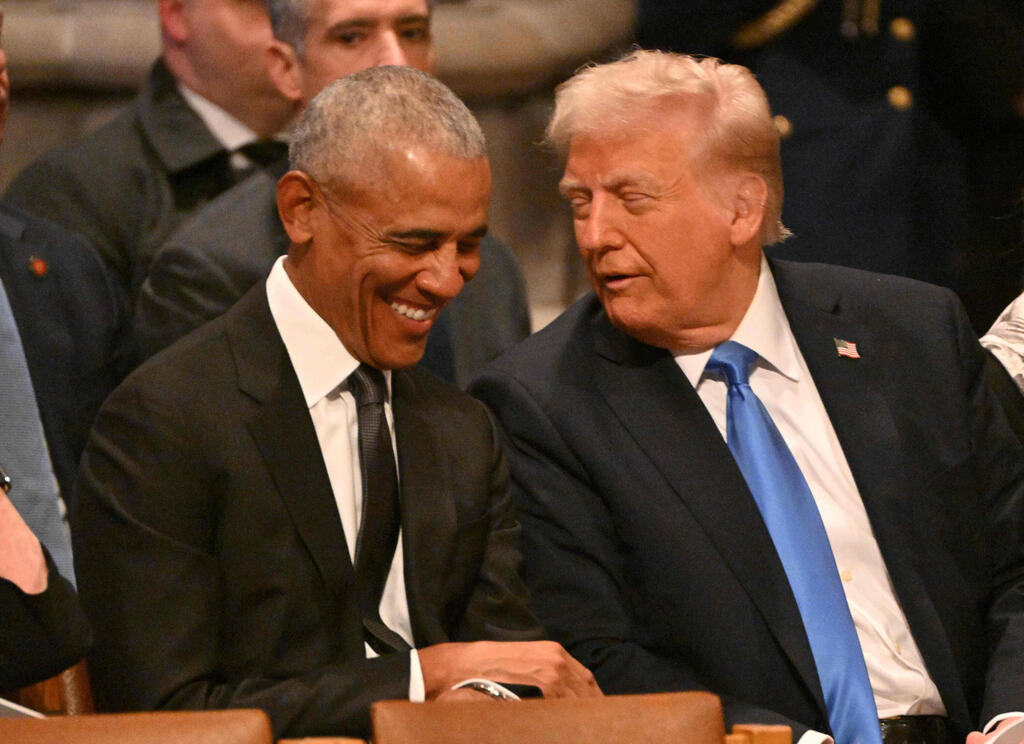
Barack Obama and Donald Trump
(Photo: ROBERTO SCHMIDT / AFP)
Whether by chance or design, the Tea Party set out to dismantle the Republican establishment — and it succeeded far beyond expectations. In 2010, 138 self‑identified Tea Party candidates ran for Congress. Nearly half won. The result was perhaps the biggest political earthquake in America in decades — and it reshaped the Republican Party permanently. Donald Trump rose on the shoulders of that movement.
Now, a similar wave appears to be forming within the Democratic Party. “‘The Democratic Tea Party is here. And there’s nothing the establishment can do to stop it,” wrote conservative magazine The New Republic. The simmering discontent has been building for years — but the party’s conduct in the first year of Trump’s second presidency has triggered a full radicalization among the Democratic base, including among those once considered moderate or centrist.
10 View gallery
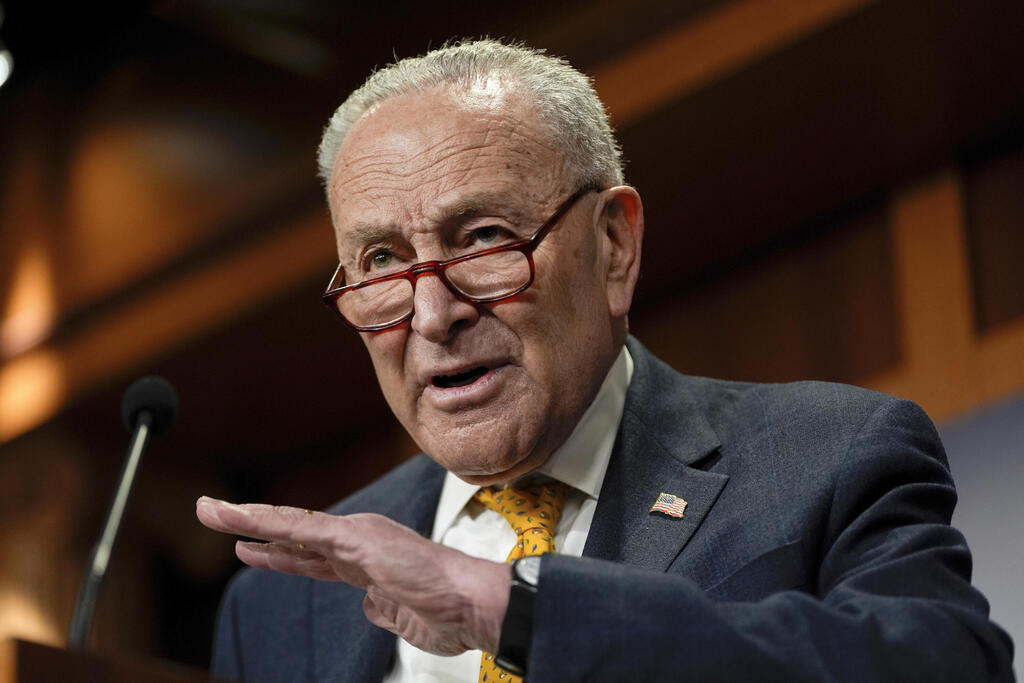
Chuck Schumer
(Photo: AP Photo/Julia Demaree Nikhinson)
10 View gallery
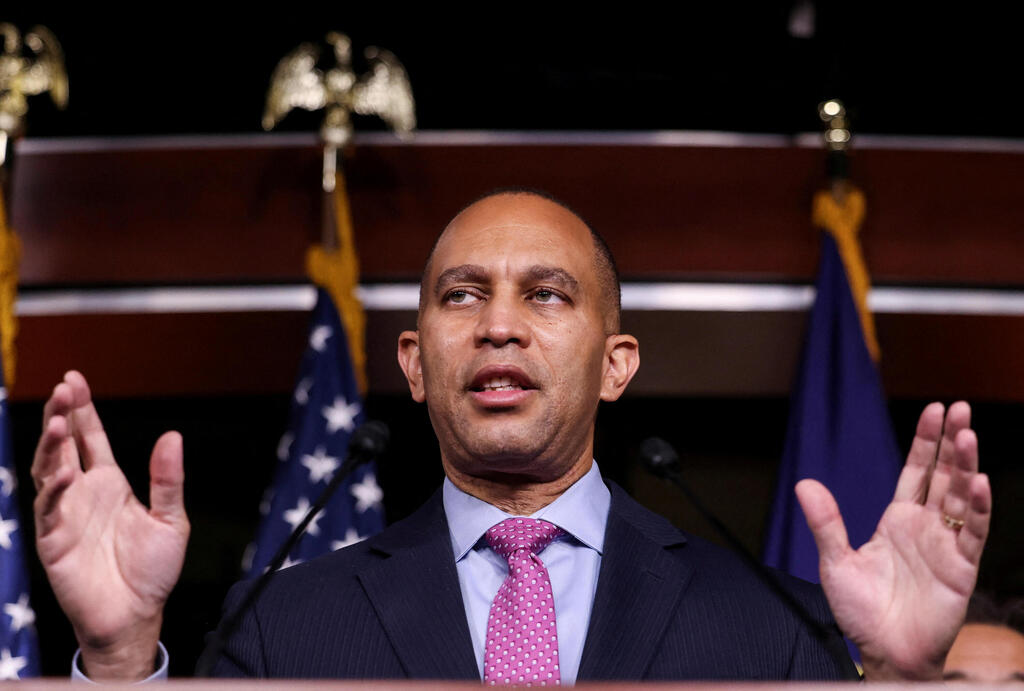
Hakeem Jeffries
(Photo: Reuters)
Early this year, top Democrats including Schumer and House Minority Leader Hakeem Jeffries, gambled on a strategy of non‑confrontation: let Trump wreak havoc and rely on that for midterm wins. At the same time, the Democratic Party did what it usually does after a presidential or congressional loss: it moved to the right. This time, though, the base did not accept that shift — and is pushing young outsider candidates in a liberal uprising aimed at real political overhaul.
Contrary to the Republican Tea Party, the Democratic unrest is brewing even among the establishment. According to The New York Times, eight senior Democratic senators have formed a group called “Fight Club,” pressing party leaders to wage a far more aggressive campaign against Donald Trump. In the same spirit, Washington, D.C. Mayor Muriel Bowser announced she will not seek re‑election, citing collaborative actions with Trump’s administration that she said crossed a red line for many in the Democratic base.
10 View gallery
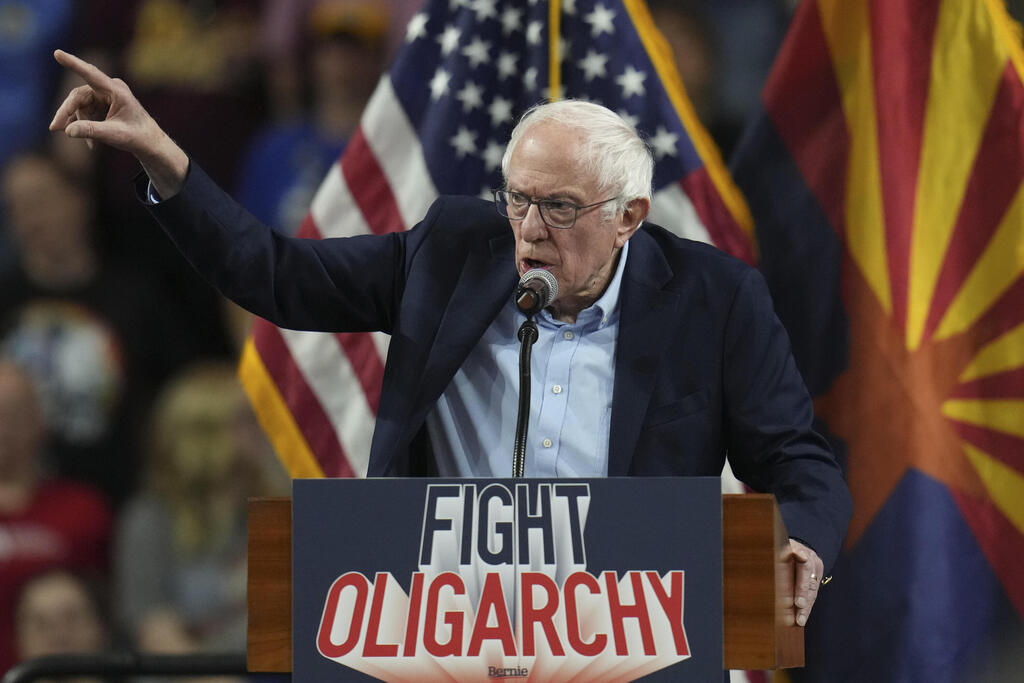
Bernie Sanders
(Photo: AP Photo/Ross D. Franklin)
The senators leading the revolt — including Warren, Sanders, Chris Van Hollen (Maryland), Tina Smith (Minnesota), Ed Markey (Massachusetts), Jeff Merkley (Oregon), Martin Heinrich (New Mexico) and Chris Murphy (Connecticut) — reflect deep mistrust among much of the Democratic grassroots toward the party’s congressional leadership.
They’ve singled out Kirsten Gillibrand, long a pro‑Israel Democrat, who apologized recently for Islamophobic remarks and, as head of the Senate Democratic campaign arm, is accused by Fight Club members of favoring establishment‑aligned candidates over fresh voices with new visions.
All this circles back to Schumer, whose failure to support rising progressive challengers like Mamdani has fueled years of frustration. Schumer, 75, is up for re‑election in 2028 — a date more Democrats now believe he may not reach if the party continues shifting away from establishment priorities.
That shift was the very reason voters supported Mamdani, or others like Katie Wilson in Seattle, or the wave of young candidates preparing to challenge incumbents in the next Democratic primaries. As Schumer himself reportedly realizes, his party has already lost the Israel‑friendly center — perhaps for a generation.