
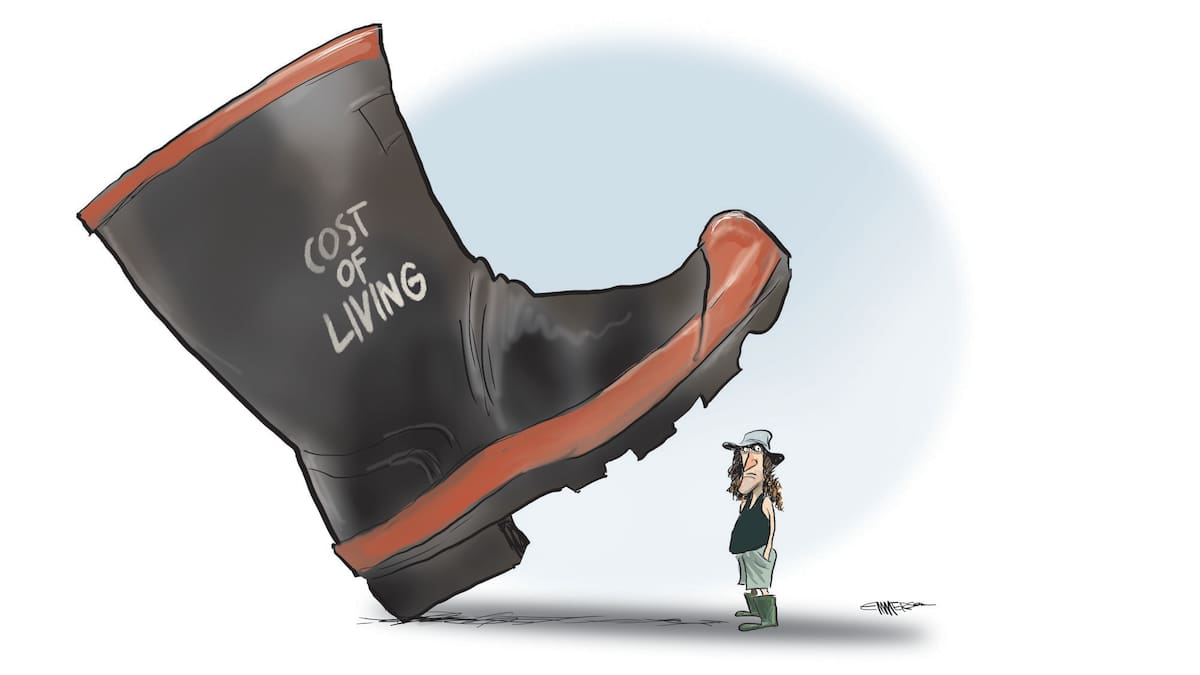
In this age of uncertainty, we’re told to trust the numbers, and here they are. According to global insurance giant Allianz’s Global Wealth Report, New Zealand is among the top five wealthiest countries per capita on the global rich list, beating out Canada, Denmark and Sweden – but ranked behind Australia.
Allianz suggests that when adding up net wealth from real estate and other financial assets, each Kiwi was worth on average US$617,067 ($1,078,107) in 2024.
Our official body, Stats NZ, estimates what each one of us is “worth” – financially – on different criteria, using a measure of everything a person or household owns, minus their debts.
The numbers:
To be in the top 50%: households, at least $524,788; individuals, at least $134,850. For the top 10%: households, at least $2.414 million; individuals, at least $1.226m. For the top 5%: households, at least $3.718m; individuals, at least $1.883m. For the top 1%: households, at least $8.727m; individuals, at least $4.735m.
Those are the bare numbers. But we need to remember the warning, commonly attributed to Benjamin Disraeli, about “lies, damned lies and statistics”. In Aotearoa, much of that so-called wealth is the valuation of the family home, plus or minus what’s owed to the Australian-owned banks.
Even more uncomfortable for a nation founded on the concept of egalitarianism: Infometrics chief executive Brad Olsen points out the on-paper median wealth of the top 1% is 22 times the rest of our fellow citizens and the top 50% has 93.3% of all household wealth.
Every time they go to the supermarket or open the inbox to another notice from the power or insurance company, many New Zealand households face the reality of making do on what’s supposed to be a good salary, but doesn’t stretch to steak on the barbie.
Amy and Mike were renting in Auckland’s Arch Hill (pictured) but made the move further out in the city to Avondale to save up to buy a house. Photo / Michelle Hyslop
‘Power goes up, food goes up, but the wages never do’
“If someone wanted to make a movie about my life,” says Amy*, “it’d be Groundhog Day.”
In her early 30s, she’s a dental hygienist in a city practice; partner Mike’s* commerce degree earned him a place at a major financial services institution.
“He’s only a couple of rungs up the ladder,” Amy says, “but the good thing about that industry is that there’s plenty of ladder to climb up.”
Amy typically grosses $52,000, depending on shifts; Mike’s grading puts him in the $55,000-$65,000 band, and they don’t have assets – “unless you count a 10-year-old Mazda and a grumpy cat”.
They’ve been together going on four years. During most of that time they have house-shared with a rotating cast of three or four others in “the usual draughty old villas” in inner-city suburbs like Grey Lynn and Arch Hill.
Those might have been the good old days.
“Post-Covid, cocktails on Ponsonby Rd or at the Viaduct, brunch on Jervois Rd on Saturdays and Sundays, eating out most nights because no one had gone to the supermarket.”
They’ve had the odd trip to Aussie and Pacific beaches.
Then things got serious.
“We decided we were in this for the long haul and it was time to act like grown-ups, get our own place, save up to buy a house, all that sort of thing.”
Goodbye, Grey Lynn.
“The only place we could afford was in Avondale. It’s a unit, clean, in good condition and we pay $625 a week.
“We keep to a really tight budget for food shopping – there are really good local fruit and vege shops here that are way cheaper than supermarkets – and we spend about $150 a week max.
“The other good thing about living in the suburbs is public transport. We can both get into the city on the train and that’s capped at $50 a week. We’d pay way more if for parking and petrol if we used the car.”
There’s a different theme to their entertainment choices, too.
“We stream movies and if it’s a treat night we’ll get Uber Eats or maybe the Thai around the corner.”
In other sacrifices, Mike gave up his long-time but costly gym membership and Amy waved goodbye to her West Lynn hairstylist.
But, she says, it’s dispiriting.
“Power goes up, food goes up, but the wages never do. We can’t see that we will ever be able to save enough to afford a house in Auckland. It looks like Australia is the option. At least we’ll have plenty of friends to catch up with when we get there.”
‘It’s the same story from every family in New Zealand’
You could call them Mr and Mrs Middle New Zealand. Tom* is a secondary school teacher in a main centre with almost 20 years at the whiteboard and a specialist qualification. His salary just tops six figures.
Jo* works from home as a tax accountant. With professional discretion, she says her income “can be $30,000, it can be $50,000. But the true value to me is the flexibility it allows me with the family”.
That, and their aged but comfortable three-bedroom, suburban bungalow, CV $1 million and change, puts them somewhere around the top 25% of Kiwi households.
Tom is surprised; while he has a keen understanding of the haves and have-nots in his community, he would have placed them “around 40% at best”.
The family agree they’re not on the breadline – but they’re not on the ciabatta line either.
“You’ll be hearing the same story from every family in New Zealand,” Tom says. “This is a low-wage, high-cost-of-living economy and it’s been that way forever and a day.”
Their priorities are their children: sporting commitments for their daughter and music for their son.
“That’s part and parcel of family life and we don’t begrudge a cent that we invest in their activities and education, but we do notice the cost.
“I see ministers on TV every night touting the ‘growth economy’ and ‘green shoots’,” Tom says. “Sorry, it doesn’t feel anything like that out here.”
Even in Auckland’s affluent suburbs like Herne Bay, people are feeling the pressures of the rising cost of living.
‘As a single parent, life’s a real struggle’
Bridget’s* jaw dropped when told she’s in the top 10% of the Kiwi wealth scale. She’s a 50-ish single parent with a middle-ranking role in the state sector, and owns a two-bedroom unit in a well-to-do Auckland suburb, which she shares with her teenager.
Her salary is average for her role – “not six figures, if only” – and the council valuation on her home is $1.2m, a slight drop from the last valuation round.
“As a single parent, life’s a real struggle,” she admits. “You’ve got the mortgage, ever-growing rates, insurance, food, utility costs. It seems that every time you open the email there’s another notice from the power company or the insurance company about the next increase.
“There are ongoing school events or requests for ‘voluntary donations’, and I have found it valuable to supplement my child’s education with outside tutoring. There are other extra costs like after-school and holiday programmes. I can work from home at least two days a week, but other days I have to be in the office in the city so I have to pay for care.
“I try to use the car as little as possible to save on petrol and parking, I take my own lunch. We do the grocery shop online so we can manage the budget. But it’ll only take one thing – say a new pair of school shoes – to throw the budget out for a couple of weeks.”
Bridget has tossed up a radical move – literally.
“I had dreams of selling up and moving out of Auckland to somewhere cheaper, but the current lowering of house CVs and the stagnant market means I’m either stuck in Auckland to weather the storm or get out and hopefully afford a similar small home elsewhere because I won’t get a good price for this place.
“The rungs of the property ladder are greased so well that one step up has you slipping three rungs down and smacking your chin on the way down.”
*Names have been changed.