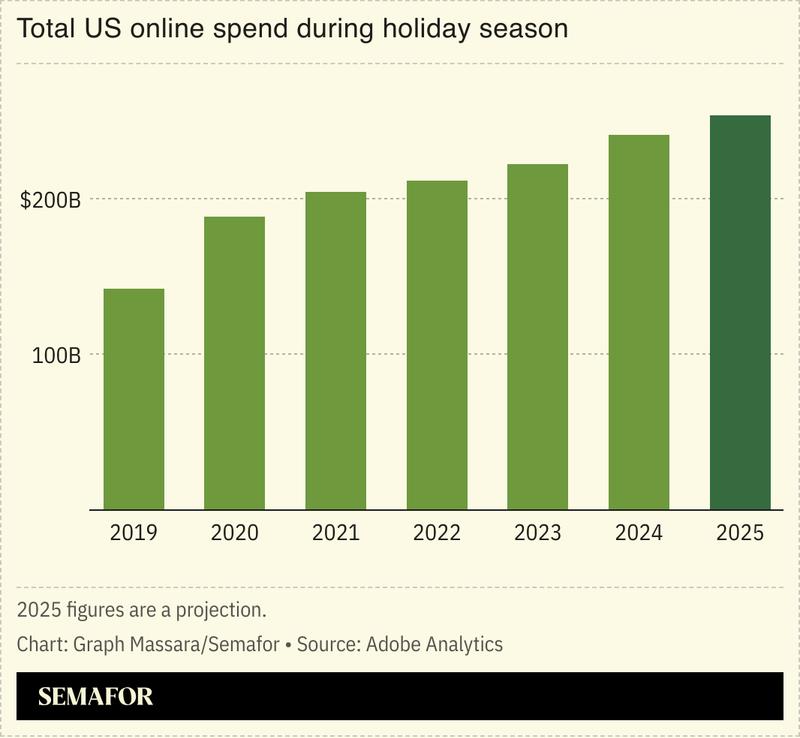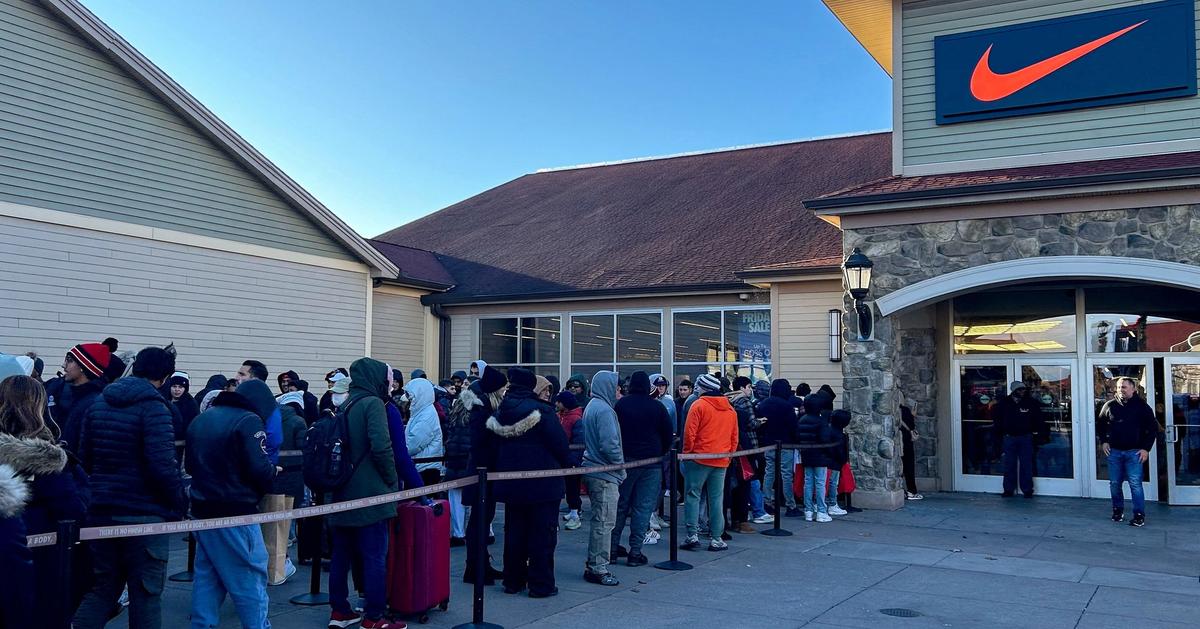
Black Friday spending reflected the forces shaping the US economy.
Retail sales on the country’s busiest shopping day of the year climbed 4.1% compared to 2024, according to Mastercard, mirroring analysts’ assessments that US consumers remain resilient despite tariffs and a cooling job market.
But the spending figures don’t account for sticky inflation, so actual gains may be marginal.
Black Friday was also “K-shaped,” with wealthier Americans spending more and low- and middle-income consumers pulling back: The US Federal Reserve’s latest Beige Book of economic anecdotes showed this trend deepening.
AI, which has boosted markets, is also propelling holiday shopping, as AI-driven traffic to US retail sites soared 805% on Friday compared to last year, Adobe Analytics said.