
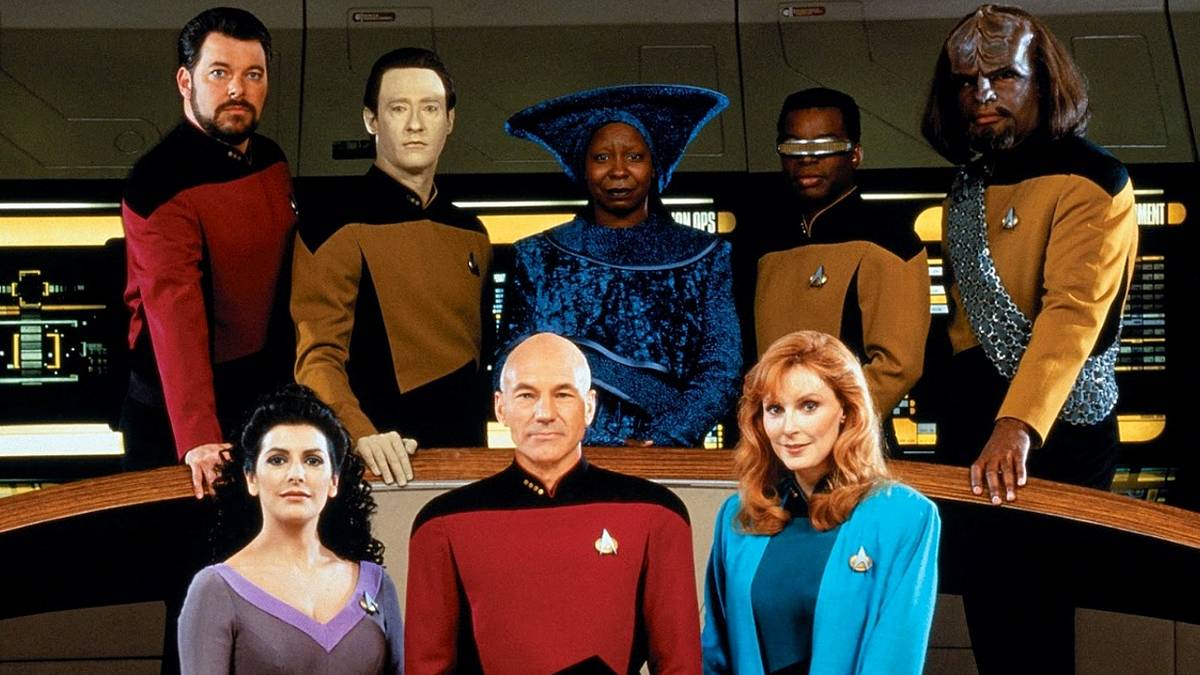
When it comes to sci-fi tropes, time travel can be one of the trickiest approaches to pull off correctly. It takes a certain balance and clarity to keep the story from becoming too confusing for the audience. However, decades ago, Star Trek: The Next Generation aired one of the best and smartest examples of time travel in modern television history.
Star Trek: The Next Generation was known for pushing the boundaries of the franchise once it found its stride. This particular episode in season 5 showed the writers were willing to let the characters shine and drive the story themselves. The “Cause and Effect” episode trusted the audience to have patience and allow the events to unfold satisfyingly and memorably.
This Episode of Star Trek: The Next Generation Is a Perfect Time Travel Story
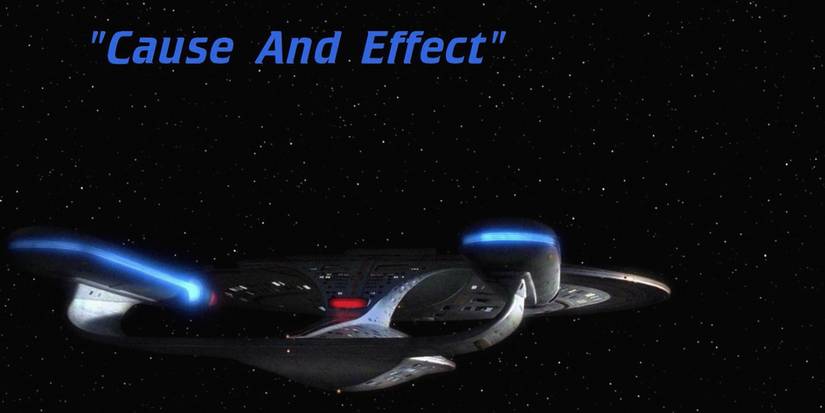
Star Trek: The Next Generation ‘Cause and Effect’ Title ScreenImage via Paramount TV
The “Cause and Effect” episode in season five of Star Trek: The Next Generation opens with one of the most explosive scenes in series history. The USS Enterprise explodes in the cold open and immediately puts the audience on edge. No context is given, and when the episode starts, the viewer expects the impending ending to be inescapable and absolute.
Immediately, the procedural approach of the typical Star Trek episode has been upset. When the story resets, viewers begin to piece together that something is off in a Groundhog Day fashion. While the time loop narrative may be familiar to most fans, the sci-fi genre presents a fun foundation to build upon and to tinker with that storytelling tactic.
Actress Gates McFadden is central to the plot of “Cause and Effect” as Dr. Beverly Crusher. While the writers of Star Trek: The Next Generation admittedly struggled to give the other characters a chance to drive the story, the show had found its footing by season 5. By this point, everyone was comfortable with their roles, and the series was running like a well-oiled machine.
The initial events of the first time loop are implied to have happened before the show begins. The audience joins in as the crew, specifically Crusher, is experiencing a sense of déjà vu. She notices conversations seem familiar, and she hears voices in her room during the night. She presents her suspicions to Picard and the others, but they’re ultimately dismissed.
The loop starts yet again after the Enterprise explodes. The card game between Crusher, Data, Worf and Riker becomes an anchor point for the episode, where the other characters begin to notice the synchronicities. They begin to be able to predict the order the cards are dealt, and it becomes clear that something more concerning is at play than déjà vu.
The Enterprise has entered a temporal distortion while investigating an area of space that has never been explored. It’s implied that the loop is caused by the collision with the USS Bozeman near the temporal distortion, which causes the explosion and subsequent paradox. Each day ends with the Enterprise crashing into the other ship, and the time loop starts anew.
The turning point happens when the voices that Dr. Crusher is hearing are, in fact, the voices of the crew of the Enterprise from the previous loops. That discovery cracks the story open, and the leading officers begin to put their heads together as they’re all experiencing intense moments of familiarity. They begin to trust their instincts and one another.
The magic of this episode of Star Trek: The Next Generation comes from the subtle progress and escalating tension between each loop. Each time, they make just enough headway to keep moving forward and change the loop ever so slightly. Those tiny shifts slowly build up, and when the pressure is finally released, it’s extremely rewarding for the viewing audience.
Star Trek: TNG Was a Masterclass in Acting and Storytelling
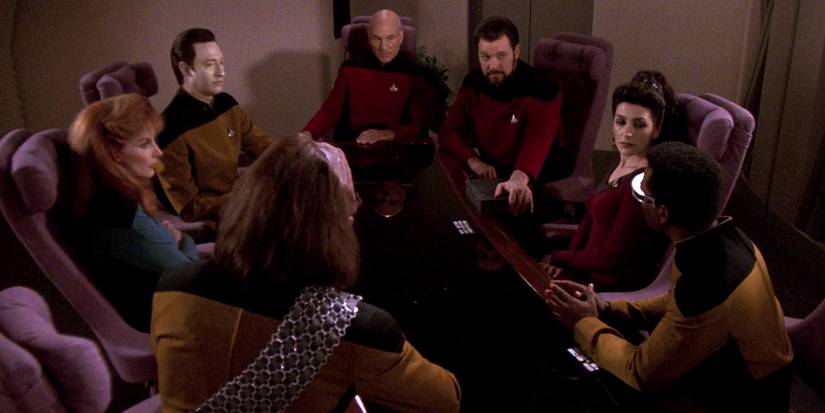
The crew sits at a meeting table in Star Trek: The Next Generation ‘Cause and Effect’Image via Paramount TV
The actors’ performances take center stage in the “Cause and Effect” episode of Star Trek: The Next Generation. While the storyline remains roughly the same throughout the various loops, it never feels repetitive. That was the biggest danger for the episode, and it was avoided by subtle changes escalating the tension and the characters interacting with the slow realization that something is amiss.
The cast had to walk a fine line. Every time the loop resets, the characters start in the same place, yet they are quietly changed by the mysterious sense of déjà vu building in the background. The shifts are subtle at first but are becoming more pronounced, so the performances must reflect the slowly escalating unease. Each actor displays this realization in their own way.
The small details are barely noticeable at first, and the filming of the episode was difficult and meticulous for the cast and crew of Star Trek: The Next Generation. Because so many scenes had to be shot multiple times with slight variations, the crew needed precise planning to keep continuity intact throughout the changes. The actors also had to have room to experiment within the continuity.
Editing is rarely referenced concerning the quality of an episode, but since “Cause and Effect” relies on repetition, it was a crucial element of the entry’s success. The cuts and camera shifts work to help the viewers feel the loop tightening. It mirrors the feeling of being trapped inside a repeating moment and gives weight to every small change the characters notice.
“Cause and Effect” is also a fitting introductory episode of Star Trek: The Next Generation. It requires no previous knowledge of the series or franchise, allowing a potential new fan to jump right in and enjoy it. It does not rely on deep lore or continuity. It is a perfect example of self-contained Star Trek storytelling, where the science fiction concept drives the plot.
The story unfolds in a non-linear fashion and never overexplains the situation to the audience. The episode pulls viewers into the confusion alongside the characters. The experience between the actors on-screen and the audience is simultaneous and immersive. It works as a shared perspective that makes the loop feel like more than a simple plot device.
This marks another great episode of Star Trek: The Next Generation that was directed by Jonathan Frakes. Frakes brings a natural understanding of the cast in front of the camera to the director’s chair. He focused on letting the actors play with small shifts that would ripple through the loop. Fans often point to this episode as one of his best behind the camera.
The episode was written by Brannon Braga, one of the most important and influential writers in Star Trek history. He was a fixture in the writing room in later seasons and would go on to become co-executive producer. His reputation for time travel stories and high-concept science fiction really began to take shape and shine with this episode.
“Cause and Effect” Has one of the Coolest Sci-Fi Endings and Cameos
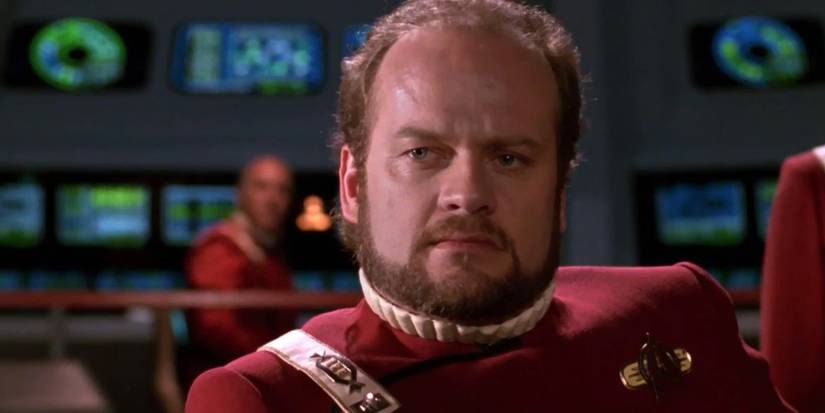
Kelsey Grammer in Star Trek: The Next Generation.Image via Paramount TV
In one of the best endings of Star Trek: The Next Generation, it’s revealed that the USS Enterprise was not the only ship caught within the time loop. While the Enterprise was caught in the loop for 17 days, the ship that they collided with had been trapped for decades. The USS Bozeman had endured the distortion for over 90 years, as seen by their dated uniforms.
In another refreshing surprise, Captain Morgan Bateson of the Boseman is revealed to be Cheers and Frasier star Kelsey Grammer. Grammer’s Captain Bateson exchange with Picard is a short and respectful conversation, and the audience can feel the weight of what just happened. The ending is earned through pacing and tension without the need for much spectacle.
Due to the quiet and somewhat somber ending for the Bozeman, the story avoids turning the final scene into a massive exposition dump. Instead, the reveal unfolds naturally. The crew of the Enterprise realizes their luck for having only been trapped in the loop for 17 days in the face of the Bozeman. It leaves the viewers curious about how Bateson will handle the knowledge of being trapped for nearly 100 years.
Star Trek: The Next Generation Set the Standard for the Time Travel Trope in Television
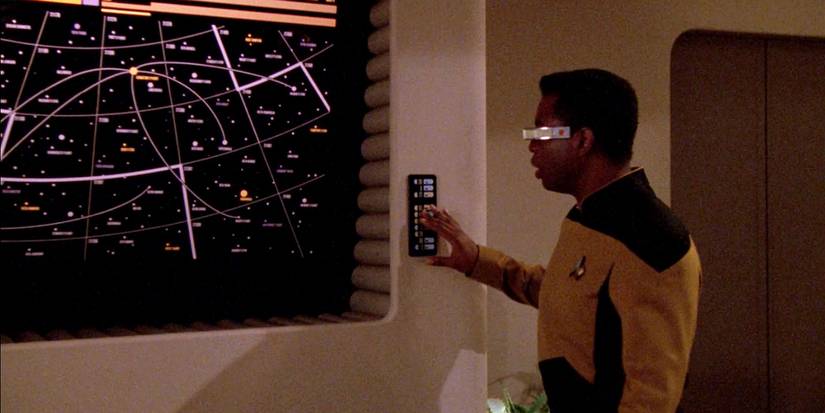
Geordi La Forge shows a presentation in Star Trek: The Next Generation ‘Cause and Effect’Image via Paramount TV
In the end, what makes the “Cause and Effect” episode of Star Trek: The Next Generation so memorable is the way it respects the audience and trusts its ideas. The episode doesn’t hold the viewer’s hand; it simply presents a fresh situation and trusts the fans to follow through to the end. The ones watching the episode become active participants in the mystery alongside the characters.
Time-travel stories come with significant narrative risks. Star Trek: The Next Generation avoids the potential pitfalls and confusion of the approach by placing more focus on the mounting tension and the performance of the actors rather than relying solely on the plot device. It’s why “Cause and Effect” is widely considered one of the most memorable episodes of the series.
Release Date
1987 – 1994-00-00
Network
Syndication
Showrunner
Gene Roddenberry
Directors
Cliff Bole, Les Landau, Winrich Kolbe, Rob Bowman, Robert Scheerer, Jonathan Frakes, Robert Wiemer, Gabrielle Beaumont, Alexander Singer, David Carson, Paul Lynch, Corey Allen, Patrick Stewart, Chip Chalmers, Joseph L. Scanlan, James L. Conway, Robert Lederman, Tom Benko, Timothy Bond, Robert Legato, Adam Nimoy, Robert Becker, David Livingston, LeVar Burton
Writers
René Echevarria, Maurice Hurley, Richard Manning, Melinda M. Snodgrass, Tracy Tormé, Hannah Louise Shearer, Stuart Charno, Ira Steven Behr, Sara B. Cooper, Peter Allan Fields, Herbert Wright, Frank Abatemarco, Burton Armus, Hilary Bader, Morgan Gendel, David Kemper, Michael I. Wagner, Philip LaZebnik, Robert McCullough, Susan Sackett, Nick Sagan, Fred Bronson, Robert Hewitt Wolfe, Sam Rolfe

Patrick Stewart
Jean-Luc Picard

Jonathan Frakes
Commander William T. Riker