
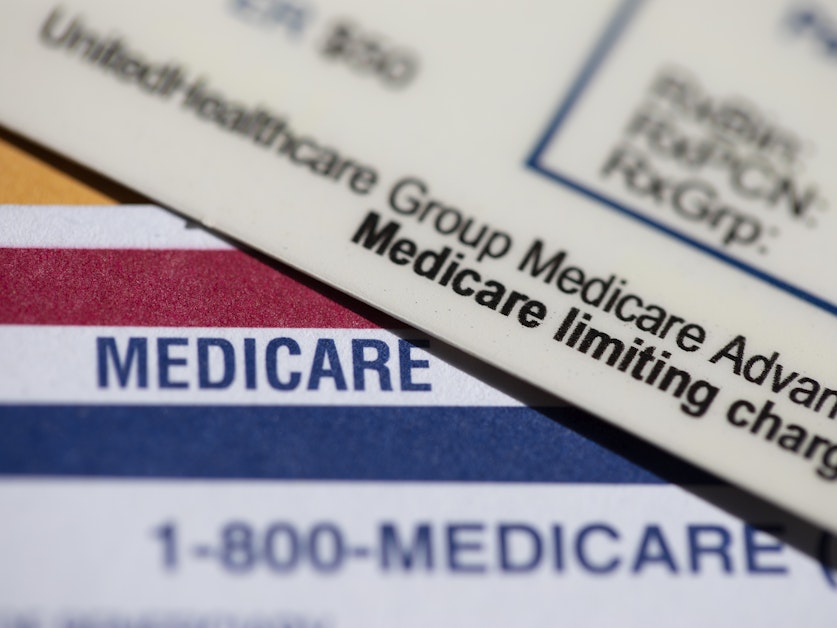
Starting Jan. 1, traditional Medicare recipients in Washington state will face a new hurdle to get certain procedures covered — private AI companies that get paid based on how many claims they deny.
Washington is one of six states selected to take part in a federal pilot program called Wasteful and Inappropriate Service Reduction, which aims to reduce fraud and waste by requiring prior authorization for about a dozen outpatient procedures deemed “low-value services.”
Washington state has more than 1.5 million Medicare enrollees, just over half of whom are enrolled in traditional Medicare (51%). Until now, people with traditional Medicare have not been required to get prior authorization for most services. That means they can see specialists, visit hospitals, and receive out-of-state care without asking for permission first.
RELATED: Medicare negotiated lower prices for 15 drugs, including 71% off Ozempic and Wegovy
The federal agency that runs Medicare, the Centers for Medicare and Medicaid Services, has hired private companies in each pilot state — Washington, Arizona, Ohio, Oklahoma, New Jersey, and Texas — who will use AI tools to determine whether traditional Medicare patients qualify for certain procedures.
The list includes nerve stimulation to treat various ailments, steroid injections for pain management, cervical fusion, arthroscopic knee surgery, diagnosis and treatment of impotence, and certain skin and tissue substitutes. (Tap here to see a full list of procedures.)
AI companies will be paid a portion of the savings from claims they deny or, as the Wasteful and Inappropriate Service Reduction plan puts it, “compensated based on a share of averted expenditures.”
RELATED: These Seattle-area clinics plan to take care of people who’ve lost their health insurance


In a statement announcing the six-year pilot, Centers for Medicare and Medicaid Services Administrator Dr. Mehmet Oz said the changes would save taxpayers money by reducing waste while protecting Medicare patients from “unnecessary and often costly procedures.”
But critics see the model as being the first step toward privatizing publicly funded health care for seniors and people with disabilities.
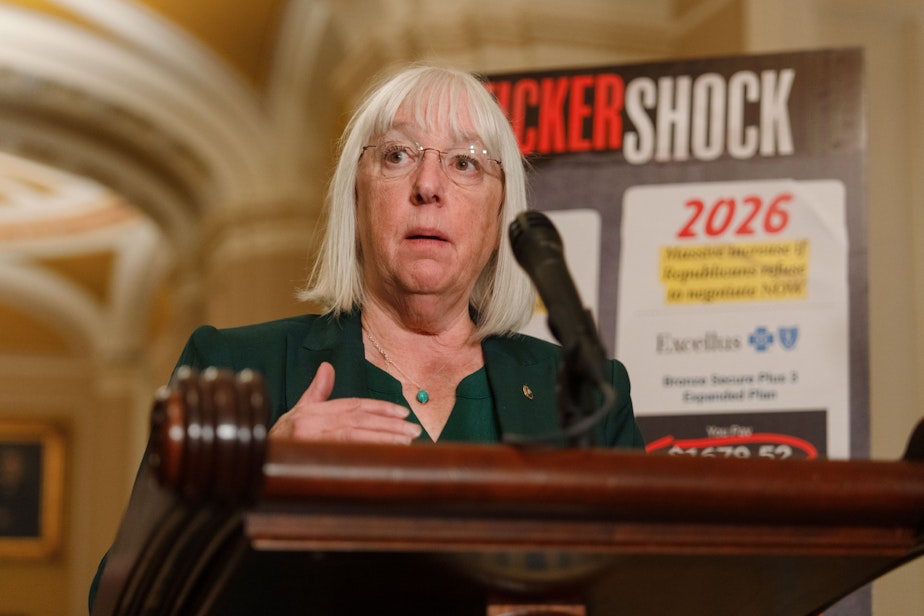
“Let’s be clear about what’s happening here: the Trump administration is using AI to cut Medicare benefits and trap seniors in Washington state in layers of paperwork and bureaucracy, blocking them from getting the health care they need,” U.S. Sen. Patty Murray (D-WA) told KUOW via email. “Everyone should be alarmed by this backdoor move by Republicans to privatize Medicare and let AI decide who deserves health care — I will be opposing it every way I can in the Senate.”
On Nov. 7, a group of Democratic lawmakers in the House of Representatives, led by U.S. Rep. Suzan DelBene of Washington, introduced a measure to repeal the proposed pilot program before it starts.
The proposed legislation, called “Seniors Deserve SMARTER Care Act of 2025,” has 29 Democratic co-sponsors — including Washington Reps. Pramila Jayapal, Rick Larsen, Emily Randall, Kim Schrier, Adam Smith, and Marilyn Strickland.
RELATED: These families’ health care costs will balloon if Congress doesn’t act on the ACA
The measure comes after DelBene and other lawmakers — including Randall and Strickland — received no response to a joint letter they sent on Aug. 7 to Oz urging him to “put patients and providers first by canceling the [Wasteful and Inappropriate Service Reduction] model and exploring other ways to limit fraud, waste, and abuse in the Medicare program.”
The letter pointed to ongoing issues with prior authorization for patients with Medicare Advantage, the alternative to traditional Medicare that is run by private for-profit companies.
A 2018 study by the U.S. Department of Health and Human Services found that, when beneficiaries and providers appealed preauthorization and payment denials from Medicare Advantage, those denials were overturned three out of four times.
But once coverage is denied, most patients don’t follow through with an appeal. A 2024 survey of 1,000 practicing physicians by the American Medical Association found that denial of prior authorization led to “treatment abandonment” in 82% of cases.

“Prior authorization in Medicare Advantage and elsewhere ultimately limits access to care for Washington seniors, increases the burden on loved ones and care providers, and leads to worse health outcomes,” DelBene said. “The administration has publicly admitted that prior authorization is harmful, yet it is moving forward with this misguided effort that would make seniors navigate more red tape to get the care they’re entitled to.”
The private company contracted to screen Medicare requests starting next year in Washington state, Arizona-based Virtix Health, said the use of AI tools would increase the speed and accuracy in which Medicare claims are processed.
“Virtix Health believes the [Wasteful and Inappropriate Service Reduction] program will empower Original Medicare and providers to make authorizations faster by bridging AI with human expertise,” a Virtix spokesperson said via email.
In its announcement of the pilot program, the Centers for Medicare and Medicaid Services promised that the final decision on claim denials would be made by “licensed clinicians, not machines.”
A spokesperson for the agency also said use of AI tools “will be subject to strict oversight to ensure transparency, accountability, and alignment with Medicare rules and patient protections.”
But the lack of transparency about the program so far has lawmakers and doctors dubious about the true intention of the Wasteful and Inappropriate Service Reduction model and worried about its potential impact on seniors who use Medicare in Washington state.
Those concerns were expressed in a Nov. 4 letter to Centers for Medicare and Medicaid Services Administrator Oz from the state medical associations in all six states that will be affected by the changes in 2026. The physicians’ groups warned that the program would delay care, reduce access, and increase burdens on both patients and doctors.
The medical associations also questioned the program’s payment model.
“When third-party entities are paid based on the volume of denied services, there is a clear risk that care that is medically necessary for certain patients will be inappropriately denied in pursuit of savings,” the letter states.
Those concerns were echoed by Dr. Bindu Nayak, a Wenatchee-based endocrinologist and vice president of the Washington State Medical Association.
Nayak has seen firsthand the time it takes for hospital staff to fill out prior authorization forms. She said she has seen how that process delays care for patients and increases paperwork for doctors, and the state is already facing a shortage of physicians. Now, with those claims being denied at a higher rate and faster pace by AI, she worries pressures on the health system will only increase.
“Who has better intentions for the patient: the physician who wants the best treatment plan for the patient, or the private contractor who will earn more money if they deny claims?” she said.