
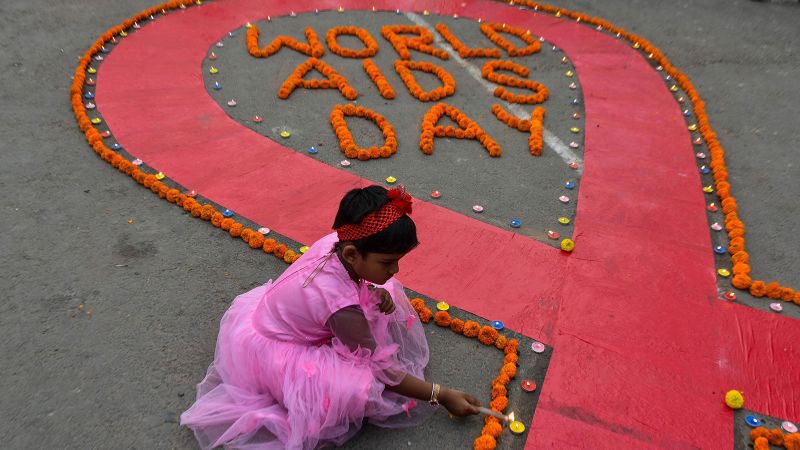
The United States is not commemorating World AIDS Day this year as it has done for decades in the past.
The commemoration has been marked every December 1 since 1988. The day is meant to raise awareness of efforts to fight the deadly disease and remember those died from it.
Globally, about 39.9 million people are living with HIV, the virus that causes AIDS, including about 1.2 million people in the United States. In the US, about 13% of people who have HIV don’t know it — one driver of the virus’ continued spread.
Observance of the day was started by the World Health Organization, from which the Trump administration withdrew this year. However, it has expanded beyond WHO to organizations and communities around the world.
“An awareness day is not a strategy. Under the leadership of President Trump, the State Department is working directly with foreign governments to save lives and increase their responsibility and burden sharing,” State Department deputy spokesperson Tommy Pigott said in a statement. “Earlier this year, we released a global health strategy aimed at streamlining America’s foreign assistance and modernizing our approach to countering infectious diseases.”
A US senior administration official stressed that the US would continue its work to combat HIV/AIDS, both through the new global health strategy and through the President’s Emergency Plan for AIDS Relief, or PEPFAR. The latter, which was started under President George W. Bush, has saved millions of lives.
As CNN has reported, health experts are warning that the Trump administration’s new “America First Global Health Strategy” could further damage public health systems already reeling from billions of dollars in foreign aid cuts after the destruction of the US Agency for International Development, and while some say the new system could bring benefits, there is agreement that it marks a radical change in approach from decades of US policy.
Dr. Anna Person, chair of the Infectious Diseases Society of America’s HIV Medicine Association, said the “efforts to unravel our country’s HIV response” raise alarm bells.
“Erasing HIV from the federal budget will not make the deadly virus go away but will reverse the progress made toward ending the HIV epidemic,” she said in a statement Monday. “Without continued research and support for HIV prevention, surveillance and services, new HIV transmissions and health care expenditures will climb, and people will die.”