
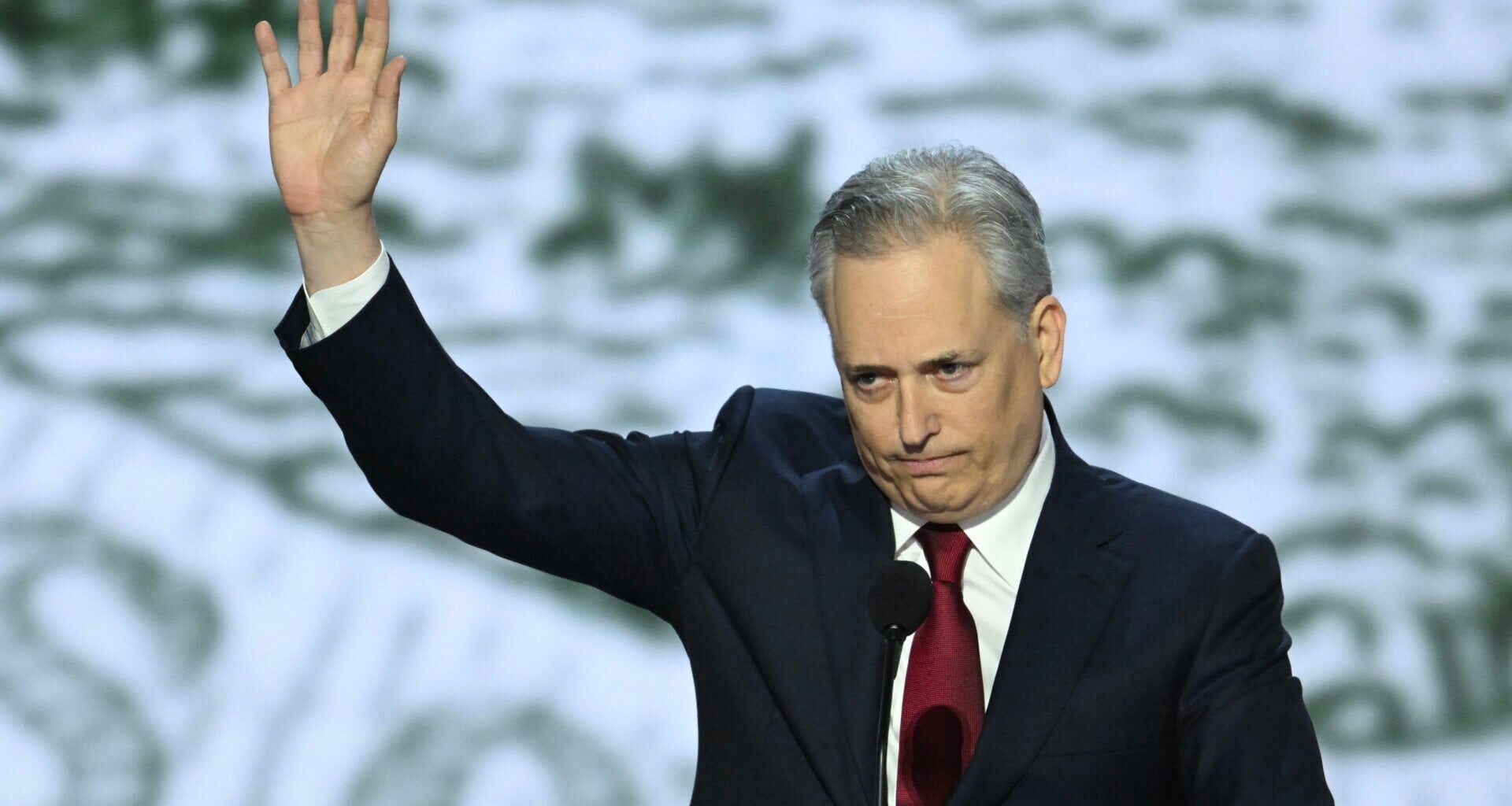
You are not going to believe this, but Silicon Valley has chosen the side of David Sacks in the Great Sacks v. New York Times feud of 2025. After the Times ran a story highlighting Sacks’s many conflicts of interest, including more than 430 investments in crypto and artificial intelligence companies while holding the position of Trump’s AI and crypto czar, the worst people you know all took to X (notably owned by Sacks’s fellow PayPal Mafia member Elon Musk) to say that actually it is good for the guy responsible for policy on emerging technologies to also be heavily invested in their success.
Sacks himself led the charge on trying to diminish the Times’ reporting, which highlighted how the venture capitalist has given tech executives unprecedented access to the White House and tried to profit off of his ties to the administration, which he called a “hoax.” He posted a letter his lawyer sent to the Times in response to questions they sent to Sacks while reporting the story, and complained the paper engaged in “constant goalpost-shifting” to prove he has financial conflicts in his role in the administration. Sacks seems to suggest that asking about things and then choosing not to publish details about them when those details are refuted is proof that the Times had an agenda and not just how journalism works.
David Sacks @DavidSacks is a throwback to the era of American greatness in which the most capable private sector citizens selflessly volunteered for government service in moments of peril for a dollar a day. He is a credit to our nation, and we need more like him, not fewer. 🇺🇸
— Marc Andreessen 🇺🇸 (@pmarca) November 30, 2025
And then came the rest of the Silicon Valley Superfriends, as if someone hit up the group chat and said their boy needed some help. Marc Benioff, the CEO of Salesforce and owner of Time Magazine, claimed the Times’ report “isn’t journalism—it’s almost strategic sabotage.” (Side note: very AI-generated vibes to that post.)
Benioff also said, “America wins the century by elevating builders, not tearing them down,” which became a bit of a refrain for the Sacks defenders. Others floated the idea that if Sacks wins, we all win, like Andreessen Horowitz’s chief egghead, Marc Andreessen. He said Sacks is a “throwback to the era of American greatness in which the most capable private sector citizens selflessly volunteered for government service.” Gavin Backer, a partner at investment firm Atreides Management, argued, “Leading in AI is good for America. And there is no way for America to lead in AI without American investors in AI doing well.”
David Sacks really understands AI and cares about the US leading in innovation. I am grateful we have him. https://t.co/6I0PCjtmjH
— Sam Altman (@sama) December 1, 2025
This probably sounds like a good argument to the ears of the guys who also have big bets placed on the same sectors that Sacks does, but the defense doesn’t actually address the Times’ central premise, which is that Sacks is still invested in areas where he is dictating policy. The implied answer to that is basically, “So what?”
Of course, Sacks’s All-In “besties” had some takes to fire off, too. Chamath Palihapitiya, he of failed SPAC fame, called the Times the “Private Equity Wife of newspapers,” whatever that means. Jason Calacanis, a human suckerfish, pondered “what would happen if we bought up all the shares [of] the Nytimes we could and joined the board.” Pretty funny tweet from the bestie who seemingly has the lowest net worth. Who’s “we,” Jason? You bumming a couple billion off your friends?
The Sachs piece illustrates the exact problem with the NYTimes. Voters specifically want THIS type of person, not a bureaucrat who has never worked a real job (Lina Khan, K street, Beltway type) https://t.co/ZDi0SsCPa8
— Martin Shkreli (@MartinShkreli) November 30, 2025
Calacanis also got into a back-and-forth with Axios reporter Dan Primack for reasons that are unclear, given that Primack has spent the last day downplaying the Times’ report as a “nothingburger.” In his newsletter, Primack said the report highlighted “the sorts of things most of us already knew, although ‘we’ aren’t the NYT’s target audience”—which isn’t really a criticism of the reporting at all. Primack argues that Sacks’s positions are basically in line with what he’s always believed and that “it’s nearly impossible to be an active venture capitalist and not have investments that will be impacted by AI policy.” Which is fair enough, but also there is no rule that we have to have a venture capitalist serving in this role. He could just not be the AI and crypto czar!
One thing that seems to be missing from the ongoing back-and-forth is the fact that Sacks is something of a totem for the divide happening in MAGA at the moment. Sacks stands as the pro-corporatist, self-dealing rich guy, the type of person who bankrolled Trump’s second run to the White House—the exact type of guy who the more populist positioned people in Trump’s orbit would like to oust. Steve Bannon, the figurehead of MAGA populism, told the Times, “The tech bros are out of control.”
Those factions have butted heads quite a bit in recent months, over everything from the Epstein files to the attempt to ban states from regulating AI, and it has led to people like Marjorie Taylor Greene ultimately jumping ship. The next test in that split will come this week with the National Defense Authorization Act, which may include a rule to block states from passing their own AI-related laws. If that sneaks in, put a win in Sacks’ column and hang an L for everyone not currently profiting from the AI industry.