
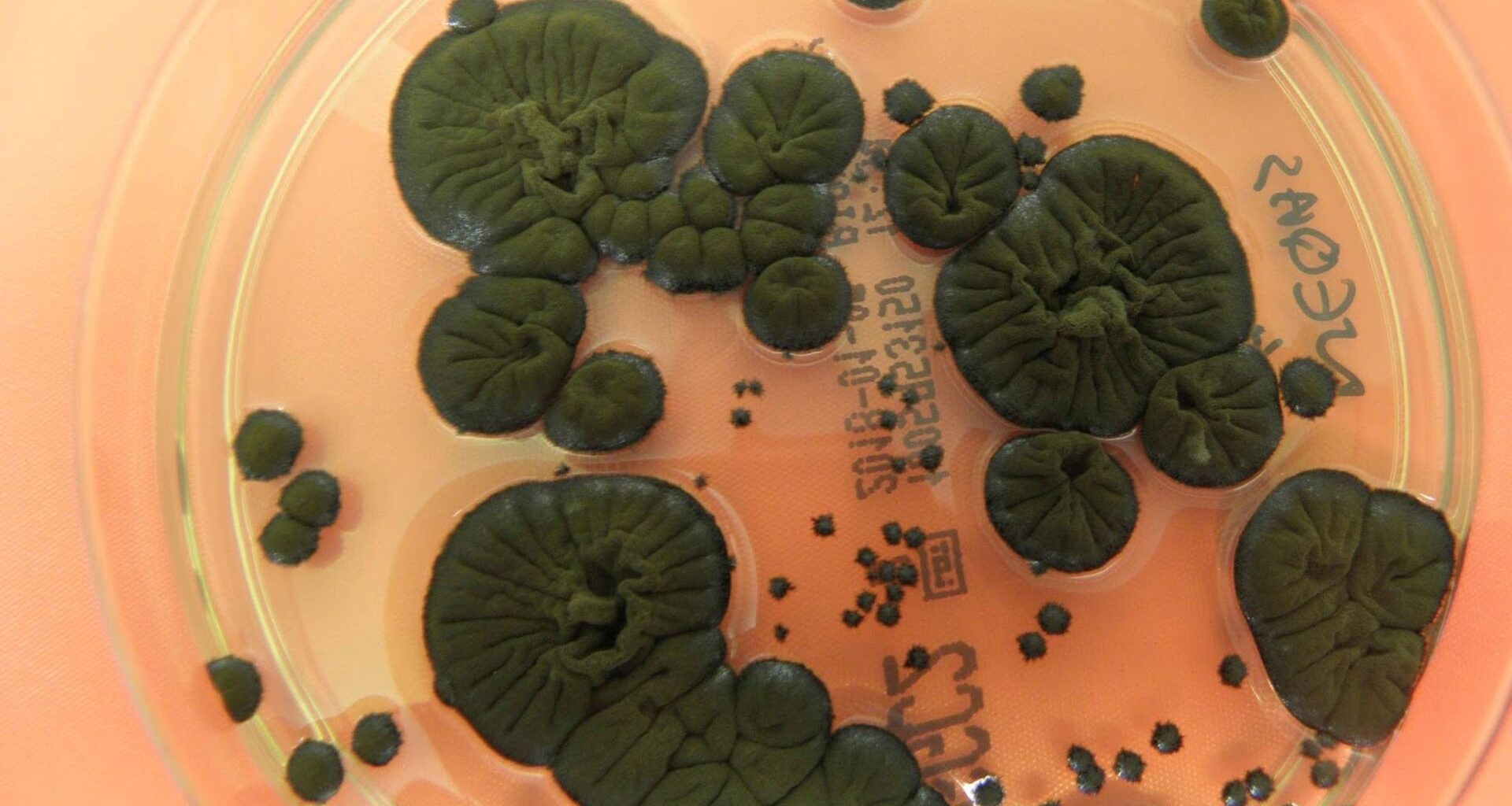
Life has a strange way of thriving in the most extreme places. A peculiar dark-black fungus at the Chernobyl disaster site is found to survive by feeding on deadly radiation.
The catastrophe happened on April 26, 1986, when a routine safety test at Chernobyl’s Reactor Four spiraled into the world’s worst nuclear accident, caused by design and operational errors.
To mitigate radiation poisoning, a 30km (19-mile) “exclusion zone” was established, keeping humans out. Despite the danger, some researchers have conducted studies on how radiation affects the surrounding environment.
For instance, in 1997, Nelli Zhdanova, a Ukrainian mycologist, discovered black mould colonizing the highly radioactive ruins of the Chernobyl nuclear plant, growing across walls, ceilings, and even inside the reactor building.
Far from avoiding the toxic environment, the investigation suggested the fungi were uniquely attracted to the ionizing radiation.
This remarkable discovery — that life could thrive and grow in the presence of radiation — has challenged established ideas about life’s resilience. It also introduced the potential for using this mould in applications such as cleaning up radioactive sites and shielding astronauts from cosmic radiation in space.
The role of melanin
The ionizing radiation, typically a destroyer of DNA and cells, appeared to be a nutrient for these resilient fungi.
Melanin seemed to be the secret. The same pigment that gives us different skin tones and protects us from UV rays is packed into the cell walls of these Chernobyl fungi.
Initial theories suggested melanin shielded the black mould.
However, a 2007 study by a nuclear scientist revealed a key finding: the melanized fungi grew 10 percent faster when exposed to radioactive Caesium, suggesting they actively used the radiation for metabolic energy. This process was called radiosynthesis.
“The energy of ionising radiation is around one million times higher than the energy of white light, which is used in photosynthesis,” Ekaterina Dadachova, nuclear scientist, told the BBC.
“So you need a pretty powerful energy transducer, and this is what we think melanin is capable of doing – to transduce [ionising radiation] into usable levels of energy.”
Further studies found that not all melanized fungi exhibit this behavior, and one study even found no growth difference in tested fungi when exposed to radiation.
Intrigued, the international scientific community sent samples of Cladosporium sphaerospermum — the same strain found in Chernobyl — to the International Space Station (ISS).
Protecting astronauts and habitats
What happened next cemented the mould’s cosmic potential. In the face of intense cosmic radiation, the fungi flourished, exhibiting a growth rate 1.21 times that of control samples on the ground.
Interestingly, the ISS experiment also showcased the mould’s potential as a protective barrier. As the fungi developed, they shielded a notable amount of radiation compared to control areas.
From these experiments, experts suggest that the mould’s perceived radioprotective benefits might not be solely due to melanin, but possibly other biological components, such as water.
Galactic cosmic radiation, a storm of high-speed charged protons from exploding stars, is “the greatest hazard” to astronauts venturing beyond Earth’s protective atmosphere.
Standard shielding solutions, such as heavy metals, are expensive and heavy to launch into space. This Chernobyl mould offers a simple, biological alternative.
NASA astrobiologist Lynn J. Rothschild envisions “myco-architecture”— habitats grown from fungi on the Moon or Mars. These living walls wouldn’t just be structural; they would be self-regenerating radiation shields, grown in situ, drastically cutting launch costs.
Having colonized a toxic site like Chernobyl, these fungi may ultimately protect astronauts in the near future.