
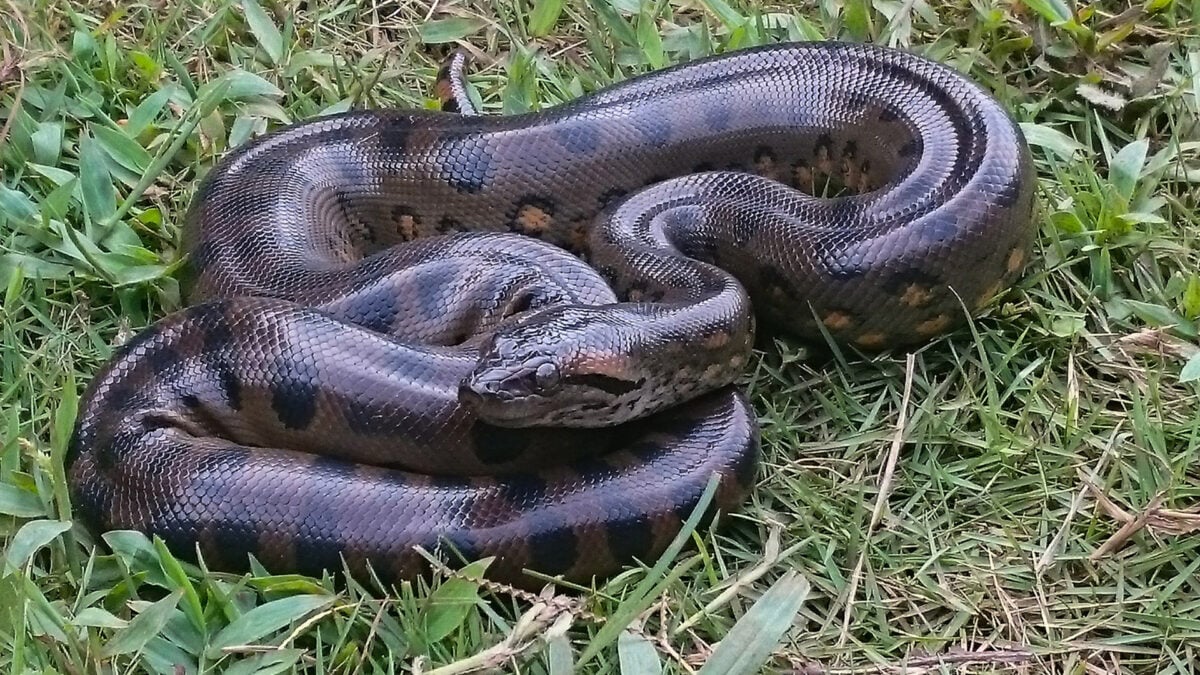
During the Middle to Upper Miocene period (12.4 to 5.3 million years ago), giant animals walked—and slithered—the Earth thanks to warmer temperatures, larger wetlands, and greater amounts of food. Many of their descendants today are significantly smaller, but anacondas (Eunectes) have proven to be unexpectedly stubborn.
Researchers investigated 12.4-million-year-old fossils from Venezuela to understand how large ancient anacondas were compared to their relatives today. They found that these early serpents would have been 13 to 16 feet (4 to 5 meters) long on average. That aligns with the usual size of today’s anacondas, meaning these tropical reptiles have remained humongous for millions of years.
Unlike other giant species, which reached their peak size during the Miocene before dying out and getting replaced by smaller species in the Pliocene, “large Eunectes has persisted in tropical South America to the present,” the researchers wrote in their study, published today in the Journal of Vertebrate Paleontology.
Long-term giants
Specifically, the team measured 183 fossilized backbones from at least 32 anacondas. Anacondas can have over 300 vertebrae, but the size of just one allows researchers to reliably reconstruct how long the snake was. This analysis, along with fossil data from elsewhere in South America, revealed that anacondas reached their maximum size 12.4 million years ago. They continued being huge, even when many other giant species went extinct.
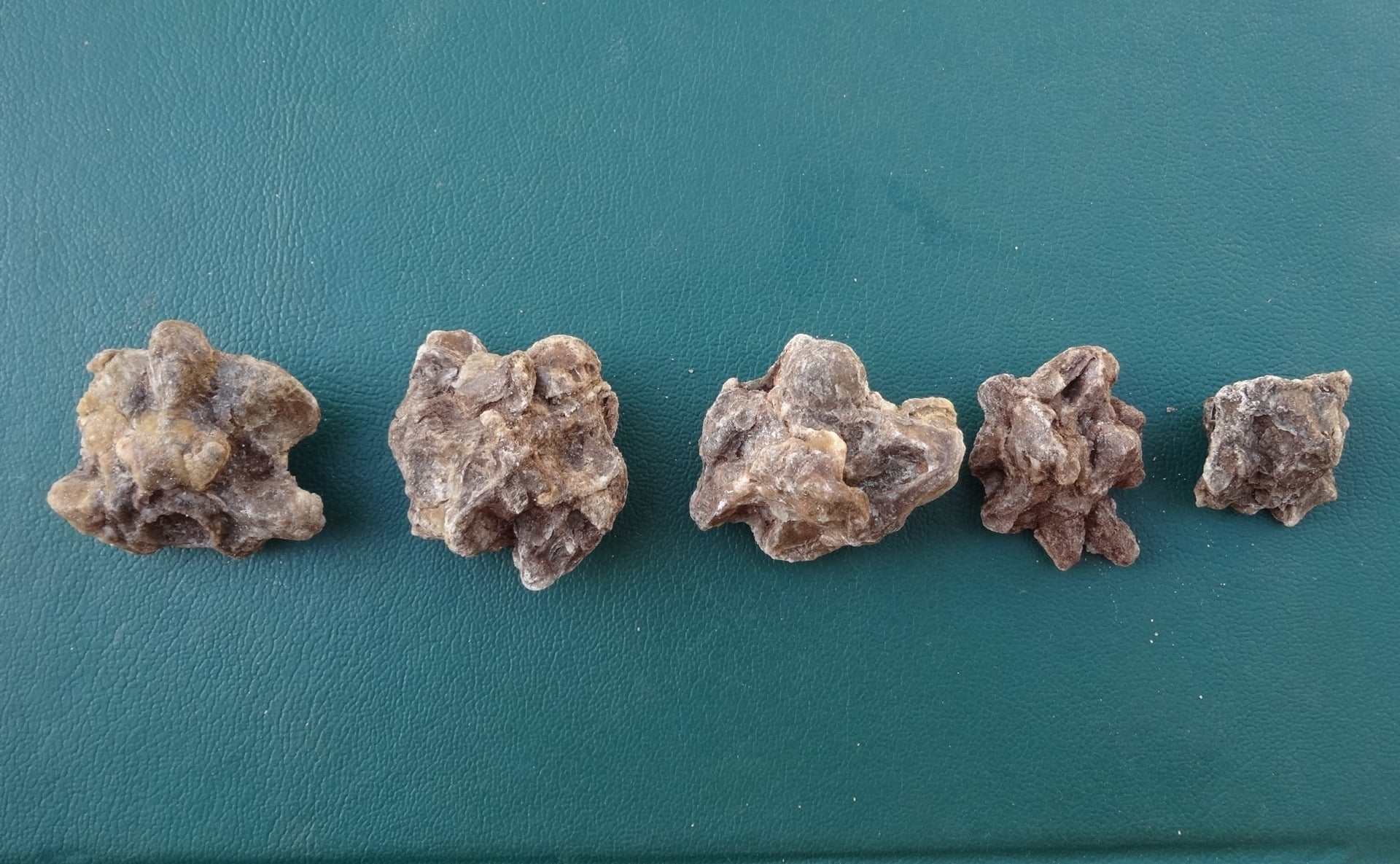 Anaconda fossils. © Jorge Carrillo-Briceño
“Other species like giant crocodiles and giant turtles have gone extinct since the Miocene, probably due to cooling global temperatures and shrinking habitats, but the giant anacondas have survived—they are super-resilient,” Andrés Alfonso-Rojas, lead author of the study and a PhD student in the Department of Zoology at the University of Cambridge, said in a statement by the University of Cambridge. “By measuring the fossils we found that anacondas evolved a large body size shortly after they appeared in tropical South America around 12.4 million years ago, and their size hasn’t changed since.”
Double-checking their results
Alfonso-Rojas and his colleagues also used an approach called the ancestral state reconstruction, which consisted of reconstructing the length of giant anacondas and related species of extant snakes with a snake family tree. This method confirmed that when anacondas first emerged during the Miocene, they would have been on average 13 to 16 feet (4 to 5 meters) long.
“This is a surprising result because we expected to find the ancient anacondas were seven or eight metres long,” Alfonso-Rojas explained. That’s about 23 to 26 feet long. “But we don’t have any evidence of a larger snake from the Miocene when global temperatures were warmer.” Snakes are especially sensitive to temperature, so researchers thought snakes would have been larger back then.
Anacondas are some of the world’s largest snakes and thrive in swamps, marshes, and big rivers like the Amazon. They had it great during the Miocene, when all of northern South America would have been similar to the current Amazonian region. Today there are significantly fewer anacondas than back then, but they still have enough habitats and food to sustain their gigantism.
Good thing other species didn’t stick around at their original size. Could you imagine if we still had megalodons swimming around?