
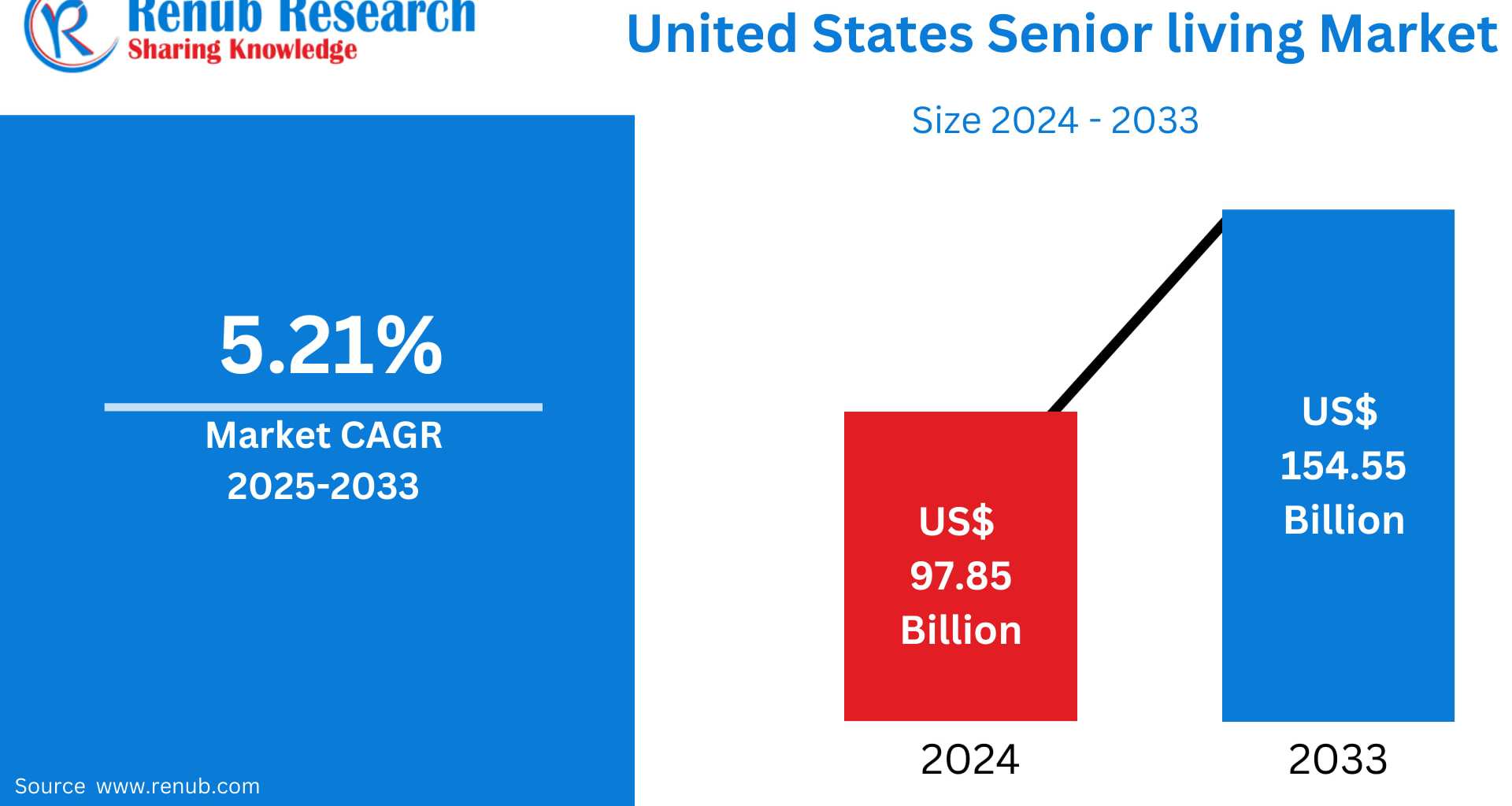
The United States Senior Living Market is entering a major expansion phase, driven by the country’s rapidly aging demographic, rising life expectancy, and a notable shift toward wellness-centered, community-based living options. According to Renub Research, the United States Senior Living Market is expected to reach US$ 154.55 billion by 2033, up from US$ 97.85 billion in 2024, growing at a CAGR of 5.21% from 2025 to 2033. This growth underscores a transformative shift in how older Americans prefer to age—prioritizing independence, quality of life, and access to health and social support.
As America approaches a historic demographic milestone—where seniors will outnumber children for the first time—facilities including independent living, assisted living, memory care, and nursing care are experiencing unprecedented demand. Aging baby boomers represent the largest retiree population in U.S. history, and their preferences for active, connected, and technologically integrated living environments are reshaping the entire industry.
United States Senior Living Market: Industry Overview
The U.S. senior living sector is undergoing a significant evolution, fueled by changing expectations and remarkable advancements in healthcare and technology. More than 10,000 Americans turn 65 every day, and the population aged 80+ is projected to grow from 13.9 million to 20.8 million within a decade, far outpacing overall population growth. This demographic wave is creating sustained demand for senior living infrastructure across the country.
Modern senior living communities no longer operate solely as care facilities; they have transformed into lifestyle-centric ecosystems built around autonomy, health, social interaction, and convenience. Operators are upgrading facilities with smart home features, onsite healthcare, luxury amenities, and diverse recreational programs. Telemedicine rooms, advanced memory care technologies, fitness centers, and integrated chronic disease management are becoming standard across the industry.
The sector is also experiencing significant consolidation and large-scale expansion. In 2024, Erickson Senior Living announced a $4 billion nationwide development plan, including a 12-story senior living tower in Bethesda and a new 62-acre community in Clarksville, Maryland. The expansion reflects a rising preference for upscale, hospitality-inspired senior living environments—an area where demand continues to outstrip supply in many regions.
Financially, the senior living industry remains attractive to private equity firms and real estate investment trusts (REITs) due to predictable revenue streams and long-term growth potential. However, the industry also grapples with challenges such as staffing shortages, regulatory pressure, and rising operational costs. Still, ongoing innovation in care delivery, wellness programs, and community design places the U.S. senior living market on a steady trajectory of sustained growth through the next decade.
Key Factors Driving Market Growth
1. Aging Population and Demographic Shifts
The most influential growth factor for the U.S. senior living sector is the country’s rapidly aging population. With 10,000 Americans crossing age 65 daily, long-term demand for assisted living, independent living, memory care, and CCRCs is guaranteed. Seniors are living longer but also requiring more support with activities of daily living, healthcare, and social engagement—needs often unmet within traditional home environments.
Moreover, the baby boomer generation is distinctive for its desire for independence, comfort, and purposeful living. This demographic prioritizes communities that offer safety, lifestyle enrichment, medical support, and opportunities for continued learning and socialization. The combination of longevity and evolving lifestyle preferences ensures that all senior living categories will experience robust demand through 2033 and beyond.
2. Shift Toward Wellness, Lifestyle, and Preventive Health
Today’s seniors no longer view retirement as a period of decline but as an opportunity to maintain active, healthy, and socially fulfilling lives. This shift has pushed senior living operators to rethink community design, programming, and services.
Modern communities now emphasize:
Fitness centers and yoga studios
Nutrition counseling and wellness coaching
Creative and educational programs
Outdoor living spaces and green design
Social clubs and community events
Telehealth and health monitoring solutions
This wellness-forward approach aligns with the expectations of aging boomers who demand more than just physical care—they seek vibrant, meaningful living experiences.
3. Rise in Chronic Diseases and Cognitive Impairment
Chronic illnesses such as diabetes, heart disease, mobility disorders, and dementia are increasing with age, fueling demand for specialized care settings. Memory care units, skilled nursing services, and continuous medical support are becoming indispensable components of senior living communities.
Facilities offering aging-in-place models, where seniors transition seamlessly from independent living to advanced care, are particularly popular. These comprehensive communities reduce the emotional and financial stress associated with relocating and allow families to secure long-term, holistic support for their loved ones.
Growing medical needs paired with the desire for compassionate, dignified care are among the strongest drivers of market expansion in the coming years.
Major Challenges Affecting the Market
1. Workforce Shortages and High Turnover
One of the most pressing challenges is the industry’s struggle to attract and retain skilled workers, including nurses, caregivers, and support staff. High turnover, increasing workload, and limited career advancement opportunities have created an environment where staffing remains unstable.
Recruitment and retention challenges lead to:
Higher operational costs
Lower resident satisfaction
Strain on care quality
Difficulties meeting regulatory standards
To address these issues, operators are investing in competitive wages, career development programs, and caregiver wellness initiatives. However, workforce stability remains a long-term concern.
2. Rising Operational and Real Estate Costs
Senior living is a capital-intensive market, with major expenses tied to real estate, staffing, insurance, food services, utilities, and compliance. Inflation and construction cost surges have affected new developments and renovations across the country.
This cost pressure has created an affordability gap for middle-income seniors, who often do not qualify for subsidized programs yet cannot afford higher-end private communities. Balancing quality care with cost efficiency will be critical for operators aiming to reach wider demographic groups.
United States Senior Living Market by States
California
California hosts one of the most advanced senior living markets in the nation, supported by a large, aging population and a robust healthcare ecosystem. Demand is exceptionally strong in metropolitan regions such as Los Angeles, San Francisco, and San Diego. Despite high real estate and labor costs posing profitability challenges, California remains a top market for providers targeting both luxury and mid-range sectors. The state’s progressive health policies and emphasis on wellness-centered aging contribute to continuous innovation and investment.
Texas
Texas is among the fastest-growing states for senior living due to its population size, low taxes, business-friendly climate, and affordable living costs. Cities like Houston, Dallas, and Austin are seeing rapid expansion of independent and assisted living communities. Texas also attracts retirees from other states, adding to demand. While workforce shortages remain an issue, the state offers exceptional growth potential for developers and operators seeking scalable, cost-efficient markets.
New York
New York’s senior living market is characterized by dense population centers, high demand, and stringent regulatory requirements. Regions such as New York City, Long Island, and Westchester show strong appetite for premium senior living, memory care, and specialized communities. However, high operating costs and real estate prices present barriers for new entrants. Increasingly, culturally tailored senior communities and nonprofit providers are contributing to sector growth.
Recent Industry Developments
July 2024: The Centers for Medicare & Medicaid Services announced over 400 participants in a new dementia care program under the Guiding an Improved Dementia Experience Model, offering respite care, care management, and coordination support.
May 2024: PACS Group announced the acquisition of operations for 53 senior living and skilled nursing facilities across eight states, expanding its national footprint and entering five new markets.
Market Segmentation
By Property Type
Assisted Living
Independent Living
Memory Care
Nursing Care
Other Property Types
By States
California
Texas
New York
Florida
Illinois
Pennsylvania
Ohio
Georgia
Washington
New Jersey
Rest of United States
Key Companies Covered
Brookdale Senior Living Inc.
Five Star Senior Living
Sunrise Senior Living
Holiday Retirement
Kisco Senior Living Company
LCS
Erickson Senior Living
Atria Senior Living Inc.
Senior Lifestyle
Sonida Senior Living
Final Thoughts
The United States Senior Living Market is poised for substantial, long-term growth as the country’s aging population expands and preferences shift toward premium, wellness-driven living environments. While workforce shortages, rising costs, and regulatory challenges persist, the industry’s transformation toward lifestyle-focused, technologically connected, and medically supportive communities positions it for sustained success through 2033.
As baby boomers seek vibrant, purpose-filled retirement years, senior living providers that innovate, expand, and invest in integrated care models will lead the market. With a projected value of US$ 154.55 billion by 2033, the industry is not only growing—it’s redefining what aging in America looks like.