
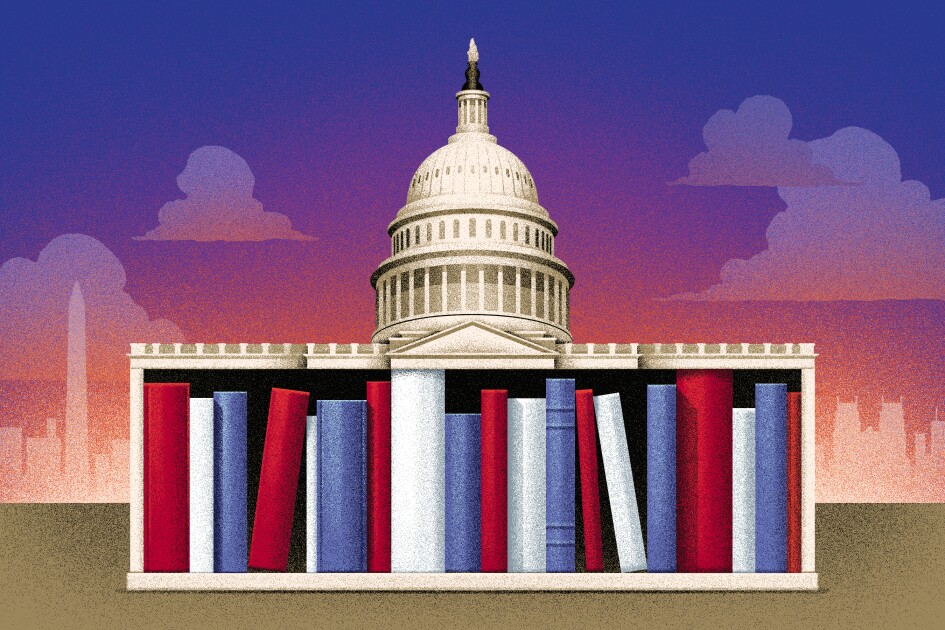
Vladimir Kogan is a professor of political science at Ohio State University and the author of the new book No Adult Left Behind: How Politics Hijacks Education Policy and Hurts Kids. The book drew attention for its tough-minded critique of school boards and call for reforming school governance. Kogan is a scholar of American politics, democracy, and education, all of which make him especially well-suited for this thorny conversation. I reached out to chat with him about his take. Here’s what he had to say.
—Rick
Rick: Recently, you published a new book, No Adult Left Behind: How Politics Hijacks Education Policy and Hurts Kids. That’s a no-holds-barred title. What are you arguing?
Vladimir: My thesis is that the core problem in public education is local voter control. Most of the voters who participate in school board elections don’t have school-age children. This produces a governance system gerrymandered to serve the interests of adults rather than students. And adult voting behavior is influenced by all sorts of considerations that are either unrelated to the quality of education or even in conflict with running effective schools.
Rick: Where did your interest in school boards come from?
Vladimir: I’ve been sort of obsessed with school boards since I first attended meetings as the editor of my high school newspaper. This book builds on academic research that I’ve been doing with my colleagues here at Ohio State and at Emory. We received a grant from the Spencer Foundation to collect data on school board elections and school tax referenda in about 20 states, which resulted in several published studies. This book hopes to make the key findings more accessible to the general public.
Rick: You suggest that there have been big changes in education politics since the Bush-Obama years. What are the most significant, to your mind, and what’s driven those?
Vladimir: I think the Bush-Obama era was the golden age for public education. Despite the problems with No Child Left Behind, we set a high-water mark on the National Assessment of Educational Progress during that period. The central premise of the Bush-Obama consensus was that schools exist to educate kids—to ensure that they had a minimal level of proficiency in core academic subjects. There was also a shared recognition that this wasn’t happening for many disadvantaged students, especially students of color. The bipartisan consensus was to combine clear academic standards, accountability based on those standards, improvements to teacher quality, and, if nothing else worked, school choice.
Unfortunately, that consensus is gone. The Democratic Party has become a wholly-owned subsidiary of the teachers’ unions. The Republican Party has soured on standardized tests and accountability. And both have decided to use public schools as a battlefield for adult culture wars.
Rick: You call for more rigorous assessments of the health of democracy when it comes to schooling. What do you have in mind?
Vladimir: My frustration with traditional research about democratic processes within school districts is that they focus on the wrong things. Research often examines topics like voter turnout, public participation in board meetings, and responsiveness to public opinion. But there is little reason to think these metrics directly capture the quality of education. If you’re studying education governance and you’re measuring the same things you would if you were examining Congress, that’s a big problem. We should instead assess the health of school governance by how it impacts academic outcomes.
Rick: In the book, you argue that “polarization is a top-down, elite-driven process.” What does that mean for local fights over schooling?
Vladimir: I think the best example of this is what happened during COVID-19. We know that partisanship—not objective public-health conditions—was the single most powerful predictor of when a district reopened for in-person learning. But there is no coherent reason why reopening schools should be a Democrat vs. Republican issue. I identified the two-week period when public opinion on this issue polarized, and the only thing that happened during that period was that Donald Trump said schools should reopen. Voters shifted their attitudes based on their view of the president. But I show in the book that COVID wasn’t unique. Polarization on education issues often increases when public officials take positions on them.
Rick: You suggest that school boards often make decisions that are bad for students. What’s going on?
Vladimir: The core problem with school boards is that voters don’t use their ballots to punish or reward school board incumbents for academic outcomes. When you look nationally, change in student learning has almost no effect on whether incumbents are reelected. This allows school boards to make decisions that prioritize other considerations—jobs, property values, partisanship—even at the expense of educational quality without incurring a penalty for doing so.
Rick: You propose some reforms intended to make school boards more accountable. What do you have in mind?
Vladimir: I think we can make things better on the margin through three reforms. First, we should move school board elections to the same day as federal contests, when we know a larger share of voters are parents. Second, instead of putting party labels on the ballot for local school board races, we should print the school districts’ academic-achievement growth. That would make achievement growth more salient to voters. Third, school choice provides an alternative form of accountability. I think the evidence is compelling that when you introduce choice and make districts compete for students, academic quality in the district improves. These are not silver bullets, but they will make things a bit better.
Rick: In recent years, discussion of education politics has tended to be driven by teachers’ unions, on one side, and conservative activists, on the other. Where do these groups fit into your narrative?
Vladimir: Unions are a big part of the story. In too many communities, schools are treated as adult employment agencies. Culture war activists, both conservative and liberal, play a major role, but so do property owners who want to maximize the value of their homes. There is a common theme among all these groups: The thing they are most passionate about is not educational quality. That’s not to say their concerns are not legitimate, but their goals often come at the expense of good teaching and learning.
Rick: As you know, some readers will say that what you call “culture war” is really just about ensuring that schools respect the values of their communities. What do you make of such arguments?
Vladimir: I have two responses. First, what “respect the values of the community” means in practice is that schools reflect the values of the majority voting bloc in school board elections, which is usually older childless adults. I don’t see how letting other adults in your community impose their values on your kids is consistent with the idea that parents, not the government, get to direct the upbringing of their children. A unanimous Supreme Court upheld this principle more than a century ago.
Second, there are unintended consequences to these culture war skirmishes. I show in my book that the wave of conflict, animosity, and staff turnover that follows these conflicts end up disrupting learning.
Rick: As you note in the book, John Chubb and Terry Moe famously argued back in 1990 that school choice was so appealing because public school governance was dysfunctional. What do you make of their critique, and how does your argument apply to the politics of school choice?
Vladimir: I completely agree with Chubb and Moe on the big picture and I often joke that my book is just a sequel to theirs. But my argument departs from theirs in two ways. First, they focus mostly on teachers’ unions and bureaucratic rules. They don’t account for homeowners, political parties, or identity politics. Once you add in those things, the dysfunction gets much worse. The second modest disagreement is precisely about school choice. They famously argued that school choice would be a “panacea” for all of the governance problems. As I’ve already said, I totally support school choice, but I’m more skeptical about its ability to fully fix these issues. The reality is that a school’s distance from home can be a major constraint for parents. It can also be very difficult for parents to compare school quality.
Rick: You call for student achievement to be the North Star of education governance, yet many parents and policymakers have questions about the reliability and validity of state test scores. What’s your take?
Vladimir: First, I just reject the premise of the question, at least with regard to parents. A number of studies have found that, when you ask people to choose between different schools and give them different attributes of those schools, test scores are always at the top of the list in driving behavior. In cities that use centralized enrollment systems, test scores are the single best predictor of how parents rank schools. Their revealed preferences show they do care about test scores. And when you ask voters if they support annual standardized testing, it’s one of the most popular, bipartisan policies you can find. So, the crazy online people, true-believer activists, and ed. school professors who raise the doubts you mention are not representative of the broader population. The problem is not that parents don’t care about test scores but rather that parents are not the ones who have the political power needed to make policy.
Rick: Finally, what’s one piece of advice for educators seeking to foster a healthier education discourse?
Vladimir: Wow, that’s a tough one. I would say it’s to assume that everyone—even those we strongly disagree with—is acting in good faith. For example, in the context of the LGBTQ+ education issues, it seems people view their opponents either as “groomers” or “transphobes.” That’s just not a productive way to engage on political issues where reasonable people with different values may disagree. But we also have to remember that the road to hell is paved with good intentions. Let’s spend less time arguing about whether folks we disagree with are bad people and more time thinking through how different policies actually impact students in the classroom.