
It would be ridiculous to suggest that the Chicago Cubs’ offense will be better next year without Kyle Tucker. Subtracting a left-handed hitter who routinely produces between 4- and 5-WAR seasons will leave a hole in the middle of the lineup and in the club’s oft-cited projection systems.
That deficit shouldn’t be glossed over.
Perhaps organizations will downgrade Tucker as a free agent, taking into account a few injuries and his quiet second half in 2025. But the baseball industry has repeatedly graded him as an elite talent, from the first round of the 2015 draft to the annual prospect rankings to the awards he’s collected throughout his career — a Gold Glove, two Silver Sluggers, four All-Star selections and a World Series ring.
The Cubs paid what they considered to be an enormous price to acquire Tucker from the Houston Astros in a blockbuster trade last offseason, knowing that he would very likely be a one-and-done player in Wrigleyville. Even if Tucker doesn’t reach the same contractual stratosphere as Vladimir Guerrero Jr.’s 14-year, $500 million extension with the Toronto Blue Jays, the top name on The Athletic’s Free Agent Big Board will be rewarded handsomely.
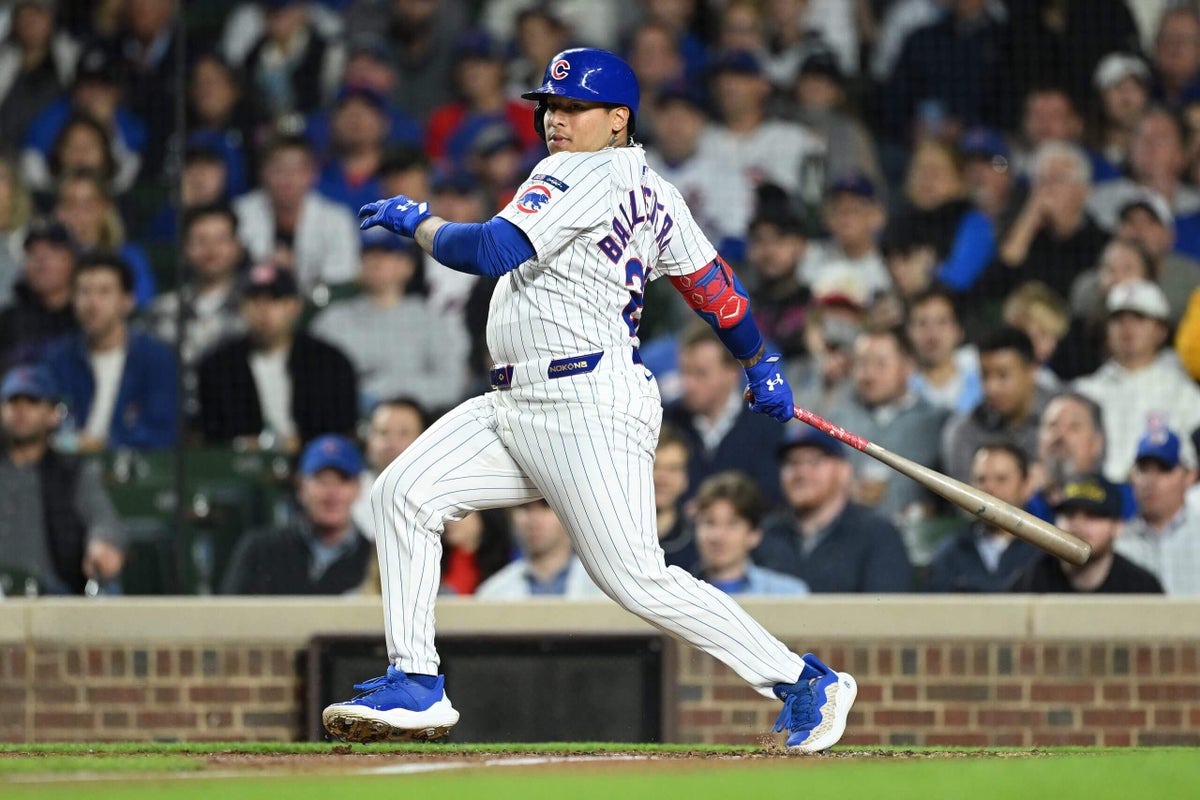
In that event, Cubs officials will continue working on their plans to replace Tucker, reallocating resources to different parts of the roster, utilizing Seiya Suzuki more in right field, and creating the runway for young hitters Owen Caissie and Moisés Ballesteros to develop and improve at the major-league level.
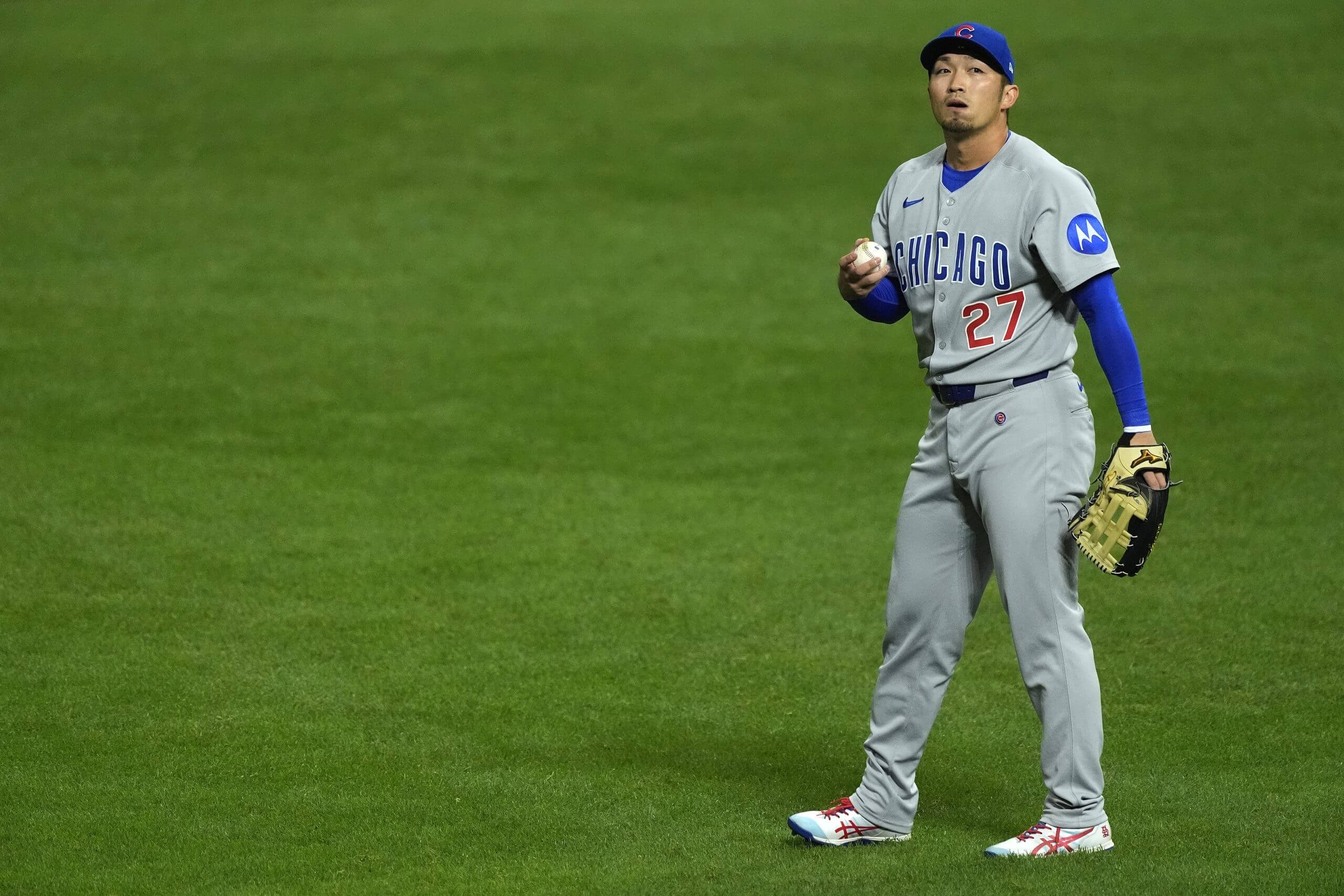
Seiya Suzuki, who primarily played DH in 2025, could see more runway in right field come Opening Day 2026. (Patrick McDermott / Getty Images)
During this period before next week’s Winter Meetings, Jed Hoyer’s front office remains focused on adding to the pitching staff in quantity and quality.
Another stated offseason goal — improving the bench — would allow manager Craig Counsell to play more matchups and provide coverage in case the club doesn’t stay as healthy in 2026. The Cubs featured six position players who appeared in at least 150 games this year — a group that did not include Tucker — and they know next season might not be as fortunate.
With Caissie and Ballesteros, the Cubs can point to successful recent examples of sticking with young talent, allowing them to make mistakes and learn on the job.
“That’s the lifeblood of baseball today,” Hoyer said during his end-of-season media briefing in October. “You have to have good young players. Those are the guys that have real upside that can surprise you and (lead to) great years even beyond projections.”
Patience and repetition factored into the year-over-year-over-year growth shown by Pete Crow-Armstrong, who evolved from an overmatched September call-up into a positive defensive contributor and then an All-Star center fielder.
Matt Shaw first needed a detour back to Triple-A Iowa, but he kept working at a new position and became a Gold Glove finalist at third base, all while bouncing back from a poor offensive start and finishing with numbers that made him a league-average hitter.
Michael Busch is older (now 28), but he’s run with the opportunity ever since the Cubs acquired him in a trade with the Los Angeles Dodgers after the 2023 season. No longer blocked by multiple Hall of Fame-caliber players, Busch has turned himself into an offensive force (34 homers, 90 RBIs), a plus-defender at first base and an outstanding playoff performer.
Things can change quickly during an offseason, but the Cubs are currently projecting regular playing time for Caissie, a consensus top-100 prospect whose name was prominently mentioned in trade discussions last offseason, and again around this year’s trade deadline.
In not executing a major deal at that point, the Cubs retained Caissie, a left-handed slugger who doesn’t have anything left to prove in Iowa after generating an .887 OPS (and 277 strikeouts) in nearly 1,000 Triple-A plate appearances across the past two seasons.
“It was stressful,” Caissie said in the Wrigley Field clubhouse shortly after the trade deadline. “I tried to do my best not to pay attention to anything. It’s obviously kind of impossible.”
The Cubs want to finally see what they really have in Caissie, 23, the only significant piece remaining from the Yu Darvish trade with the San Diego Padres, which was finalized five years ago this month. That long wait made it particularly frustrating when Caissie went on the injured list with a concussion in the middle of September — the same time that Tucker was sidelined with a calf strain.
Ballesteros took advantage of that opportunity, hitting .333 with a .999 OPS in 14 September games. That sample is obviously limited, and late-season evaluations can be tricky. At that moment, however, Counsell was very impressed with a left-handed hitter who had not yet turned 22. The manager essentially waved off a question about Ballesteros’ defensive work at first base and catcher.
“He’s been an exceptional hitter since he’s been here,” Counsell said. “That’s the best development for Moisés. He’s come up to the big leagues and shown everybody what a natural hitter he is (while being) put in the fire against some tough, tough competition. The rest is a bonus.”
Coming out of Venezuela, Ballesteros had demonstrated those instincts, excellent hand-eye coordination and a surprising amount of athleticism, given his stocky frame. With that September performance, the Cubs gained the confidence to put him on their active roster for both playoff rounds and move forward with the expectation that he can be a foundational part of their lineup.
“We already saw it, to a certain extent,” Hoyer said. “He has a low strikeout rate. He’s on time against so many different pitches. The stuff didn’t seem to faze him in the big leagues. He showed the ability to pull for power. He showed the ability to hit for power the other way. He showed the ability to take a single the other way. He’s a very versatile hitter in that regard.
“It feels like he’s just ready to hit aggressively. There’s not obvious holes. He’s not swinging and missing. He’s a good, balanced hitter with power.”
Inexperience means Ballesteros and Caissie likely won’t replicate Tucker’s fast start with the Cubs, when he looked like a leading MVP candidate. Tucker, however, played in only 41 games after the All-Star break (.738 OPS), substantially lowering the external pressure to sign him to a long-term contract.
While Hoyer’s group still has a lot of work to do on the pitching side — and persistent questions about the payroll parameters for baseball operations remain — the Cubs are holding together most of the nucleus that won 92 games and the franchise’s first postseason round in seven years.
“Kyle was a big part of that,” Hoyer said during MLB’s GM meetings. “But I do think that we have a very capable position-player group, a playoff-worthy group.”