
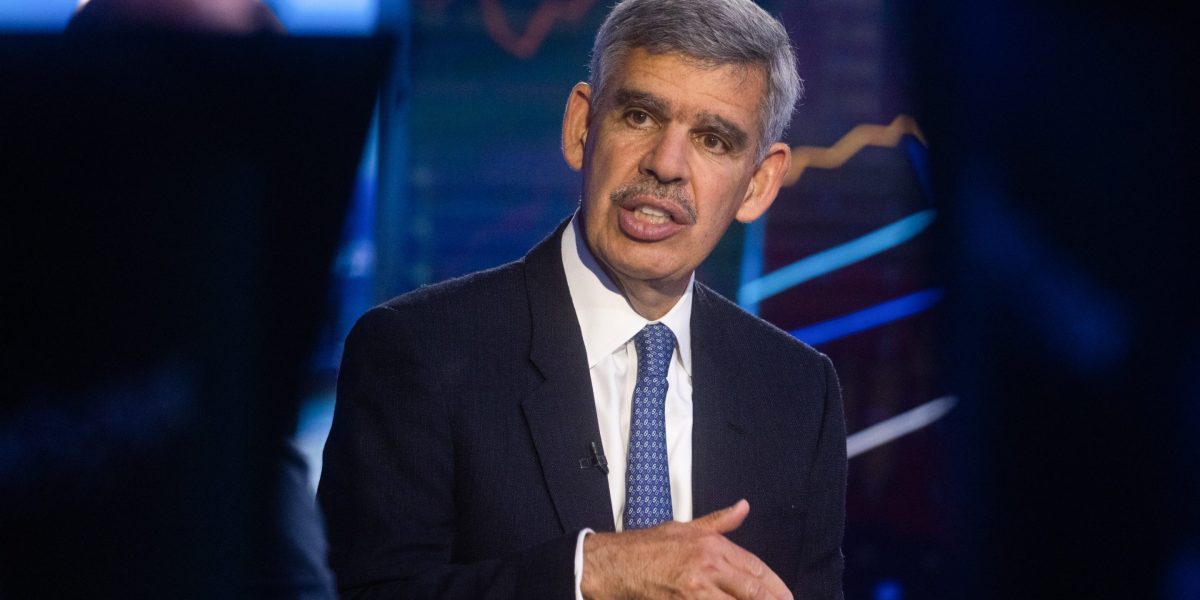
As the Federal Reserve eyes a period of transformation to a new chairman, famed economist Mohamed El-Erian is of the opinion that it can’t come soon enough.
The former Pimco CEO echoed calls from the likes of Treasury Secretary Scott Bessent for the Federal Reserve—and indeed its interest rate-setting committee—to take more of a back seat in economic debate and instead focus on the big picture.
“This Fed went to sleep,” El-Erian, president of Queens College at the University of Cambridge, told CNBC. He said the independent central bank needs to admit it made some mistakes: It needs to think about scenario analysis as opposed to point estimates, it needs to look more closely at supply-side economics, and it needs to improve its culture of compliance.
“There’s a lot of things that we have to focus on [at] the Fed because it’s so central to our economic wellbeing,” he added.
El-Erian said Bessent’s estimation of the future of the Fed is “perfect,” adding: “We don’t need a play-by-play Fed, we need the Fed to cool it. We need the Fed to step back and take a bigger, visionary view, and we need reforms. We desperately need reforms, and I think all five on the shortlist are committed to reforming that insitution, which is critical not just for the U.S. but for the global economy.”
Of the candidates on the shortlist, a frontrunner is already emerging. While interest in who the next Fed chairman will be has rumbled on all year—spurred by President Trump’s battle against “Too Late” Powell—speculation has spiked over the past 48 hours after the White House confirmed a decision on the nominee has been made.
The White House has been transparent about potential names on the list: “two Kevins” (Trump’s chief economic advisor Kevin Hassett and former Fed governor Kevin Warsh) as well as some names within the Fed. These have included current Federal Open Market Committee members such as governors Chris Waller and Michelle Bowman. BlackRock’s Rick Rieder has also been a name floated.
At the time of writing, Hassett leads the polls as the person most likely to receive Trump’s backing, with odds on prediction markets platform Kalshi sitting at 80%. Next is Warsh at 10%, and Governor Waller at 4%.
Bessent is already prepping Wall Street on what to expect from a reimagined Fed. Analysts may not like it, as they’ve grown accustomed to poring over the details of speeches made by various Fed presidents and governors. “I think we just need to calm down all these speeches by bank presidents that are just redundant,” Bessent said last week. “Why don’t they actually just come out and talk about the meaningful issues [for] the American people, rather than the short-term view of the next meeting?”
The spikes in expectations for a Fed cut in December are evidence of why the Fed needs to take more of a backseat approach, added El-Erian, referencing the likes of CME’s FedWatch tracker, which has increased from a 50/50 likelihood of a cut at the next meeting to odds at the time of writing of more than 87%.
“It’s crazy,” El-Erian said. “This should not happen. The whole point of forward guidance is predictability and stability. So there is something wrong that has to be addressed. The rest of the world looks at this and says, ‘Wait a minute, the Fed is at the core of the system and there’s so much volatility in what they expect they’re going to do in a few weeks, what’s going on here?’”
A question of independence
Investors will be watching closely to ensure the upheaval doesn’t stray anywhere close to a threat on the central bank’s independence. Earlier this year, markets revolted after President Trump threatened to fire Powell, a claim walked back when investors kicked strongly against political intervention into the leadership of the Fed.
UBS chief economist Paul Donovan already signalled to clients he is keeping an eye out for such outcomes, saying Hassett’s leadership could draw “parallels” to a disastrous relationship between President Nixon and Fed chairman Arthur Burns in the 1970s. However, Donovan did caveat the concern with the fact that some members of the current Federal Open Market Committee (FOMC) have been known to pull away from the consensus vote when they feel it’s needed.
Deutsche Bank also outlined in its 2026 world outlook that among the risks facing the U.S. is the “potential infringement on Fed independence,” and analysts won’t be waiting long to see the factor come into play.
January marks the beginning of the Supreme Court hearings for Fed Governor Lisa Cook, who is challenging President Trump over his bid to remove her from her post. As Deutsche Bank noted: “This case is pivotal as it challenges the President’s ability to dismiss a sitting Fed Governor, with potential implications for the independence and stability of the Federal Reserve.”