
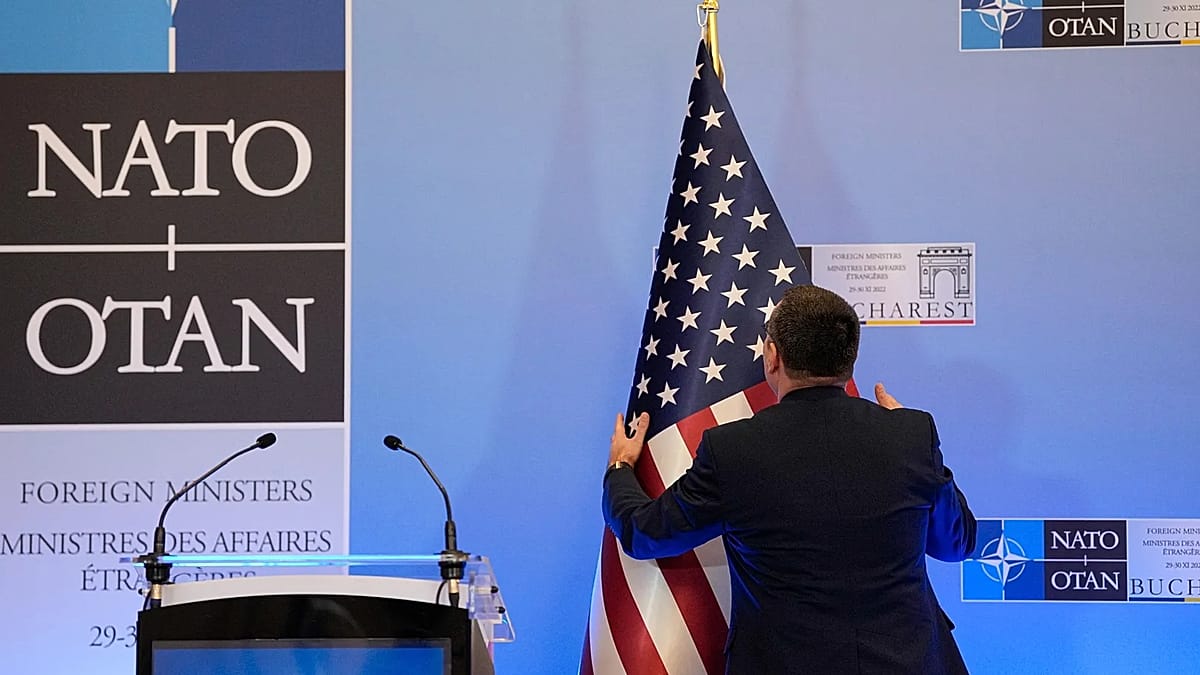
NATO Secretary General Mark Rutte brushed off fresh concerns about the United States’ commitment to the military organisation on Tuesday on the eve of a meeting of allied foreign ministers focused on Russia’s war against Ukraine.
US Secretary of State Marco Rubio will not attend Wednesday’s meeting, which will take place during high-stakes negotiations in Moscow and elsewhere in Europe on Ukraine’s future.
Rubio’s rare absence at the US-led alliance comes after President Donald Trump’s 28-point proposal to end the almost four-year war dismayed European allies and Canada last month.
Speaking to reporters ahead of the meeting, Rutte underlined that Rubio has a busy schedule.
“He’s working extremely hard to take care not only of the situation of Ukraine, but of course many other issues which are on his plate,” Rutte said.
“So I totally accept him not being able to be here tomorrow and I would not read anything in it.”
A senior State Department official, speaking on condition of anonymity to discuss the internal administration reasoning for the absence, said Rubio has already attended dozens of meetings with NATO allies, “and it would be completely impractical to expect him at every meeting.”
Deputy Secretary of State Christopher Landau will attend instead and press allies to deliver on their commitment to invest 5% of gross domestic product on defence.
Trump’s initial peace proposal
The administration’s draft plan suggested that NATO would not expand further, a longtime Russian demand, and that Ukraine would not be admitted to the alliance, breaking with a yearslong promise to Kyiv that it has a place at the organisation’s table.
The plan also stated that a dialogue would be held between Russia and NATO, mediated by the US, to resolve all security issues and create business opportunities. It was unclear how NATO’s most influential member might serve as an impartial mediator.
Rutte also downplayed contentious parts of Trump’s original plan for ending the war, saying that it has been heavily reworked to address European concerns.
“You need to start somewhere. You need to have proposals on the table,” he said.
“When it comes to the NATO elements of a deal to end the war against Ukraine, that will be dealt with separately. And that obviously will include NATO.”
Despite the proposal to rule out Ukrainian membership, the former Dutch prime minister insisted that the country remains on an “irreversible path” to join the world’s biggest security alliance, as NATO leaders pledged in Washington in 2024.
But he underlined that it’s politically impossible for Ukraine to become a member, which would require the unanimous agreement of all 32 allies.
The Trump administration has ruled that out, and Hungary and Slovakia are also opposed.
“Right now, as you know, there is no consensus on Ukraine joining NATO,” Rutte said.
Weapons sales and troop drawdowns
At NATO’s last summit in The Hague, Trump reassured European partners when he affirmed US commitment to Article 5, the collective security guarantee that says an attack on any ally should be considered an attack on all of them.
He described other NATO leaders as a “nice group of people” and said that “almost every one of them said ‘Thank God for the United States.'” But several of his remarks since then seem to place the United States outside the organisation it has long led.
“We’re selling a lot of weapons to NATO and that’s going I guess to Ukraine for the most part,” Trump said at a White House meeting with Finnish President Alexander Stubb in October.
“That’s up to them, but they’re buying weapons from the US.”
Concerns are also high about a further US troop drawdown in Europe. Romania announced in October that the United States would reduce its military presence in the country by up to 3,000 troops as it focuses on security threats in Asia and elsewhere.
The administration is expected to announce its troop movement plans in early 2026.
Additional sources • AP