
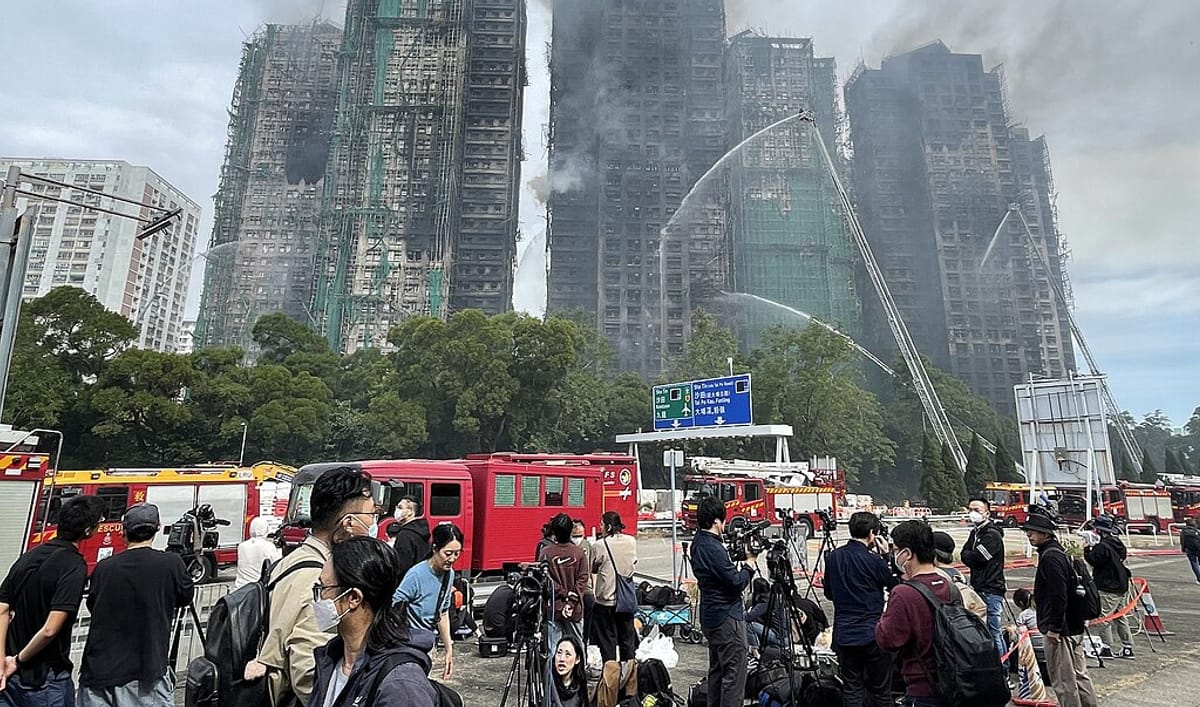
Almost one week after a deadly fire tore through several tower blocks in Hong Kong’s Wang Fun Court housing complex, questions are being asked about whether materials used during renovation works had contributed to the blaze. The death toll has continued to climb, now sitting at 156 people as of December 2nd. Approximately 30 people are still missing.
City leaders have established an independent committee to investigate the cause of the blaze, while 15 people have been arrested on suspicion of manslaughter. Here is a summary of what we know so far.
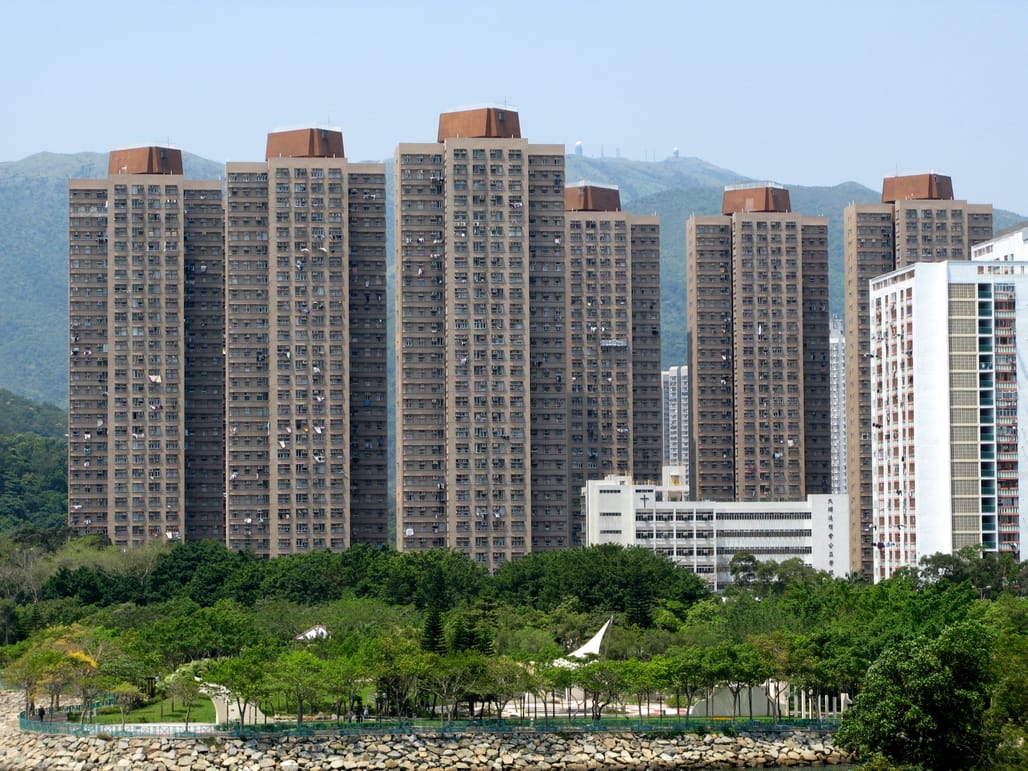 The towers in 2009. Image credit: Wikimedia user WING licensed under CC BY-SA 3.0Before the fire
The Wang Fuk Court complex was constructed in 1983, comprising eight residential towers each rising 31 levels. The scheme is located in Tai Po, a residential district in northern Hong Kong, close to the city of Shenzhen. In total, the complex contains 1,984 apartments housing over 4,600 residents. Approximately 40% of the residents are aged 65 or over.
A 2016 inspection of the towers resulted in a need for significant repairs to the complex. Work began last year on a plan to completely rebuild the exterior walls of the towers with tessera tiles, though in June of last year, the plan was changed to ceramic tiles.
Before the fire broke out, the towers were enveloped in bamboo scaffolding and safety netting. Bamboo is a popular scaffolding material in Hong Kong, comprising 80% scaffolding used in the state.
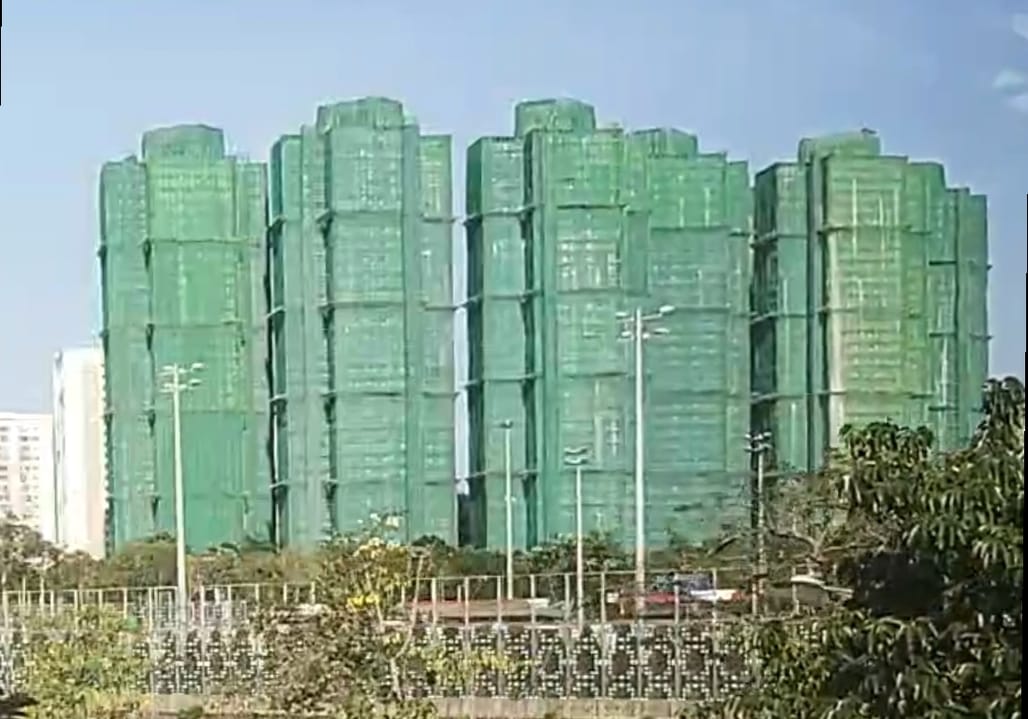 The towers cased in scaffolding and netting one day before the fire. Image credit: Wikimedia user Waydwaid licensed under CC0The fire
The fire broke out on the afternoon of November 26th, with eyewitnesses reporting that scaffolding on one of the towers had caught fire. The blaze spread across the scaffolding and indoors through the windows, ultimately engulfing seven of the eight towers. The condition of the fire continued to worsen through the evening, with many residents trapped in their apartments. It would later be found that none of the fire alarms had activated in any of the eight towers.
The fire was only brought under control in the early hours of November 27th, and took almost two days to entirely extinguish. At least 156 people are confirmed to have been killed in the blaze, with 79 others injured. Approximately 30 people are still missing, while 56 people were rescued from the fire.
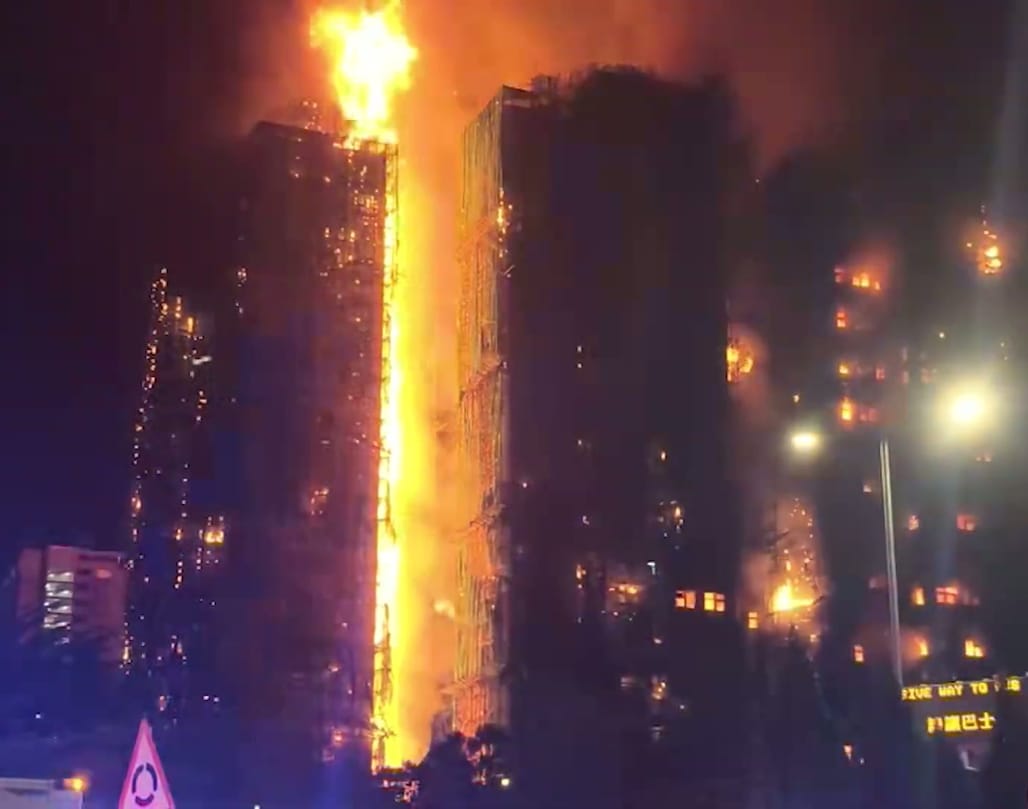 Towers engulfed in fire. Image credit: Wikimedia / ncsvideo licensed under CC BY 3.0 Suspicion of renovation material
In the immediate aftermath of the blaze, suspicion has been cast on the building renovations taking place at the time of the blaze. So far, authorities have pointed to substandard plastic mesh and insulation foam used in the renovation. It has also emerged that in September 2024, residents of the towers raised concerns about the suitability of the mesh used by contractors to cover the bamboo scaffolding.
Earlier this week, officials said that several samples of mesh on the buildings did not match fire-resistant standards, while also alleging that contractors used substandard materials in hard-to-reach areas that were difficult for inspectors to notice. After a typhoon in July damaged original netting on the scaffolding, contractors replaced the material with cheaper, substandard netting, officials added. Foam insulation used to cover windows also fueled the flames, aided by strong winds, officials allege.
While commentators have expressed suspicion over the use of bamboo as a scaffolding material, the Hong Kong Institution of Safety Practitioners notes that approved bamboo and netting are not easily ignited, and that fires in bamboo scaffolding are typically due to the presence of debris that can ignite from sparks emitted during construction. Nonetheless, the BBC reports that earlier this year, the city had sought to phase out bamboo scaffolding due to safety concerns, and transition to metal scaffolding.
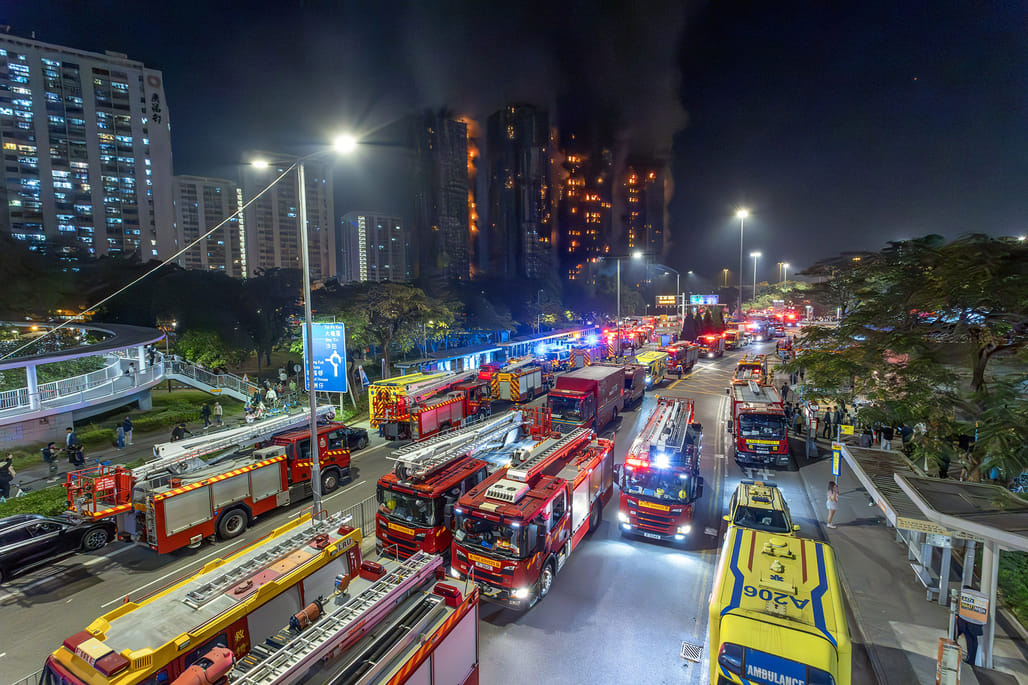 Emergency response during the fire. Image credit: Flickr user Samson Ng licensed under CC BY-SA 4.0Arrests and calls for transparency
On December 2nd, it was announced that an independent judge-led committee will investigate the fire in full. So far, 15 people have been arrested on suspicion of manslaughter, and 12 have been arrested in a corruption investigation. It is unclear if any individuals overlap in both categories. Among those detained are scaffolding subcontractors and directors of a construction company and consultancy.
Amid the arrests, groups in the city have called for greater transparency and accountability. City officials have warned of consequences for those seeking to politicize the disaster, with two people currently being investigated for sedition and one student detained and bailed. International rights groups have warned that the moves demonstrate government attempts to suppress criticism surrounding the blaze, Reuters reports.
Elsewhere, city officials have suspended renovations at 28 other projects managed by the same construction company that oversaw the renovations at Wang Fuk Court, ABC reports.
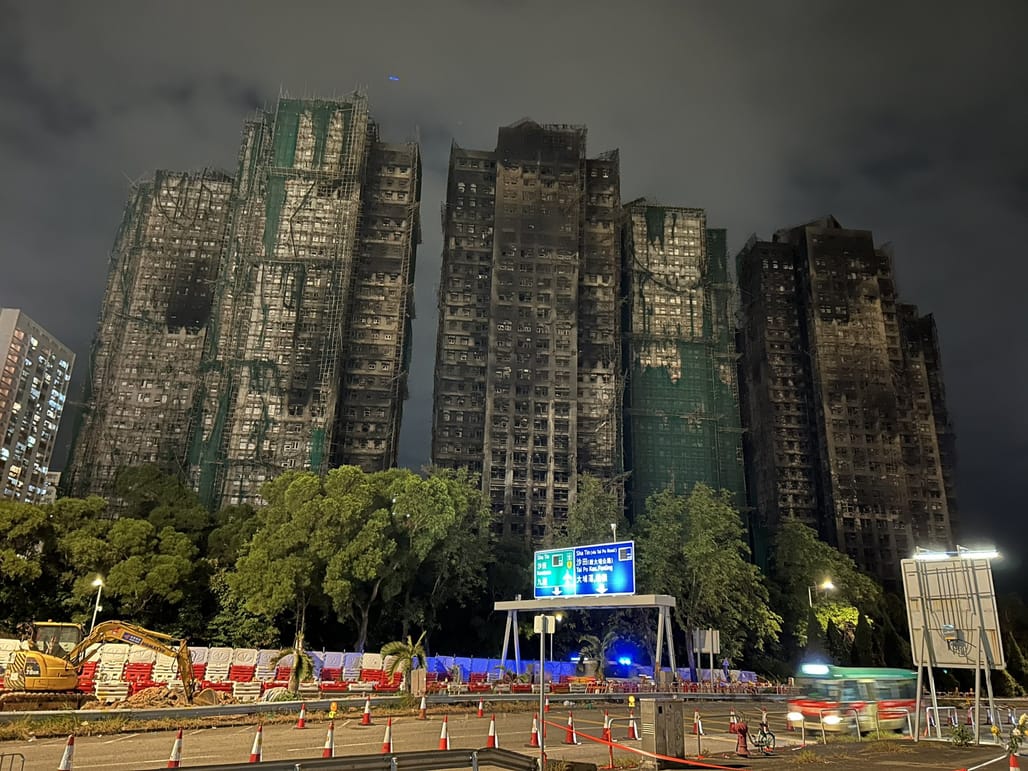 Remains of the tower following the fire. Image credit: Flickr user km30192002 licensed under CC BY 4.0What we don’t know
Despite initial allegations floated by city officials, the definitive cause of the fire is yet to be determined. An investigation into the fire, launched December 2nd, could take three to four weeks as evidence is gathered and examined, the BBC reports. In addition to substandard materials and practices present during the renovation, questions remain over whether the original components of the building, such as windows and doorways, were capable of withstanding fires even before the renovation.
As not all individuals have been accounted for, and 11 remain critically injured, the final death toll for the blaze has also not yet been confirmed.