
George Mycock’s fitness routine had gotten out of hand.
The 22-year-old was terrified of putting on body fat but eager to develop more muscle. He tracked his food so thoroughly that he was weighing lettuce leaves. And he was exercising –– way too much, in fact.
“If I halved it, I’d still probably be doing the same, if not more, than what anyone else I knew who was going to the gym,” Mycock said.
As hard as he worked, he never felt satisfied. On the contrary, he often felt like he just didn’t have the discipline or character to reach his ever-changing body goals. He felt like a loser.
Then he found himself pulling away from his friends at university and increasingly believing people would be better off without him, he said. He was experiencing suicidal thoughts when a friend dropped by unexpectedly to check on him.
“I just started crying in front of her … I just told her how awful I felt,” Mycock said.
That was the breakthrough moment.
“At the time, I didn’t really know that it was necessarily about my body or about the eating. I just knew that I felt horrendous. I just thought I was pathetic loser. And she convinced me to get help.”
Mycock has never received a formal diagnosis for the condition –– he only knows of one person who has. But seven years later, as a researcher in the field and doctoral student at the University of Worcester in the United Kingdom, he understands his experience as muscle dysmorphia, which is sometimes called “bigorexia.”
“Muscle dysmorphia occurs when an individual becomes obsessed with becoming muscular,” said Dr. Jason Nagata, associate professor of pediatrics at the University of California, San Francisco School of Medicine. Nagata is lead author of a review on the condition published in The Lancet Child & Adolescent Health Tuesday.
The condition is often unrecognized and behaviors that go with it can even be praised, but the condition isn’t just about vanity, Mycock said. It is a mental health condition that can have serious consequences.
This type of dysmorphia can include extreme exercise behaviors, concern about being “scrawny” even if a person is objectively muscular, and the use of performance- or appearance-enhancing drugs, he said.
Muscle dysmorphia is considered part of a family of eating and body image disorders that are often stereotyped as being restricted to thin, White, young women. But they can happen to anyone – and sometimes they go unnoticed because they can resemble behaviors society praises.
“In moderation, exercise is healthy, and the goal is to find activities that feel enjoyable and sustainable over the long term,” Nagata said. “But with muscle dysmorphia, workouts can shift from something positive to something that causes more stress than joy.”
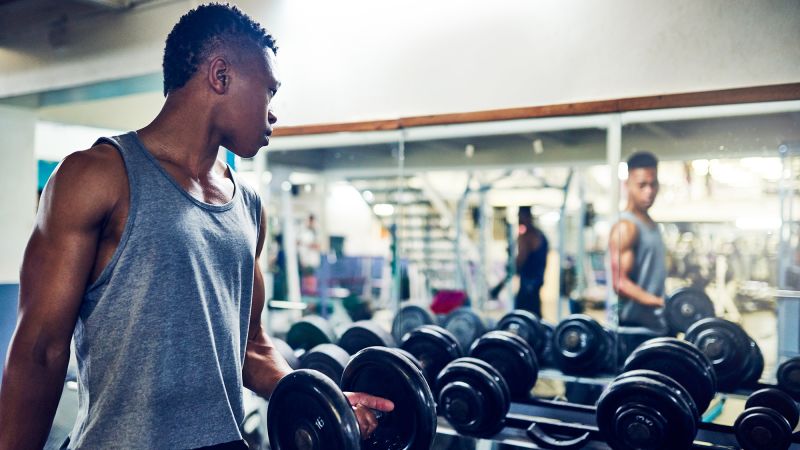
Many people, especially young men, find joy and community at the gym when they go to get fit, but some people can take it too far.
Instead of looking forward to a workout, people with muscle dysmorphia may feel compelled to go because they worry about missing a session. Building muscle may start to get in the way of work, school or their relationships, Nagata said. People with this condition also may withdraw from social events or their usual activities because of concerns over their appearance.
“When exercise starts to take over your life rather than support it, that’s a warning sign,” he said.
The dominance of exercise over a person’s life is not without consequence.
Muscle dysmorphia is linked with a higher risk of depression, anxiety, substance use, and sometimes suicide risk, Nagata said. And the performance-enhancing drugs –– like anabolic steroids –– can have health consequences on the brain, such as irritability, aggression and paranoia.
Overexercise can lead to muscle or joint injuries, as well, he said. Steroid use can also damage the kidneys and liver and increase heart disease risk.
It is hard to tell when a desire to be muscular tips over into a disorder, because many people get the cultural message that appearance is important for social status and dating opportunities, said Dr. Kyle Ganson, assistant professor in the Factor-Inwentash Faculty of Social Work at the University of Toronto.
“For a lot of young people, they think that their body needs to look a particular way in order to succeed,” he said.
Boys and young men in particular are at risk for muscle dysmorphia because of the specific societal pressures put on their bodies.
“Most boys and then have generally higher drive for muscularity overall, like they want to go to the gym. They want to be more muscular based on sort of the ideal male body,” Ganson said.
Weightlifting and body building increase the risk, Nagata said.
“Competitive athletes are especially vulnerable, and the risk is even higher when training is focused on changing appearance rather than improving performance,” he said. “Those pressures around physique can make certain athletes more susceptible to developing unhealthy or obsessive relationships with their bodies.”
Mycock’s problem with fitness began when he injured his spine playing rugby at 13 and had to miss a year of school to recover. When he returned, he noticed his peers weren’t treating him the same. People who would talk with him when he was in a smaller, more muscular body suddenly were not speaking with him as much, he said.
But when he started trying to lose weight, he found that he got more praise, to the point where his back surgeon joked about him coming in to teach other patients how to do it.
“But little did he know that I was, at that point, basically starving myself and exercising multiple times a day,” Mycock said.
Not only was Mycock’s relationship with his body tied up with his identity as an athlete, but ideas of masculinity were at play, too, he said.
The fitness influencers he followed online spread the message that anyone could achieve the ideal masculine body if only they worked hard enough, were disciplined enough and were man enough, he said.
But the stricter Mycock got with his diet and exercise, the farther the goalpost moved.
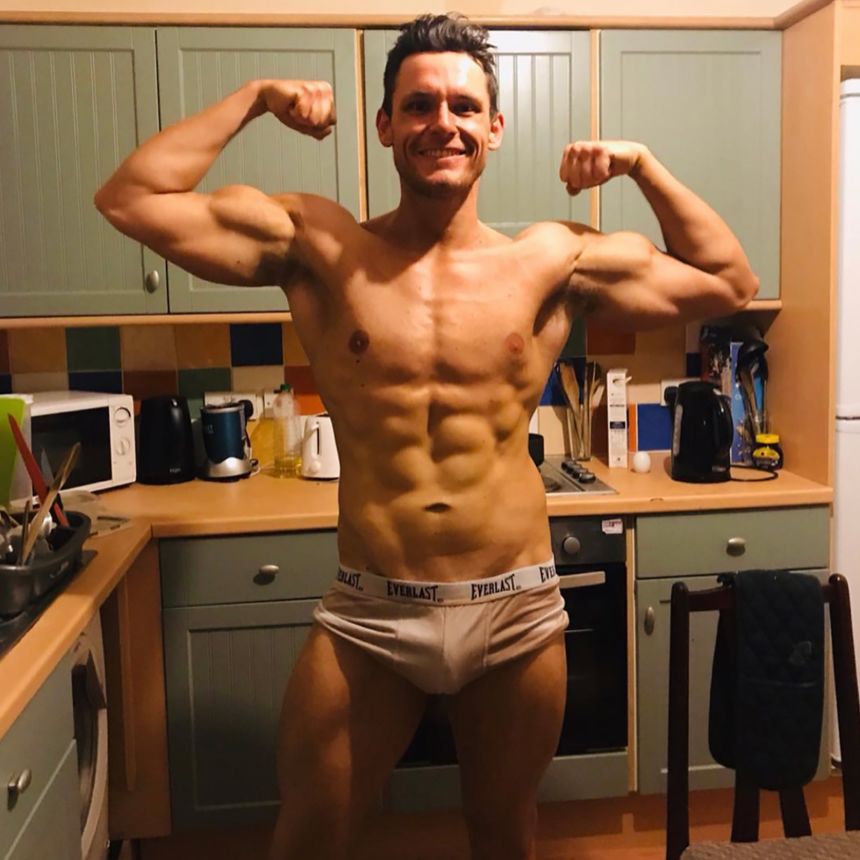
“Every time I managed to meet the thing that I was aiming at, my brain said, ‘OK, this is now a thing that I can do, therefore it’s not good enough, and I need to do more,’” he said.
It makes sense, because social media use is associated with muscle dissatisfaction and steroid use, Nagata said.
“Boys’ bodies are on display more than ever on social media, especially through influencer accounts,” he added in an email. “Boys scroll through an endless feed of hyper-muscular, ultra-lean physiques, often heavily filtered or selected from hundreds of shots, which creates a constant pressure to measure up.”
When Mycock couldn’t reach the always far-off destination of the ultimate, masculine body, the message he received was that he just wasn’t good enough as a person, he said.
There is a lot that researchers don’t know about muscle dysmorphia.
Data on the prevalence is limited, but two studies in Australia and North America estimate that 2% to 3% of boys meet the criteria for muscle dysmorphia, Ganson said.
One problem getting more information on the disorder is that people who have muscle dysmorphia likely have the gym and muscle building embedded in so much of their lives, that they are less likely to disrupt their world by seeking help, he added.
It is also difficult to determine the best treatment, because the condition resembles body dysmorphic disorder and eating disorder behaviors. Dietary practices and bulking and cutting, for example, can veer into disordered eating, Ganson said.
Cognitive behavioral therapy would likely be the first line of defense, he said. But, family-based treatment like those used for adolescents with eating disorders might provide benefit as well, Nagata said.
Either way, with the potential for physical and mental health consequences, people concerned that they may be experiencing muscle dysmorphia should seek professional help.
A therapist or health care provider may be a good place to start.
Ideally, the support comes from an interdisciplinary team including mental health, medical and nutrition providers, Nagata said.
Recovery from this condition isn’t linear.
Today, Mycock can eat and exercise in a way that feels healthy and balanced, but body image is still something that takes some thought, he said.
There are still times that he feels insecure, but his work with a counselor has helped him to not make his feelings about his body the foundation of his whole life.
“Previously, my life was built on a pillar, and the base of that pillar was the way that my body looked and the way people saw my body, and then everything else, like who I was, was built on top of that,” he said. “So, whenever something happened to that … my whole life fell apart.”
His counselor has helped him change his perspective so that his body is one brick on the pyramid of his life.
“I now also have that I like that I’m funny and I’m a good friend and I’m a good partner,” Mycock said, “On those days when my body isn’t what I want it to be, or I feel insecure about it, it doesn’t matter, because I’ve got all these other things that I like about myself.”