

Sir Norman Foster is among those on a shortlist of six architects vying to design the National Gallery’s new wing as it seeks to compete with the Tate for works from the 20th and 21st centuries.
Six architecture practices with dozens of cultural buildings to their names around the globe have been shortlisted for the creation of the wing at the gallery, which is likely to be the most significant new museum building in London for decades.
Other contenders for the multimillion-pound brief include Kengo Kuma from Japan and Renzo Piano from Italy. The National Gallery has confirmed it plans to “park its tanks” on the lawns of the Tate.

The gallery is expanding its remit into the 20th and 21st century
The gallery has declared that it will no longer limit itself to showcasing paintings “in the western tradition” from before 1900 and will expand into the 20th and 21st century.
For 25 years, the Tate has had a de facto monopoly on buying modern and contemporary works for the national collection.
The National Gallery turned heads in September when it revealed it had secured two record-breaking £150 million donations, from the Crankstart foundation and the Julia Rausing Trust, to help fund its new wing. John Booth, the chair of trustees, the gallery itself and anonymous donors are providing another £75 million.
For the past decade, Britain’s cultural organisations have bemoaned the difficulties of finding philanthropic support, which has been felt more acutely given the decline in state funding over the past 15 years.

Gabriele Finaldi, the gallery director, said that the ambition was to raise another £375 million on top of the initial £375 million donations, which would fund the new wing as well as creating an endowment fund to help safeguard its long-term future and an acquisitions fund to buy modern paintings.
Although there is no price tag on the redevelopment plan yet, this is likely to mean an acquisitions fund of hundreds of millions of pounds to buy 20th-century paintings. Masterpieces from this era, by the likes of Lucian Freud, Francis Bacon, Pablo Picasso and Jackson Pollock, command eight-figure and occasionally nine-figure prices.
Finaldi said the plans, codenamed Project Domani, were for a £750 million campaign that would “help redefine the National Gallery for the next century”.
He said: “Thanks to the remarkable support we have already received, we are building momentum towards our vision of creating new spaces to house an expanded collection, building an acquisitions fund for modern paintings, while also ensuring the gallery’s long-term financial sustainability through a robust endowment.”
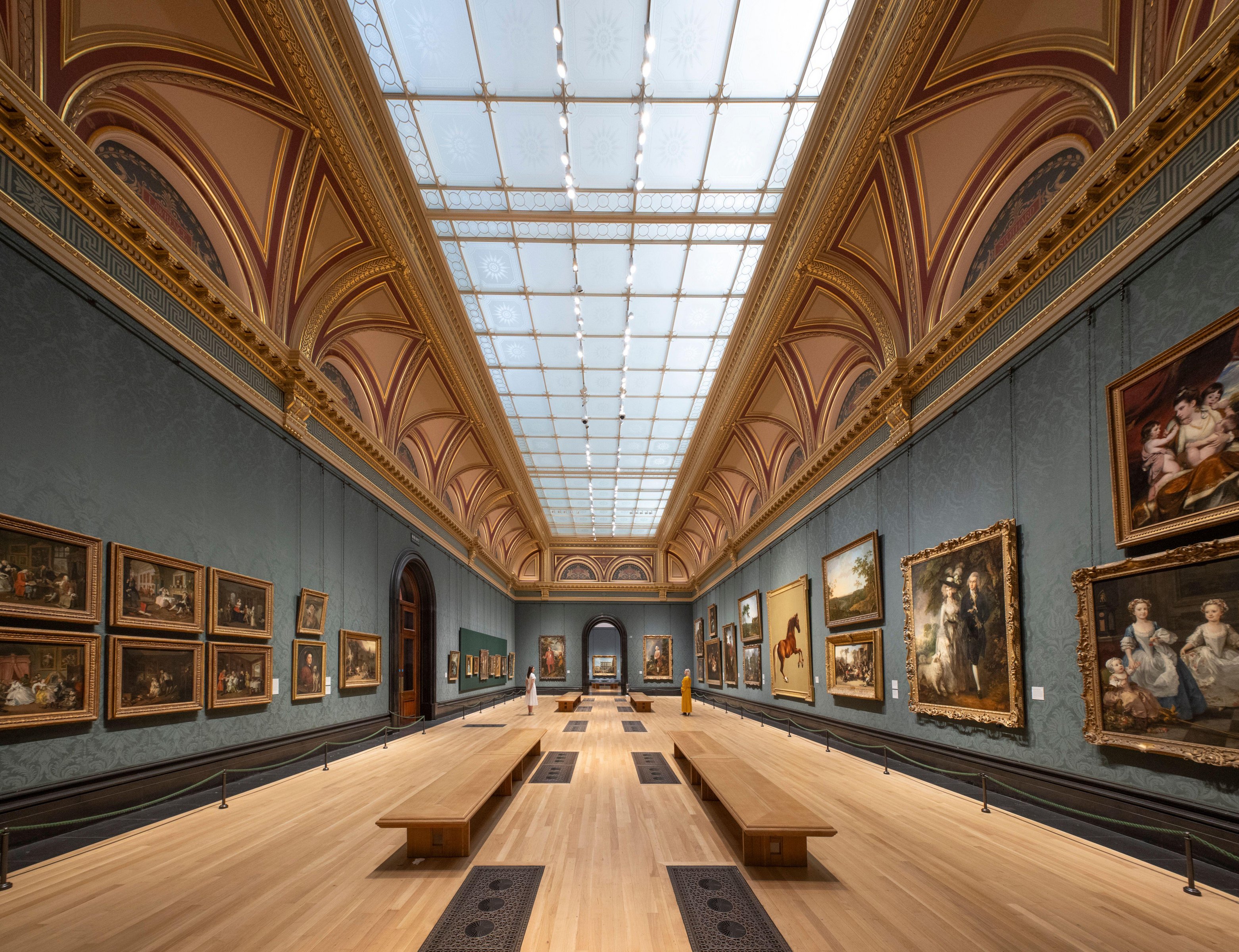
The Sainsbury Wing
MALCOLM PARK/ALAMY
For the development of the new wing to showcase works from the 20th and 21st century, which will have a similar footprint to the gallery’s Sainsbury Wing, 65 submissions were received.
On the six-strong shortlist are Farshid Moussavi Architecture, Foster + Partners, Kengo Kuma and Associates, Renzo Piano Building Workshop, Selldorf Architects and Studio Seilern Architects.
The practices have designed many cultural buildings between them. Kuma designed the V&A Dundee building and Foster the Great Court at the British Museum, and Selldorf recently unveiled their renovation of the National Gallery’s Sainsbury Wing.
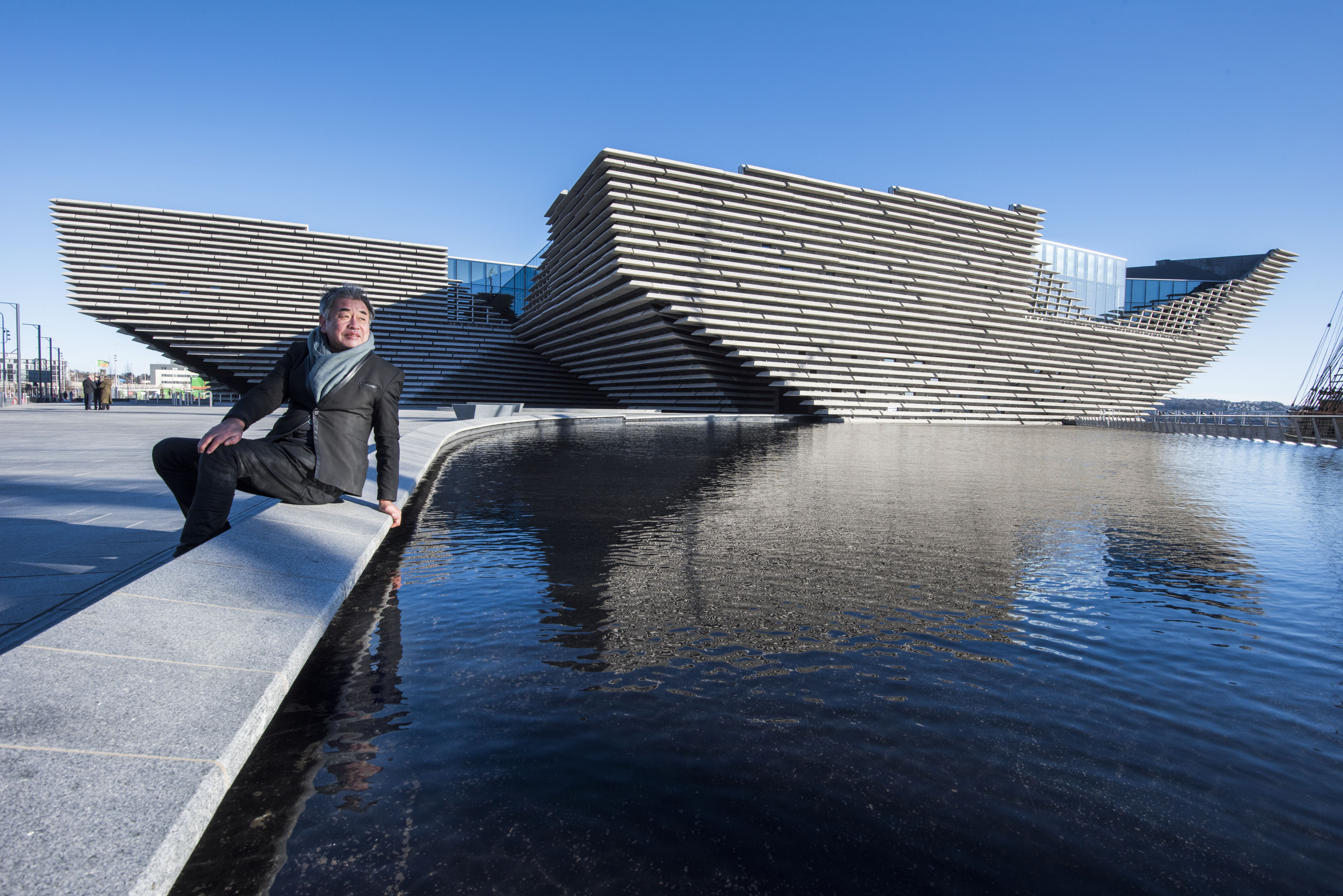
Kengo Kuma at V&A Dundee
ALAN RICHARDSON/PIX-AR.CO.UK
The winning practice is due to be appointed in April next year. The gallery said the new wing, which will be built on the adjacent St Vincent House, which houses a hotel and an office complex, would be a “landmark of both local and international significance”.
Finaldi has previously distilled the architectural brief down to “creating display space, making good use of daylight [and] building something which is distinguished and beautiful”.
He said this week that the “new physical and artistic expansion” was a reaffirmation of its “commitment to the public” adding that it had been founded in 1824 to “make great art accessible to all”.