
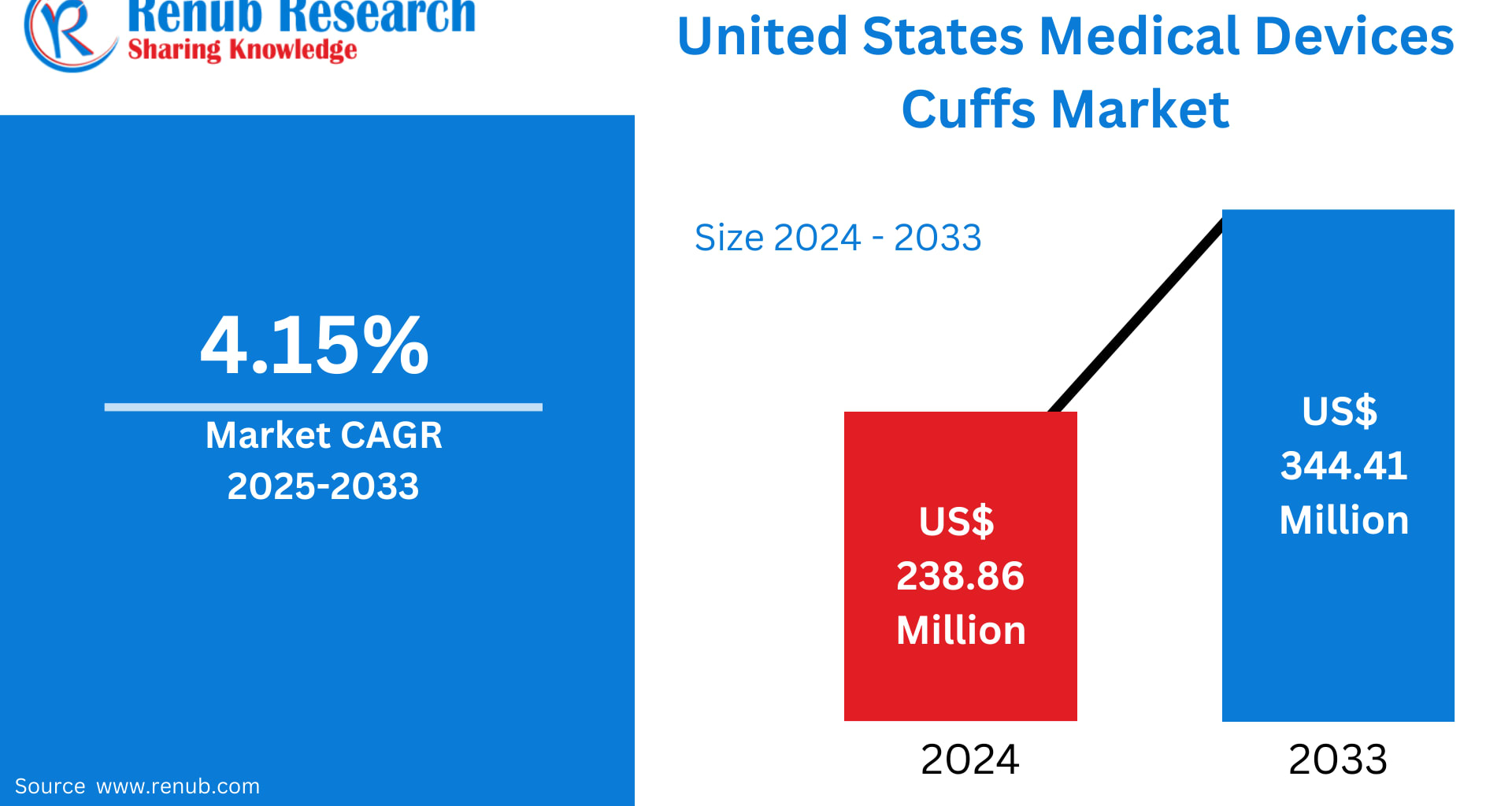
The United States Medical Devices Cuffs Market is projected to reach US$ 344.41 million by 2033, rising from US$ 238.86 million in 2024, progressing at a CAGR of 4.15% during 2025–2033, according to Renub Research.
This steady upward trajectory reflects America’s accelerating shift toward advanced patient monitoring, chronic disease management, and home-based healthcare solutions. Medical device cuffs—ranging from blood pressure and compression cuffs to endotracheal tubes and tracheostomy cuffs—have become indispensable across hospitals, clinics, ambulatory surgery centers, and households.
Today, the United States stands at the forefront of a digital transformation in healthcare, and cuffs are among the most frequently used diagnostic and therapeutic devices. Their evolution—from simple manual wraps to AI-powered, Bluetooth-enabled smart solutions—is shaping how Americans track their health and how clinicians deliver care.
United States Medical Devices Cuffs Industry Overview
The U.S. market for medical devices cuffs is expanding steadily, supported by a strong healthcare system and a rising need for diagnostic and therapeutic tools. Cuffs play a crucial role in:
Surgical procedures (tourniquets, endotracheal cuffs)
Cardiovascular monitoring (blood pressure cuffs)
Rehabilitation (compression cuffs)
Respiratory management (ET tube cuffs, tracheostomy tube cuffs)
Healthcare facilities across the country—from large hospitals to outpatient clinics—are increasingly adopting automated, accurate, and digitally integrated cuff systems.
The adoption is further fueled by:
An aging population
Higher obesity and chronic disease rates
Increasing home monitoring
Rise of telehealth and remote patient care
According to WHO, 1.28 billion adults worldwide have hypertension, while the CDC reports that cardiovascular disease claims one American life every 33 seconds. With 702,880 heart disease deaths in 2022 alone, monitoring tools like blood pressure cuffs remain essential for early diagnosis and ongoing management.
The U.S. hypertension statistics highlight how critical monitoring devices have become:
18–39 years: 23.4% prevalence
40–59 years: 52.5%
60+ years: 71.6%
Men aged 18–39 and 40–59 show significantly higher hypertension prevalence than women, emphasizing a continued need for widespread monitoring tools across demographics.
As the demand for frequent and precise patient monitoring accelerates, the medical devices cuffs market continues to evolve as a cornerstone of diagnostic reliability and therapeutic support.
Key Factors Driving Market Growth
1. Rising Burden of Chronic Diseases & Aging Population
The United States is experiencing unprecedented growth in chronic diseases, particularly hypertension, diabetes, and cardiovascular disorders. These conditions necessitate consistent monitoring through devices like:
Blood pressure cuffs
Compression cuffs
Tourniquet cuffs
The elderly population—a major healthcare-consuming demographic—relies on routine checks to manage chronic illnesses. Non-invasive and user-friendly cuff systems are especially favored in:
Homecare setups
Assisted living facilities
Telehealth programs
This combination of chronic disease prevalence and population aging ensures that cuff-based devices remain essential to patient care strategies through 2033 and beyond.
2. Technological Advancements & Smart Digital Integration
Healthcare technology is transforming traditional cuffs into intelligent, connected devices. Key innovations include:
Wireless & Bluetooth-enabled cuffs
Smart sensors for precise readings
AI algorithms for trend analysis
Integration with EHRs and telehealth platforms
Smart cuffs allow physicians and caregivers to monitor patients remotely, reducing hospital visits and ensuring timely intervention. These devices also improve patient engagement, which is crucial for managing chronic conditions.
As digital health continues expanding, connected cuff systems will play a defining role in preventive care, long-term monitoring, and early diagnostics—driving significant market growth.
3. Surge in Homecare & Outpatient Monitoring
Home-based healthcare is rising sharply in the United States due to:
High hospital costs
Increased comfort with self-monitoring
Growth of telemedicine
Preferences of elderly and chronic patients
Portable, easy-to-use cuffs—especially blood pressure and compression cuffs—are becoming household necessities. Outpatient centers also rely heavily on cuff devices for frequent assessments across rehabilitation and chronic disease programs.
As healthcare shifts away from hospital-exclusive care, medical device cuffs are emerging as essential tools for accessible, low-cost patient monitoring.
Challenges Restraining Market Growth
1. High Costs & Affordability Gaps
Advanced cuff systems with automated and wireless functionality often come at a premium price. This creates financial challenges for:
Smaller hospitals
Rural clinics
Underserved populations
Home-users with limited budgets
Besides initial purchase costs, additional expenses such as calibration, maintenance, and consumables widen the affordability gap. While low-cost alternatives exist, they often compromise on precision and durability.
To achieve equitable access, the U.S. healthcare ecosystem must address pricing challenges and expand reimbursement options.
2. Regulatory Complexity & Standardization Issues
To be used clinically, medical devices cuffs must meet strict FDA standards. This translates to:
Lengthy certification procedures
Higher R&D and testing costs
Potential delays in product launches
Variations in device quality—especially among low-cost or homecare models—complicate product standardization. Healthcare providers need confidence in consistency, accuracy, and safety.
Balancing innovation with regulatory compliance remains one of the biggest hurdles for manufacturers in the U.S. cuffs market.
United States Medical Devices Cuffs Market Overview by States
Regional adoption is strongest in California, Texas, New York, and Florida, backed by high healthcare spending, large populations, and advanced medical ecosystems.
California
California stands as one of the largest markets for medical device cuffs due to:
Extensive hospital networks
High prevalence of chronic diseases
Strong digital health adoption
Aging population
Leading medical R&D hubs
Urban centers like Los Angeles, San Francisco, and San Diego are early adopters of smart cuffs and telemonitoring technologies. Homecare adoption is rising rapidly, especially among seniors managing hypertension or cardiovascular conditions.
Texas
Texas represents a dynamic, fast-growing market driven by:
Large population base
High rates of obesity, diabetes, and hypertension
Expanding rural healthcare systems
Rapid growth of outpatient services
Metropolitan hubs—Houston, Dallas, Austin—lead in integrating advanced cuff devices. Meanwhile, rural Texas increasingly depends on affordable, portable monitoring tools to bridge healthcare access gaps.
New York
New York’s strong healthcare ecosystem bolsters adoption of medical cuffs through:
A concentrated network of hospitals & specialty clinics
High chronic disease prevalence
Integration of connected devices in telehealth
Collaboration between healthcare providers and manufacturers
New York City remains a hotbed for innovation, with academic institutions and medical technology firms driving next-generation cuff development.
Florida
Florida is one of the fastest-growing markets for medical devices cuffs. Its demographics—primarily an older population—create sustained demand for:
Blood pressure cuffs
Compression therapy devices
Rehabilitation cuffs
Telehealth penetration and the growth of homecare services are accelerating cuff adoption across the state. Florida’s healthcare institutions are investing in digital patient monitoring to meet the needs of seniors and chronic disease patients.
Market Segmentation
By Type
Blood Pressure Cuffs
Cuffed Endotracheal Tube
Tracheostomy Tube
By End Use
Hospitals
Clinics
Ambulatory Surgery Centers
Others
By States
California, Texas, New York, Florida, Illinois, Pennsylvania, Ohio, Georgia, New Jersey, Washington,
North Carolina, Massachusetts, Virginia, Michigan, Maryland, Colorado, Tennessee, Indiana, Arizona,
Minnesota, Wisconsin, Missouri, Connecticut, South Carolina, Oregon, Louisiana, Alabama, Kentucky,
Rest of United States
Competitive Landscape
The U.S. medical devices cuffs market is competitive yet innovation-driven. Key players include:
Cardinal Health
ConvaTec Inc.
Cook Medical
GE Healthcare
Omron Healthcare Inc.
Pulmodyne Inc.
Smiths Medical
SunTech Medical Inc.
Teleflex Incorporated
Welch Allyn Inc.
Coverage Includes:
Company Overviews
Key Executives
SWOT Analysis
Recent Developments
Revenue Analysis
Strategic Initiatives
These companies are actively innovating through digital integration, portable designs, improved durability, and enhanced patient comfort.
Final Thoughts
The United States Medical Devices Cuffs Market is entering a transformative growth phase. As homecare expands, telehealth becomes mainstream, and chronic diseases surge, the demand for accurate, user-friendly, and connected cuff systems will only intensify.
With a projected value of US$ 344.41 million by 2033, the market is poised for long-term stability, shaped by technological innovation, demographic trends, and evolving patient needs.
Manufacturers that prioritize smart integration, affordability, and compliance will emerge as leaders in this steadily growing landscape.