
Global coffee prices hit record highs earlier this year, driven by poor growing conditions in major producing countries such as Brazil and Vietnam.Sammy Kogan/The Globe and Mail
For coffee drinkers, a good morning doesn’t start without that first sip. But what was once a simple, daily routine is now a rising cost that leaves a bitter aftertaste.
As of October, coffee prices have jumped by 26.3 per cent over the previous year, outpacing the 3.4-per-cent rise for overall groceries, according to Statistics Canada. Prices have soared by 59 per cent over the past six years, making coffee a major source of financial strain in the checkout aisle.
Michael von Massow, a food, agriculture and resource economics professor at the University of Guelph, says two things are driving coffee price increases: climate change and U.S. tariffs. Extreme weather conditions, which are exacerbated by global warming, have disrupted coffee harvests and supply, especially Arabica beans, which are vulnerable to rising temperatures, drought and crop diseases.
“We’ve seen yields go down because of disease and other things,” Dr. von Massow said. “When the supply goes down, prices go up. That’s basic economics 101.”
Global coffee prices hit record highs earlier this year, driven by poor growing conditions in major producing countries such as Brazil and Vietnam. U.S. tariffs on these countries have pushed prices even higher. While Canada doesn’t impose tariffs on coffee from these countries, much of our ground coffee is imported from the U.S., which leads to higher prices. Earlier this year, the federal government temporarily imposed 25-per-cent retaliatory duties on coffee from the United States.
The story of coffee is the story of American capitalism. Will its next chapter be a terrible jolt?
Despite rising costs, demand for coffee remains steady, says Dr. von Massow. Canadians are buying, but they are changing how they shop: hunting for deals, trading down on quality or skipping add-ons such as food. This shift, he says, could put small roasters at a disadvantage. Their reliance on U.S. brokers makes them more susceptible to tariff pressure, unlike large chains, which typically buy coffee beans directly from major producing countries.
For independent cafés, coffee is what keeps customers coming through the door. Genna Steckel, owner and executive chef at XO Bisous in Toronto, says keeping prices low has been challenging as the cost of key ingredients rises.
Although Ms. Steckel’s business doesn’t pay tariffs directly, she says key ingredients – alternative milks for lattes and cocoa beans for mochas – often pass through the U.S. before arriving in Canada, which has forced suppliers to raise costs.
XO Bisous buys roasted beans from long-time partner Propeller Coffee, a Toronto-based coffee roaster that sources through direct trade across South America, including Colombia and Brazil.
“When they have to pay more for their ethically sourced raw product, that increased cost inevitably reaches us,” Ms. Steckel said. “At the same time, we are seeing rising prices in packaging, dairy, ingredients, utilities and labour.”
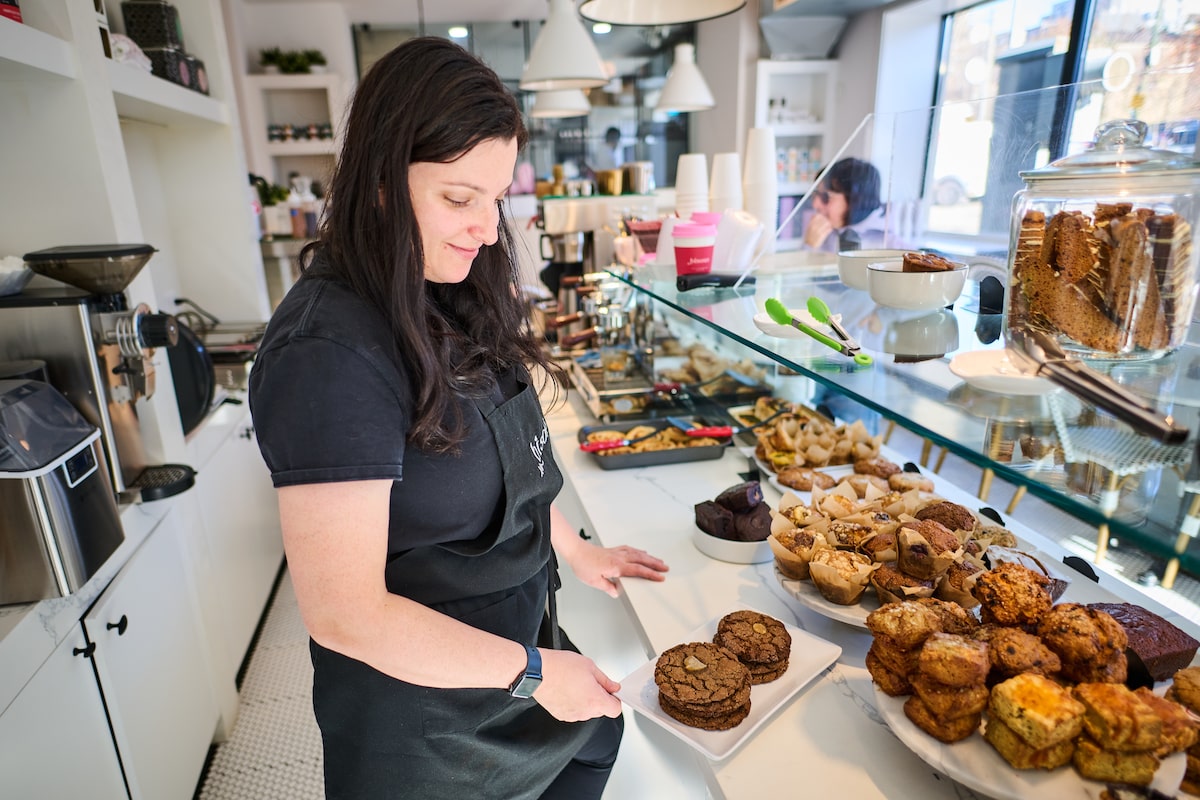
XO Bisous owner Genna Steckel prepares a latte at her coffee shop in Toronto’s west end on Monday.Sammy Kogan/The Globe and Mail
Ms. Steckel points to cocoa powder as one example: A bag that once cost her $20 now sells for $60. “For a small business like ours, these increases accumulate quickly and they’re felt in a very real, very immediate way,” she says.
Margins at XO Bisous are deliberately low to keep coffee affordable, but rising costs are making it harder to absorb expenses. Espresso drinks account for about 80 per cent of daily sales, says Ms. Steckel, and last week the café nudged prices up: A small drip coffee went from $2.85 to $3.00 and a small latte from $4.50 to $4.75. Even small increases reflect the daily challenge cafés face in keeping prices fair, while staying profitable.
While cafés adjust pricing, consumers are trying to adjust habits. Twenty-six-year-old Olivia Akena started paying attention when a black coffee jumped past $4 at shops that once charged under $2. Instead of cutting coffee out of her routine, she invested in an espresso machine at home.
“Where you can cut spending, absolutely do it,” Ms. Akena says, explaining that brewing at home has saved her roughly $300 a year.
Dr. von Massow says the strain linked to rising coffee prices reflects a larger global market shift. Because coffee is an internationally traded commodity, he says, Canadian businesses are price takers, not price setters, and that places them at a built-in disadvantage.
“When a major consumer like the U.S. changes its trade behaviour, global supply chains adjust. Those adjustments ripple out to every country tied to the same markets,” he says.
Margins at XO Bisous are deliberately low to keep coffee affordable, but rising costs are making it harder to absorb expenses.Sammy Kogan/The Globe and Mail
“If Brazil produces 40 per cent of the world’s coffee, and something disrupts Brazilian exports – weather, labour costs, shipping, tariffs via intermediaries – the entire world market moves.”
On Nov. 21, global coffee prices plunged after U.S. President Donald Trump removed 40-per-cent tariffs on imports of Brazilian agricultural products, including green coffee beans.
According to Statscan, in a typical month, one-quarter of Canada’s coffee bean imports come from Colombia, with most of the remainder from Brazil, Honduras, Guatemala, Mexico and Peru. From January to July of this year, Canada imported 131 million kilograms of coffee, valued at more than $1.3-billion.
Dr. von Massow doesn’t expect coffee to return to previous costs any time soon. He says Canadian small businesses should consider blending beans, sourcing outside U.S. brokers when possible and protecting coffee as the core traffic driver for customers.
For independent cafés, coffee plays a crucial role in boosting sales and foot traffic. “If you’re getting squeezed on margin, you’re better off adding a little bit of price to the non-core parts of people’s purchases, not the coffee itself,” said Dr. von Massow.