

That one thing successful founders who’ve sold up never needing to work again always do? It’s start again.
While poring over term sheets, honing technology or pulling coding all-nighters, most founders have an exit dream. Maybe it’s a desert island holiday, maybe it’s a Porsche, maybe it’s just being more available for their kids.
But whenever I meet an entrepreneur who’s sold up with enough financial firepower to never have to work again they all say the same thing:
No sense of purpose. No responsibilities. No reason to get up in the morning. Not even anyone to play golf with – because everyone else is at work.
Roy Shaby is a prime example. After spotting a lack of sushi in Camberwell back in 2012, he went on to build one of London’s biggest dark kitchen businesses, Foodstars. Then, in 2017, he had a call from Uber founder Travis Kalanick, and sold for “a life-changing amount.”
Shaby worked with Kalanick on dark kitchens for three years: “the best university of my life. He was always there when needed, extremely smart, hardworking – the first in the office, last out – and he taught me to think about the bigger picture.”
Then when Shaby finally left the business and booked that longed-for escape, “I planned a very long holiday – I thought lying on the beach with no worries would be a dream come true. But it was the most depressing time of my life. I had nothing to do. I tried to pick up books, to enjoy the quiet. I just couldn’t. I hated that my phone wasn’t blowing up with people needing stuff. So I walked off the beach, went into a store and bought a new MacBook, to start again.”
Tradestars is Shaby’s next business: studio workspaces in Southwark, Hackney Wick and Islington so far, where tenants range from TikTok shops to barbers. Below, he discusses what he learnt about scaling differently, second-time-around.
And onto the Budget – among all the headlines about tax cuts and raises, the publication of the Entrepreneurship Prospectus last week means there’s a lot for UK founders to consider. We take a look with the ScaleUp Institute – including how you can help shape Government entrepreneurship policy.
“I sold to Uber’s founder… now I’m shaping London’s office spaces for a generation of creative entrepreneurs”
In 2021, Roy Shaby has just left that beautiful beach where he’d felt depressed, and bought a new Mac, desperate to start again. But where did inspiration for Tradestars come from?
“I realised that if you look at workspaces today, 90% of them are built around the landlord. Little thought goes into what a founder needs from their space. When I started my online sushi delivery business, I had to make do with a kitchen in a kebab shop: it wasn’t optimised for my business.
“Then I started looking at the wider e-commerce market, and realised there was no space for people who sell physical products online to operate a business like that. Some are paying two rents, keeping stock in a Big Yellow, renting a WeWork, but no logistics. So I decided to make something that offered it all in one.”
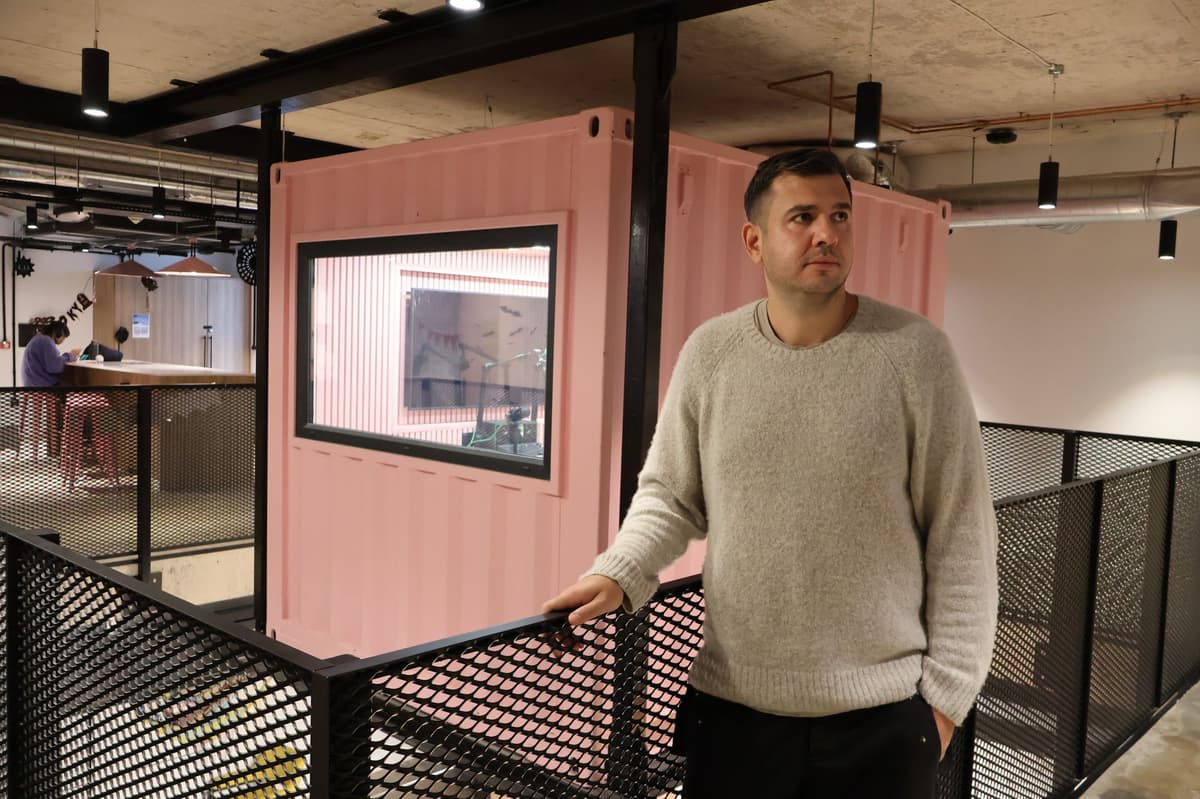
Shaby takes me on a tour around one of Tradestars’s industrial-chic sites. There’s the steel windows, bijou kitchens and Millennial Pink that you see in a lot of co-working spaces; lots of sofas, and loos that wouldn’t be out of place in a five-star hotel. “One of my members said they signed up because the toilets impressed them,” Shaby laughs.
Unlike traditional co-working offices built around desks, his include photography and recording studios, distribution areas where creatives package up parcels without having to wait for couriers, and £150-per-month rent for those running side hustles. There’s a shipping container hanging off the roof with recording equipment for podcast sessions – “it’s very popular”. One tenant is a company doing AI for fashion and beauty products, next door is a ‘merch packaging’ firm. Brands send their goods here for the items to be packaged and dispatched to influencers in branded boxes.
In a logistics centre downstairs, entrepreneurs are packaging goods, printing labels, and storing products in vast lockers. “Someone running a side hustle just needs a space to lock up goods and come in twice a week. We hang around waiting for DHL or Royal Mail on their behalf.”
A hair salon lies along one corridor. “When I opened the first site in Hackney Wick, a lot of people who advertised services online wanted space. Tattooists, barbers, things like that – they didn’t need footfall; customers book after seeing them on Instagram. But they did want the smart coffee shop and sofa waiting area, and we had that.”
Tradestars’ three sites are at 75% occupancy, with almost 210 studios; the business – which raised £60 million from backers including Clearbell private equity – is surging but Shaby hasn’t shouted about it yet. “I like building things before talking about them,” he says. He’s aiming for 20 to 25 Tradestar sites in London by 2028, before national expansion and then sites across the Middle East, France, and Germany, alongside local partners.
Shaby is scaling more efficiently with his second business, he says. “I’ve built processes for scale from the beginning to avoid the painful work breaking down everything you’ve done and starting again. And this time I have centralised supply chains for critical pieces.” After being quoted £12,000 for one fire-rated glass door, he approached a Turkish manufacturer with an order for all sites at £3000 each, “that saved £2.5 million across the portfolio.”
Scaling second-time-around, Shaby set up governance systems, with architects – who controlled designs centrally – in charge of small development teams and tight budgets so everything ran to time and cost. “I also built flexibility into operations from the start: our partition walls are easy to remove, so they’re adaptable to business growth.”
Government action on scaleups: have your say on tax support
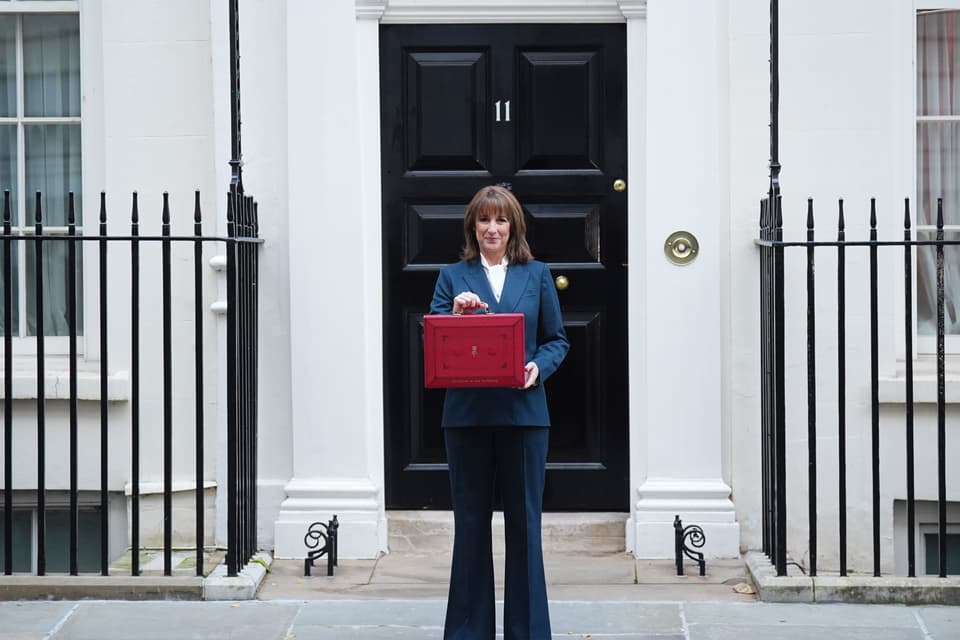
Rachel Reeves defended her handling of the Budget (James Manning/PA)
PA Wire
“Half of new jobs in Britain are created by scale-up businesses. And we want those jobs created here, not somewhere else. Our job is to make Britain the best place in the world to start up, to scale up, and to stay,” said the Chancellor Rachel Reeves in her speech to Parliament at last week’s Budget.
In the last edition I reported on the ScaleUp Institute Annual Review and the Chancellor’s stated commitment to foster scaleup ambition. Part of this included her appointment of Resi and Helpling founder Alex Depledge, as an advisor to work on a package for entrepreneurs in the Budget.“I believe in British exceptionalism – we just need to get behind it properly,” Depledge said. Well, amid the noise around last week’s fiscal event, you might have missed it, but the Entrepreneurship Prospectus was published. This has some vital policy measures to address the long term challenges of scaling in the UK, with a focus on four key areas for the scaleup community.
Make sure to delve into, and digest the key actions planned as – with so much debate on tax affecting entrepreneurs – this is your chance to have your say in the HM Treasury call for evidence. The SUI will also respond and welcomes your views here.
ScaleUp Institute’s CEO Irene Graham highlights four key areas in focus:
* R&D: directing public research firepower towards the needs of scaling companies across the UK, including the activities of UKRI and Innovate UK.
* Procurement: how the Government can become a better customer to scaling businesses, by fast-tracking innovative solutions, launching ‘Advance Market Commitments’, and anchoring procurement champions to help scaleup growth within Government departments.
* Tax: doubling the eligibility of reliefs so that growing firms can accelerate their expansion. The Budget doubles EIS/VCT eligibility limits from April 2026 to £10 million annually, or £20 million for highly innovative companies, with lifetime limits also doubled. It also significantly expands the Enterprise Management Incentive scheme to 500 employees, £6 million share option limit, £120 million gross assets test, and a 15-year maximum holding period, including existing contracts, from 2026.
* Public Finance Institutions: strengthening investment at Series B and beyond, and using Public Finance Institutions to support growth, supporting at least ten new-to-market growth-stage funds over the next five years via the British Business Bank.