
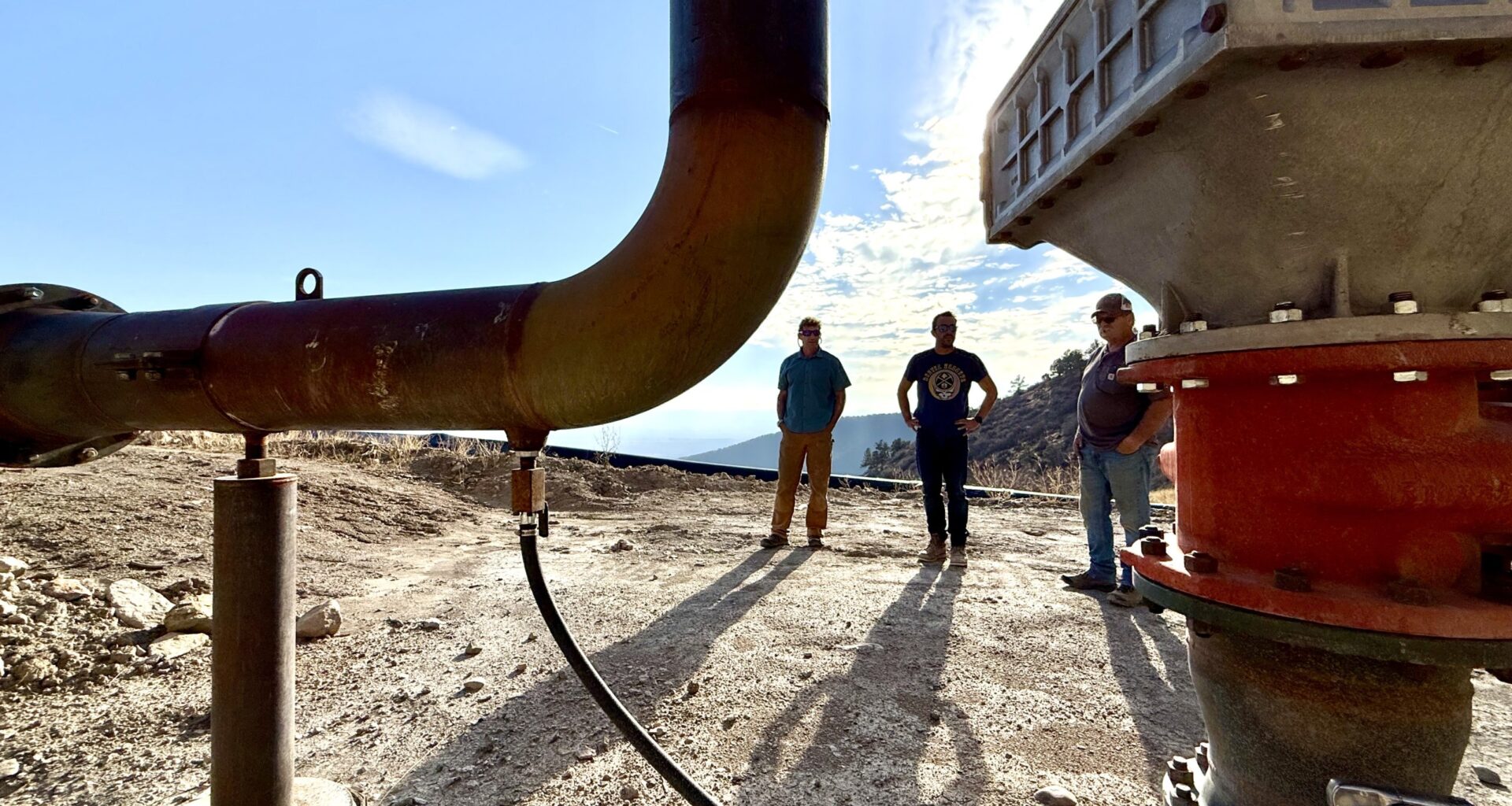
PAONIA — Taut tarps stretch across the meadow. An R2D2-sized valve sticks out of the ground. A long pipe runs down a slope, connecting the valve to a humming, red-hot tube.
“It’s satisfyingly analogue. Pipe and flame,” said Auden Schendler, a climate activist who walks the talk with his co-ownership of a methane-destruction project atop a dormant coal mine above Paonia. “There are a lot of people working on micro climate solutions right now. This is a macro solution and it’s a model for the rest of the world.”
Methane destruction is not terribly complicated. The owners of the 117-acre Bowie No. 1 coal mine — former Aspen Skiing Co. execs Schendler and Matt Jones and methane-hunting scientist Chris Caskey — are hoping their pioneering project on a grassy slope a half-mile from downtown Paonia can prove that.
They drilled a couple small holes into the coal mine below in December 2024 after securing state permits. They pumped 20,000 pounds of dense foam to seal two of the mine’s arched-roof portals. The Bowie No. 1 mine stretches for 900 acres underground. It has not operated since 1998.
The tarps installed in December 2023, shortly after they bought the property, were the first way to capture the methane leaking from the portals. The foam and small bores concentrate the methane and funnel it toward the valve. Down the slope from that valve, a horizontal pipe pushes the climate-savaging gas through a flame.
It’s 1,400 degrees at that flame, but as the gas burns and moves down the pipe, it’s less than 200 degrees. And that torched methane turns to carbon dioxide.
Methane is a greenhouse gas that can be 80 times more potent than carbon dioxide when it comes to trapping heat in the atmosphere over the next 20 years. Humans have more than doubled the amount of methane in the atmosphere in the last 200 years.
At Bowie No. 1, the climate team in October destroyed more than 51 metric tons of methane. That’s the equivalent of removing more than 1,428 metric tons of carbon dioxide from the atmosphere. That’s according to the Environmental Protection Agency’s calculations showing the climate-warming effect of methane over 100 years. Caskey and Schendler prefer to use more urgent calculations that show the impacts of methane over 20 years, before its planet-warming density is reduced over many decades in the atmosphere.
“Because we don’t have 100 years to solve this problem. We have 20, 30 years,” says Caskey, who equates 51 metric tons of methane over his hastened timeline to 4,243 metric tons of carbon monoxide.
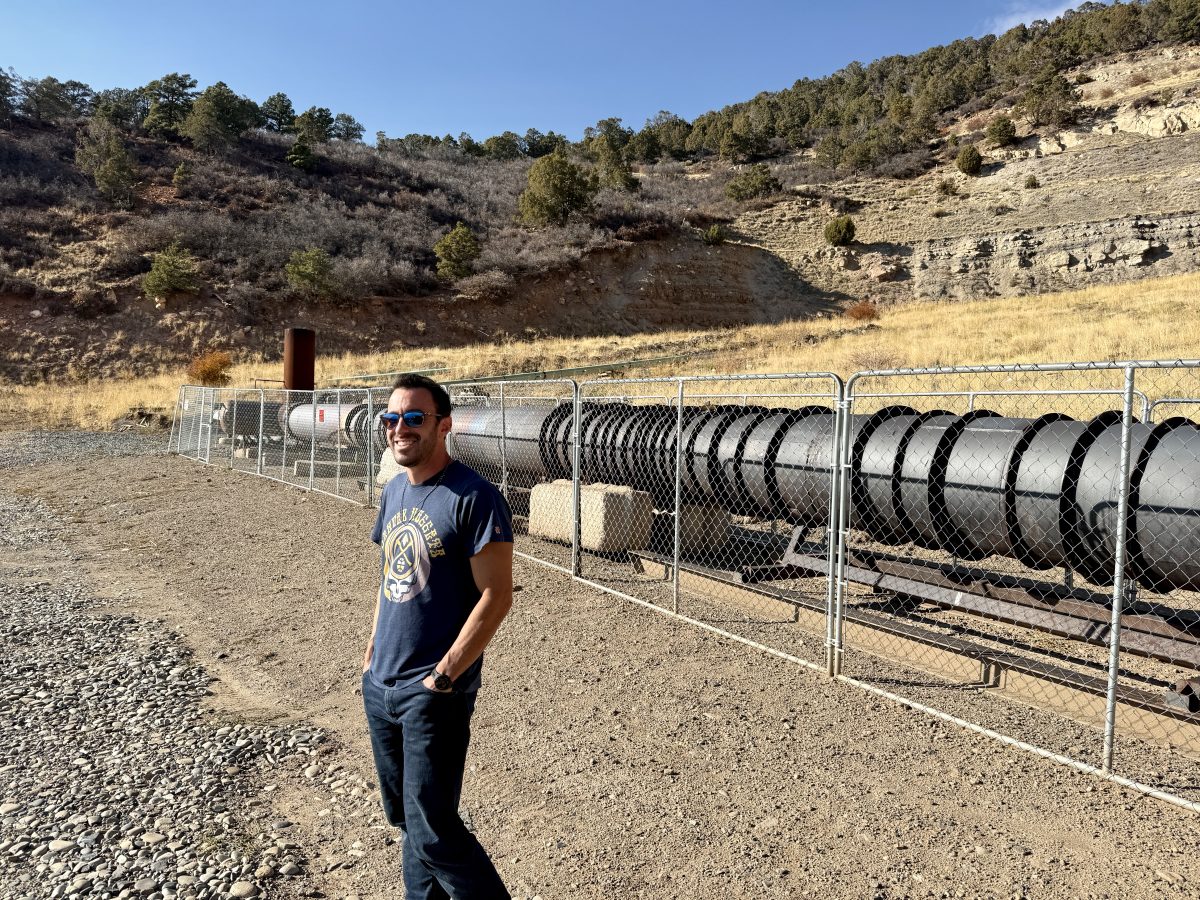 Chris Caskey has spent more than decade scouring the North Fork Valley for abandoned coal mines leaking potent methane. This year he helped design and build a methane flaring operation above Paonia. (Jason Blevins, The Colorado Sun)
A gasoline-powered vehicle emits 4.29 metric tons of carbon dioxide a year, or 0.36 metric tons a month. So removing 1,428 metric tons of carbon dioxide from the atmosphere in the month is the equivalent of removing about 4,000 cars from the roads that month. Or by his more hastened calculations around the effects of potent methane over 20 years, the project has removed more than 11,700 cars from the road for the month of October.
Whatever way you count, he says, “As long as we keep it up, those cars stay off the road.”
Aspen Skiing Co. in 2012 invested $5.4 million to capture leaky methane at Oxbow Corp.’s Elk Creek coal mine in Somerset. Generators atop the mine converted the methane waste into 24 million kilowatt hours of electricity, enough to power the ski company’s four ski areas, 13 restaurants and three hotels. It also removed the annual equivalent of climate-impacting emissions belched by more than 13,000 cars.
The ski company’s boss at the time, Mike Kaplan, called the first-in-the-West project “the most exciting, innovative, optimistic, coolest project I’ve ever been associated with.”
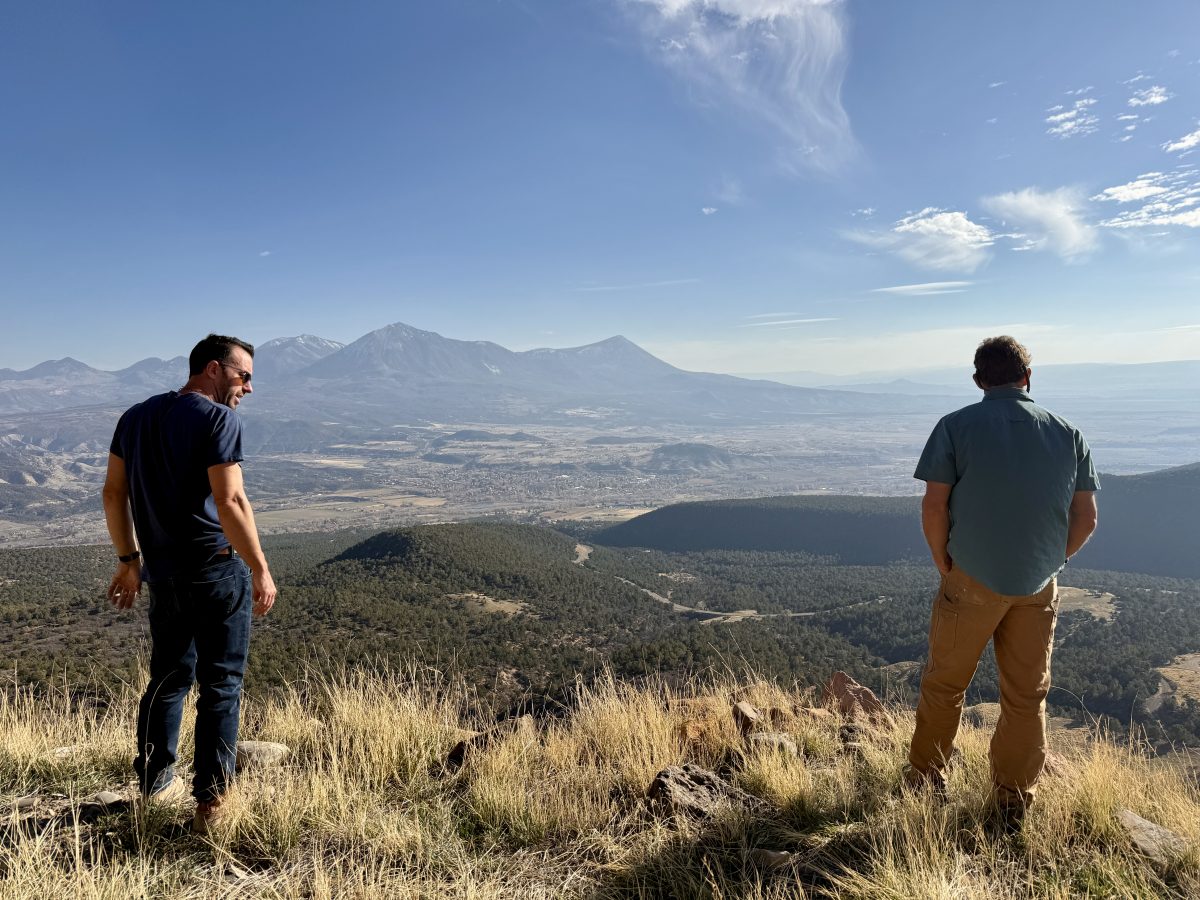 Chris Caskey and Auden Schendler are co-owners of the 117-acre Bowie #1 mine above Paonia where they have designed a methane destruction system they hope will become a national model for slowing emissions of climate-warming gases. (Jason Blevins, The Colorado Sun)
Ten years later, the flow of the methane from the Elk Creek Mine slowed to a trickle and the generators stopped producing electricity. Today, the idled methane electricity project at the Elk Creek Mine only flares the methane, converting it to less impactful carbon dioxide.
That’s what the methane-destroying pipe at the abandoned Bowie No. 1 mine is doing. The damp gas burping up from the mine also generates water as it hits cold weather and is burned off. The project, at peak operation, could generate a few hundreds gallons of water a day.
Burning methane is the low-hanging fruit for climate advocates like Caskey, Jones and Schendler.
Reducing heat-trapping carbon dioxide in the Earth’s atmosphere requires sweeping economic and social transformation, they say. While climate advocates orchestrate those foundational shifts, it’s best to focus on the easiest steps for more immediate benefits.
A growing chorus of scientists argue that curbing methane emissions — as well as refrigerants, black soot and smog — right now can slow global warming by a half-degree Celcius, which would prevent more than 225,000 premature deaths and protect some 24 millions of tons of crops. And it’s not too heavy of a lift: plug leaky mines and pipelines, burn natural gas when drilling wells and compost organic waste before sending it to landfills. (Routine burning of natural gas is prohibited in Colorado, but state regulators do allow flaring when natural gas developers and drillers can show that flaring will reduce impacts to public health, safety, welfare, the environment or wildlife resources.)
“The best thing a planet can do today for the climate is to take a Bic lighter and go around the planet and set every methane leak on fire. And then we can figure out how to use it beneficially,” Schendler said. “But right now it’s pouring out of old mines and out of cracks in the earth and out of old well heads and no one is doing anything about it.”
Those coal mines around Paonia and Somerset “are steaming piles of methane,” Schendler said. “Like cow patties.”
Methane entrepreneur baking bricks, selling credits to slow warming
Caskey has spent the better part of a decade seeking out ways to capture and use methane in the North Fork Valley. Several years ago the chemist and former professor at Colorado School of Mines hatched a plan to collect sediment from the silt-clogged Paonia Reservoir and shape it into bricks and tile that could be cooked in kilns fired with methane leaking from 20-plus mines in the valley.
The climate warrior entrepreneur has followed the collapse of coal mining in Colorado. Coal used to deliver more than half of the state’s electricity and now it provides less than a third. Nowhere is the coal crash felt more acutely than the North Fork Valley, where the economy is transitioning away from mining and toward increased reliance on agriculture, tourism and recreation.
A 2016 Colorado Energy Office study of coal mine methane identified 11 abandoned coal mines around Somerset that were spewing 4.3 million cubic feet of methane into the atmosphere a year.
In 2023, Caskey used methane-sniffing gizmos on airplanes to identify the leaking and long-shuttered mines in Coal Basin above the Crystal River Valley. The amount of methane Caskey found qualified the Coal Basin mines as “super-emitters.” The five old Coal Basin mines on the eastern flank of Huntsman Ridge produced nearly 60 millions tons of coal between 1956 and 1990. The methane burbling from the mines that span more than 5 square miles could be doing as much damage to the climate as all the houses, buildings and vehicles in Pitkin County.
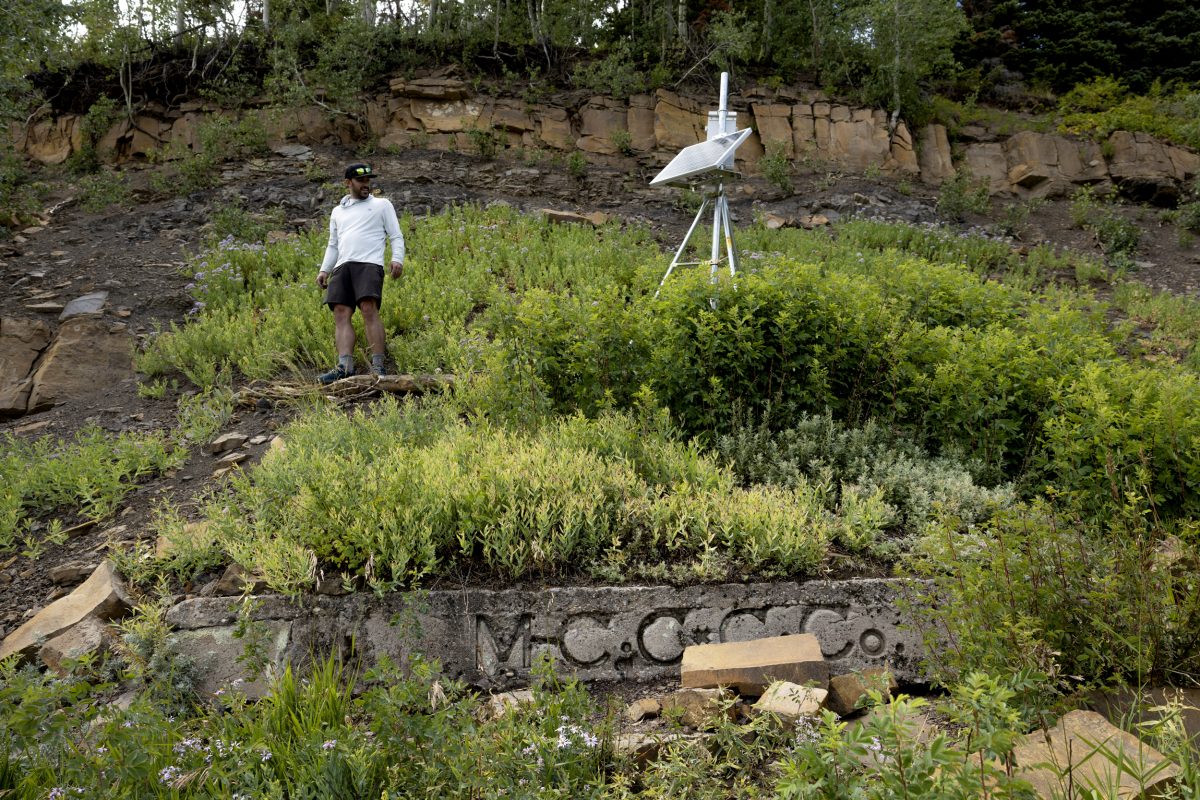 Delta Brick and Climate Company’s Christopher Caskey checks the stability of the methane detectors moments after placing it above the former Mid-Continent Coal and Coke Co. mine, Aug. 23, 2023, near Redstone. The abandoned mining sites from the 19th and the 20th centuries in the Coal Basin area are leaking methane, a harmful greenhouse gas. Caskey’s machines are measuring just how much methane is percolating from the gassy mines. (Hugh Carey, The Colorado Sun)
Caskey and the Aspen Community Office for Resource Efficiency want to capture that Coal Basin methane and burn it, just like he’s doing in Paonia. The White River National Forest is reviewing the plan to install flaring vents at the remediated mine portals in Coal Basin.
Today, Caskey, Jones and Schendler are hoping to find a business, philanthropist or regional government who would buy methane-destroying credits to reduce their carbon emissions impact. Inside a small shack, a computer monitors the flow of methane, carefully tracking the amount captured and burned. Maybe they can connect a brick-banking kiln to the super-hot flaring pipe for the Montrose-based Delta Brick and Climate Co. that Caskey sold to his company manager earlier this year.
The state of California, the fifth largest economy in the world, in 2013 created a market-based cap-and-trade program that requires businesses to either reduce carbon emissions or buy carbon-reducing offsets from a regulated market.
The Paonia methane burning project could sell coal-bed methane destruction credits on the California market, but only for about $15 a ton.
That would barely cover the cost of capturing and flaring the methane.
“And it does not justify doing another project,” Caskey said.
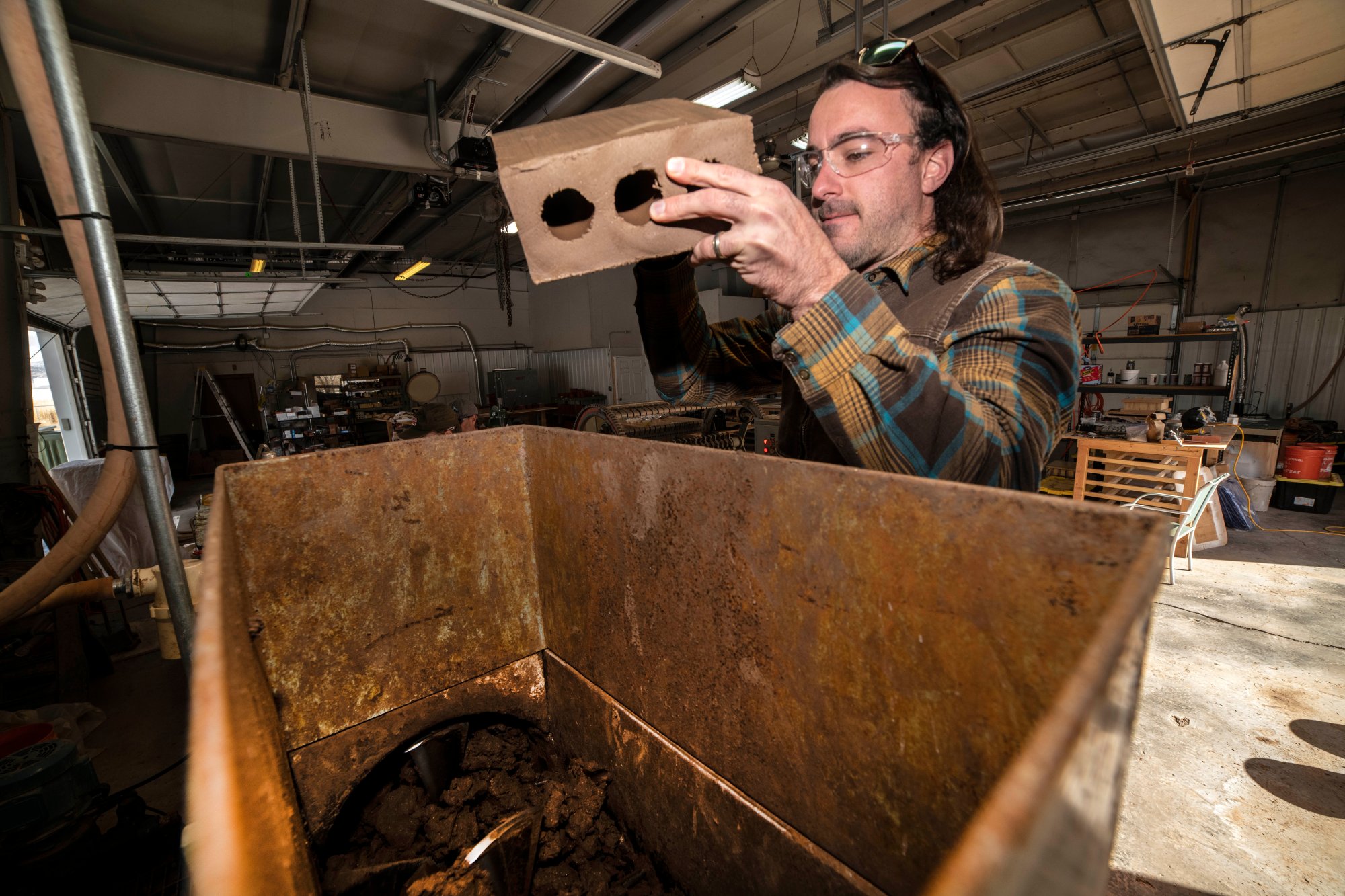 Delta Brick and Climate Company founder Christopher Caskey feeds wet blemished brick made from mud from the Paonia Reservoir into a brick making machine at the company’s brick factory in Montrose, Colo, Monday January 25, 2021. (William Woody, Special to The Colorado Sun)
The answer for Colorado methane hunters would be a cap-and-trade program similar to California’s. Or a national program. In July, U.S. senators from Virginia and West Virginia re-introduced legislation that would create a tax credit for capturing methane at active and abandoned coal mines, which are the country’s fifth-largest source of methane emissions. (Colorado has a cap-and-trade program that allows major polluters to buy carbon-offsetting credits if they have installed certain systems to reduce on-site emissions.)
“So we wait for prices to go up or move off the regulated market into the voluntary market, where a philanthropist, business or community will buy at a higher price with the argument being these are extremely high quality credits,” said Schendler, who pitches a buy-in of the methane destruction project as “a good story, with good PR” on top of the climate benefits.
“We are hoping we can find someone saying we want to support this project because it’s the right thing to do,” Caskey said. “And then we can do it again and again.”
Type of Story: News
Based on facts, either observed and verified directly by the reporter, or reported and verified from knowledgeable sources.