
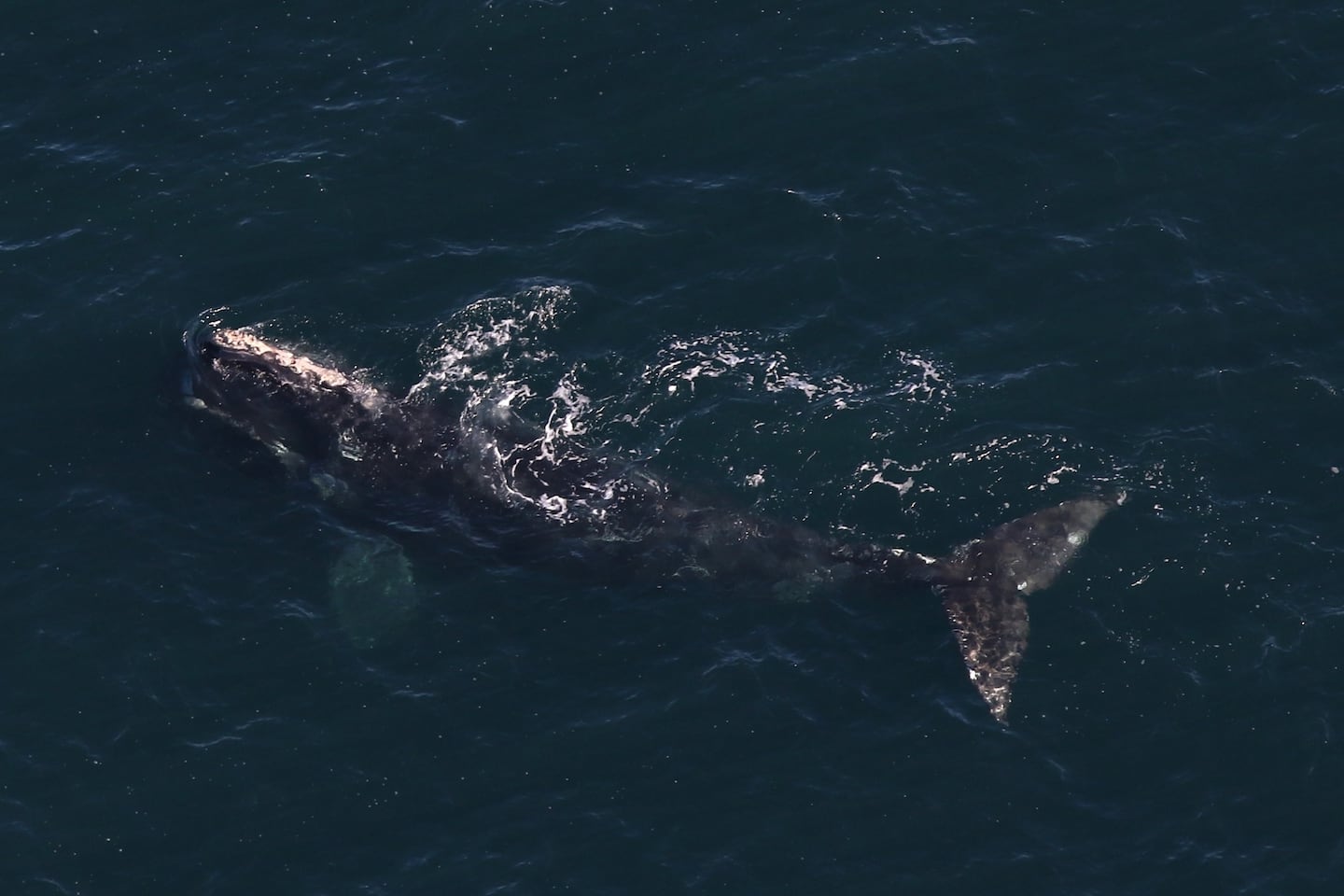
A recent whale discovery has blown researchers out of the water on both sides of the Atlantic.
An endangered North Atlantic right whale previously only seen off the coast of Ireland last year swam 3,000 miles from Donegal to Boston, a journey that researchers are calling “extraordinary.”
Observers from the Center for Coastal Studies were conducting an aerial survey in Massachusetts Bay on Nov. 19 when they spotted their first right whale of the season off Boston. The massive mammal bore unique scarring on the right side of its head and was feeding alone at the surface, not far off from a group of humpback whales.
The researchers immediately began snapping photos of the lone traveler.
“The first sighting of the year is always exciting, but we didn’t yet realize just how remarkable this one would turn out to be,” said Ryan Schosberg, who spotted the whale alongside fellow researcher Annie Bartlett.
Only an estimated 384 right whales remain in the world. The center documents about half of the entire population swimming in and around Cape Cod Bay every year. When the researchers realized the whale didn’t match any known right whales, they reached out to the New England Aquarium, where researchers have collected millions of photos of right whales over decades and tracked their life stories.
They soon found an international match.
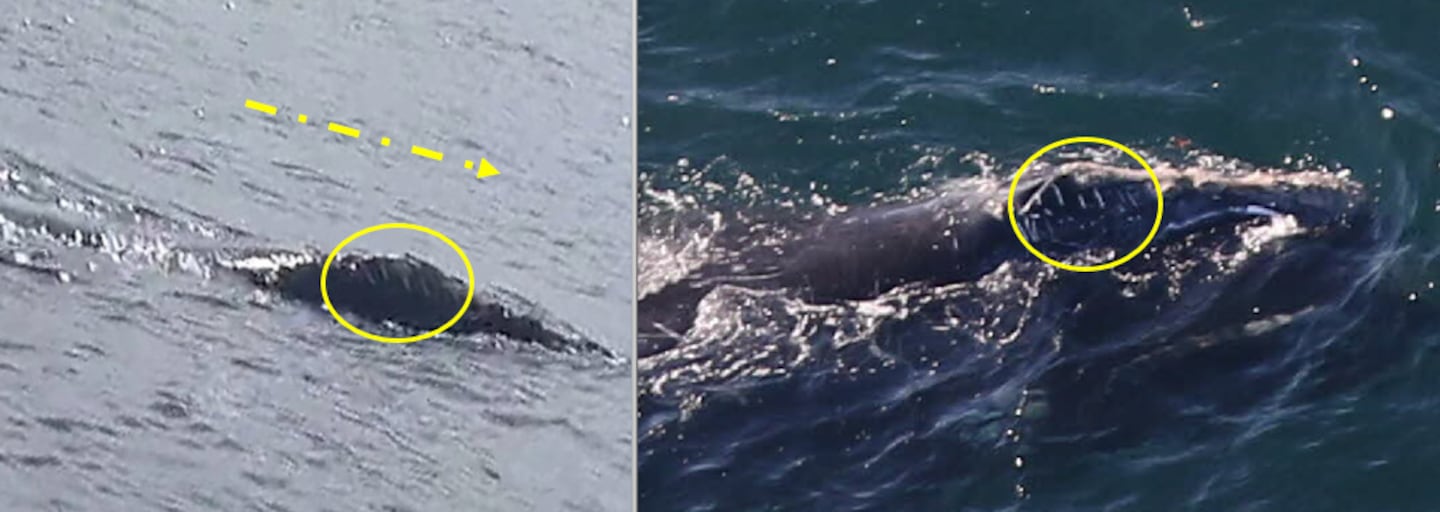 Unique scarring on the right side of the whale’s head is one of several features that helped researchers in the New England Aquarium’s Anderson Cabot Center for Ocean Life match photos from the Ireland sighting (left) with images captured by the Center for Coastal Studies off Boston (right).Naomi D’arcy (left) and Center for Coastal Studies
Until last month, scientists at the aquarium said that particular whale had only been spotted in Donegal Bay — the largest bay in Ireland — in July of last year. Researchers said the sighting appears to be the first documented case of a whale initially seen in the eastern North Atlantic later being seen in the western North Atlantic.
“The next day, when the aquarium’s catalog team sent over a potential match, I was shocked,” Schosberg said.
Although the population of right whales in European waters was thought to be eliminated by whaling efforts, some from the area are seen once in a blue moon. But they don’t stick around, or don’t photograph well.
Still, researchers said the sighting suggests that these historical habitats may still hold value for the critically endangered species. Many also continue to search out suitable homes. Warming waters have led to shifts in right whale habitat use.
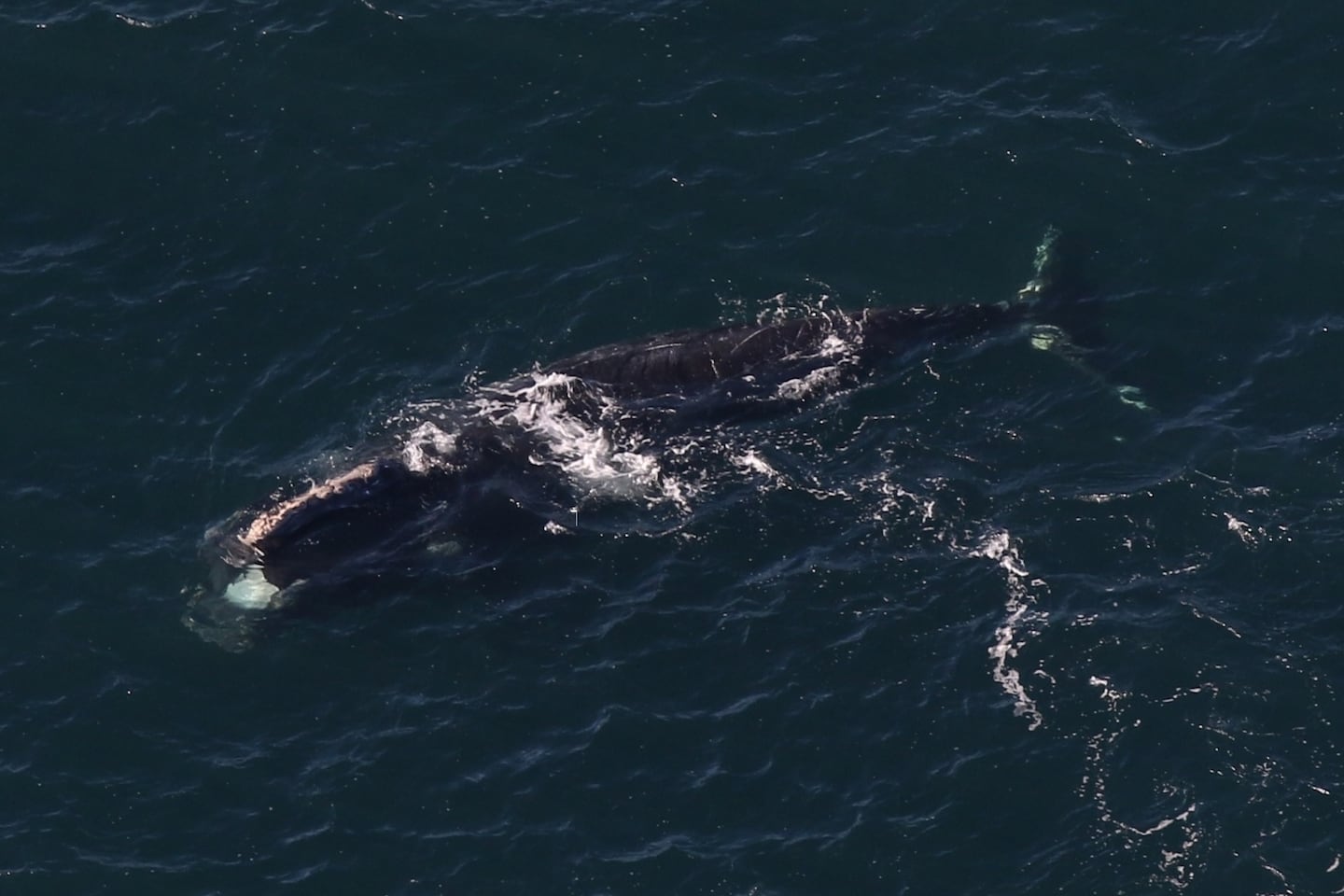 Right whale photographed off Boston on Nov. 19, 2025, previously located in Donegal Bay, Ireland, in July 2024.Center for Coastal Studies
Right Whale Ecology Program
“Seeing a whale photographed in Ireland reappear off Boston is extraordinary,” said Daniel Palacios, director of the Right Whale Ecology Program at the Center for Coastal Studies. “Encounters like this highlight both their resilience and the importance of international cooperation to support their recovery.”
Pádraig Whooley, the sightings officer at the Irish Whale & Dolphin Group who shared information with the aquarium for identification, noted securing photo matches requires “a fair bit of luck.”
“So, we had zero expectation of matching this solitary right whale from Donegal Bay in July 2024,” Whooley said. “But where else would one expect to find a right whale with Irish connections if not off Boston?”
Shannon Larson can be reached at shannon.larson@globe.com. Follow her @shannonlarson98.