
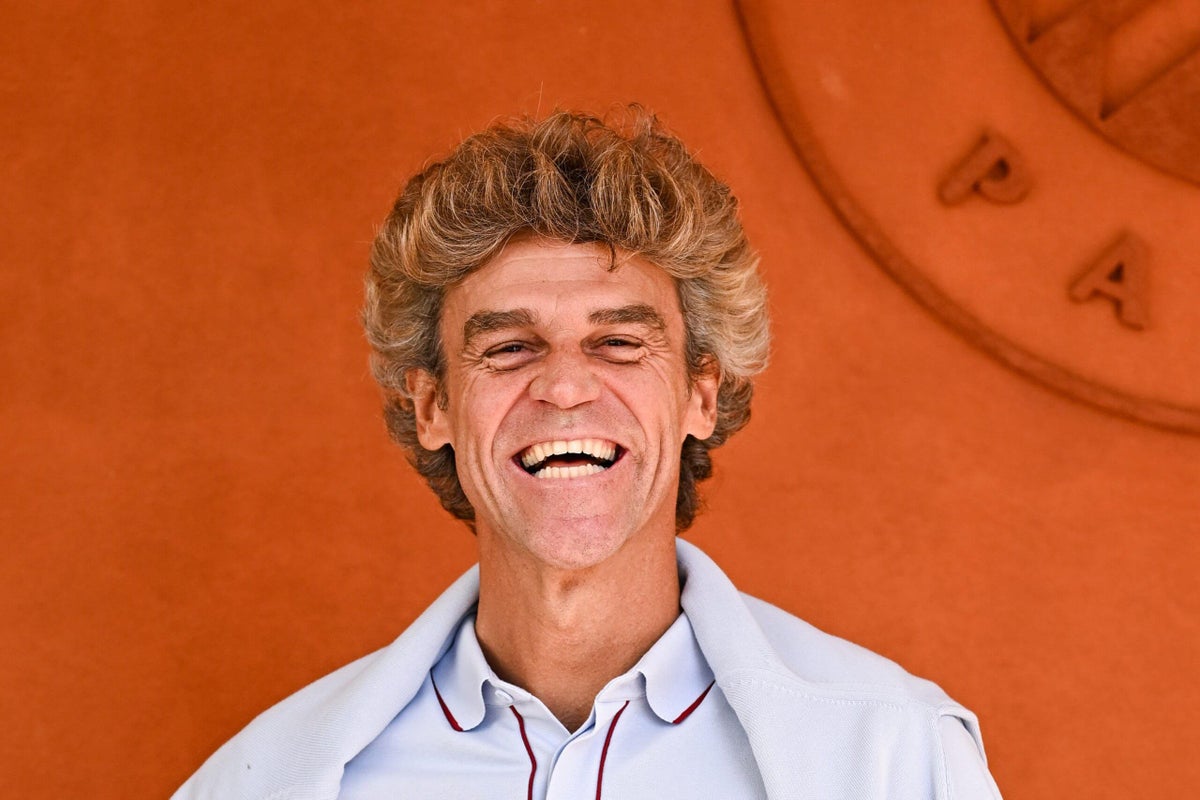
Start with the name: Guga.
Then, the hair, a big bush of dirty-blond curls. The irrepressible smile. The joy he brought to the task of a grueling tennis match. The whipping, next-generation forehand that would take over the sport.
Twenty-five years ago this week, all that, plus the belief that his coach instilled in him that he could do something no one from his country had done before, helped to make Gustavo Kuerten the men’s world No. 1. Kuerten is the only Brazilian to achieve that lofty spot since the advent of the current tennis rankings system in 1973, and just one other player from South America had reached No. 1 before.
None have since.
“History goes against you,” Kuerten, 49, said during an interview this week from the headquarters of his business and foundation in Florianopolis, on Brazil’s southern coast.
“We had the example to follow of Maria Esther Bueno,” he said of the No. 1-ranked women’s player of the 1950s and 1960s, who won seven Grand Slam titles in singles before professionals were allowed to play the events.
“But it was kind of undercover. Nobody talked about it and raised you on these beliefs.”
A quarter-century after he reached the top of the tennis mountain, much has changed in Kuerten’s life and much remains the same. The light curls are as bushy as ever, and he still has to fight off that smile.
He has an artificial hip and plays tennis half a dozen times a year because balancing and pushing off one leg can cause pain. His 12-year-old son, Luis Felipe, who is starting to climb through Brazil’s junior ranks, carries the Kuerten tennis torch now.
“It’s much harder, the taste of being there,” Gustavo said. “Hopefully, in a few years, I can be back to enjoy more.”
Still, a typical day involves a few hours of physical activity in the mornings. Often, that means surfing, his passion, and then perhaps some physical therapy.
Then he might come into the office for a bit to take care of some work with his business or his foundation, which supports opportunities for social inclusion and transformation through sports and the arts for children, especially those with disabilities. Kuerten had a beloved younger brother, Guilherme, who lived with cerebral palsy and who died in 2007.
He described Guilherme as the light of the family and the keeper of his trophies. Guilherme would never accompany Gustavo to the airport when he headed out on another of his journeys, because it made him too sad to watch his big brother leave. But he was always at the airport when he returned, to welcome him home — and to collect the hardware.
In the second half of the afternoon, Kuerten goes on dad duty. He will bring his son to tennis training, or his daughter, Maria Augusta, to piano lessons. It’s a good life. The laughs come easy.
His face lights up most when he remembers his journey to the pinnacle of the sport. He can pinpoint the moment it began, in 1992, during his first visit to the French Open as a 15-year-old junior who struggled to stay with his contemporaries on the court. In a postcard he sent home, he wrote that he would practice as hard as he could and make it to No. 1 someday. He said he had to write it down so he would believe it.
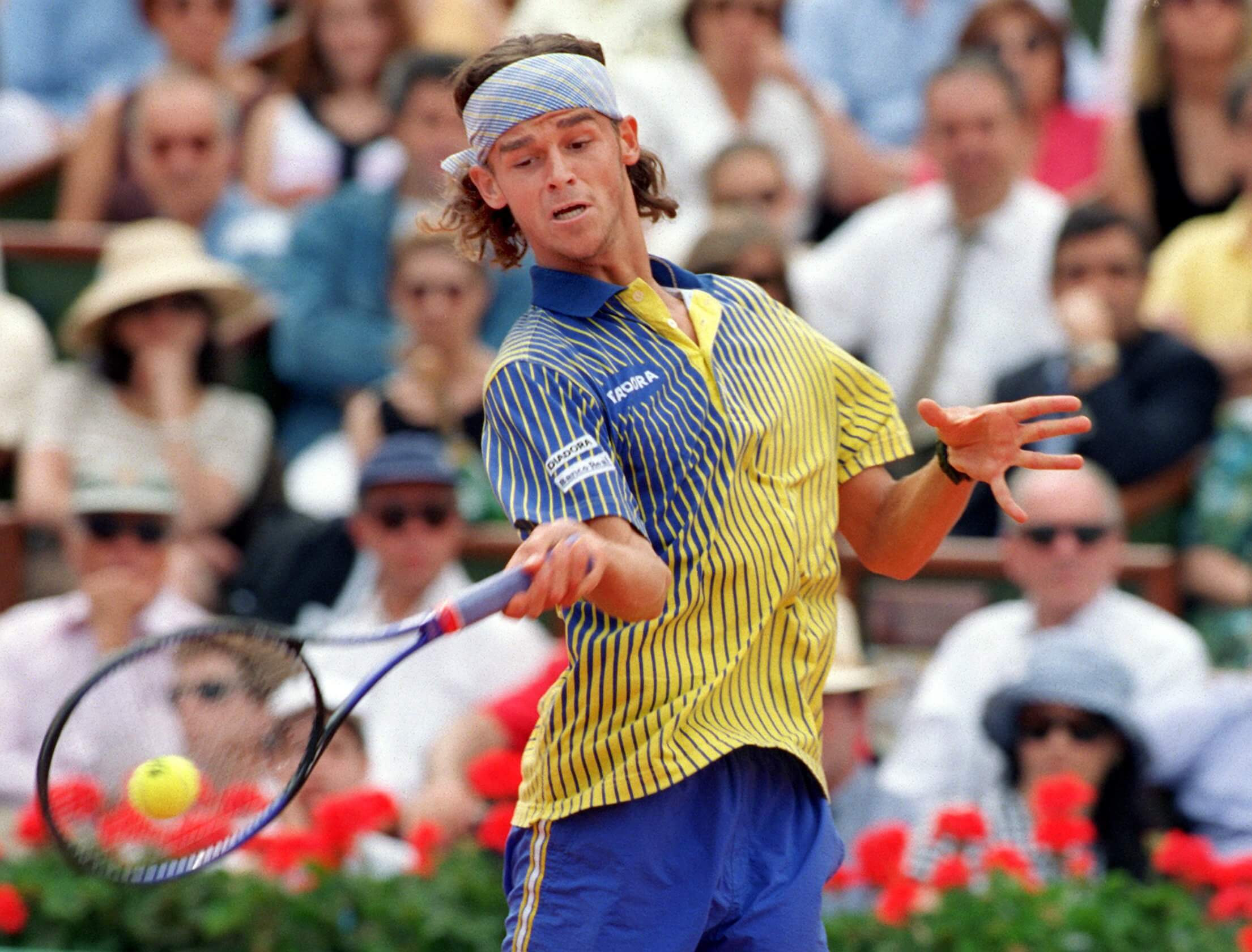
Gustavo Kuerten whips a topspin forehand at the 1997 French Open, where he won his first tennis title. (Arne Dedurt / Getty Images)
Two years later, he made possibly the biggest decision of his career. He became one of the first players to switch from natural gut strings to polyester strings. A decade later, nearly everyone would use them, but at the time, they were revolutionary. Players could take bigger, longer swings than ever before to maximize racket speed and spin, allowing them to hit with both power and consistency. Since Kuerten made the change when he was just 17, he was able to build his whole game around the new technology.
In 1997, Kuerten arrived at Roland Garros again as the world No. 66. By the time he left, he had come out of nowhere to win his first French Open, beating the three most recent champions on his run to the title: Thomas Muster in the third round, Yevgeny Kafelnikov in the quarterfinals, and Sergi Bruguera in the final.
The triumph launched him into the top 15, but still a world away from the summit. Kuerten knew he was far from a complete player, and at the time, Pete Sampras was nearly as dominant as Carlos Alcaraz and Jannik Sinner are now.
Getting to No. 1 during the next three seasons would mean climbing past a player who would become a legend of the sport and who was already beyond formidable. That was to say nothing of Michael Chang, Kafelnikov and Patrick Rafter — and then the rising Andre Agassi, who surged up the rankings to battle with Sampras.
Even after the 1999 season, which Kuerten finished as world No. 5 after Sampras won the ATP Tour Finals to knock him down from No. 3, Sampras and Agassi still felt like they were in another level of the atmosphere, even if Kuerten had been ranked higher than both of them at separate times.
Then Kuerten had an epic battle with Sampras in the 2000 Miami Open final. Sampras prevailed in four sets, but tiebreaks decided the last three. Sampras won two of them, the final one 8-6.
On the plane ride home to Brazil, he fidgeted in his seat rather than falling easily to sleep as he usually did. His coach, Larri Passos, asked him what was bothering him. They talked through the match, about how close he had been and how far he had come.
“He looked at me and said, ‘You are ready to be No. 1,’” Kuerten recalled. Kuerten initially doubted him, but the idea no longer caused him anxiety. He’d had a taste of Sampras and Agassi’s top levels and felt like he could match them.
Two months later, he ground his way to consecutive titles on the clay, in Hamburg and then in Paris, where he claimed his second French Open title by beating Kafelnikov again, Juan Carlos Ferrero, and then Magnus Norman, despite a ferocious comeback from the Swede.
The tennis world slowly grew obsessed with the things that still stand out: Kuerten’s curls, his electric smile, his forehand. More players began using the polyester strings and imitating his strokes.
He won a hard-court title in Indianapolis that summer, but flamed out in the first round of the U.S. Open before entering the ATP Tour Finals as the world No. 2. When he got to the last four, Sampras and Agassi stood in his way. He beat them both, sweeping past Agassi 6-4, 6-4, 6-4 in the final to wake up the next morning as the world No. 1.
He would spend 43 weeks there during the next 12 months before giving way for the last time to Lleyton Hewitt in November 2001.
Kuerten said he isn’t surprised that another South American hasn’t gotten there since. So many players from so many other countries, and Roger Federer, Rafael Nadal, Andy Murray, Novak Djokovic clogging the top for so long. Now there’s Sinner and Alcaraz. Juan Martín del Potro, the last South American player to win a Grand Slam singles title, got to world No. 3.
“It’s rare even for the United States,” he said.
Kuerten’s challenges were not unique. His country and continent have long been at a disadvantage to tennis infrastructure in Europe and the U.S. In the present day, the February South American swing on the ATP Tour is gradually being eroded, with the announcement of the long-mooted ATP Masters 1000 event in Saudi Arabia putting further pressure on the continent’s standing.
ATP Tour chairman Andrea Gaudenzi has said he would like the new tournament to run alongside events in South America.
Kuerten believes that a South American player could challenge for the top spot before too long: João Fonseca, the 19-year-old Brazilian sensation. His rise has brought throngs of Brazilian fans with it across the world, as Kuerten experienced through his own career.
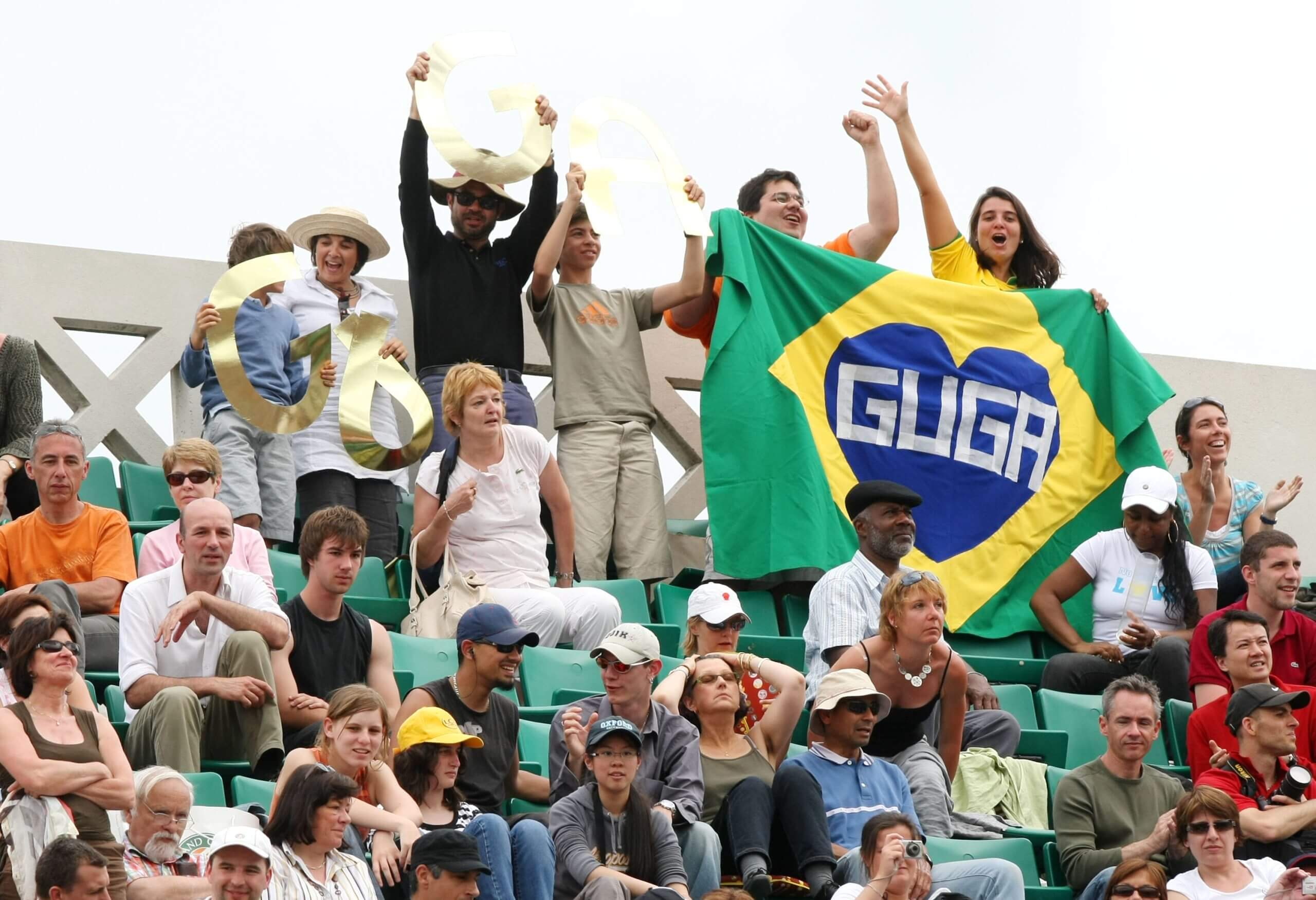
Gustavo Kuerten’s exploits drew adoring Brazilian fans to tennis stadiums across the world. (Suzanne Plunkett / Bloomberg via Getty Images)
Still, nothing is guaranteed. He serves as a resource for Fonseca, available upon request but careful not to get in the way of what he describes as the excellent job that his coach, Guilherme Teixeira, has done with him. He and Teixeira speak often, he said, but he remains in the background.
“I try not to disturb,” he said.
Why is he so high on Fonseca?
“The most crucial weapon is about the mentality, what he wants for his tennis career, and I only see a kid and a player targeting the maximum,” he said. “He will try as much as he can. That’s what it takes.”
Fonseca’s background is a comfortable one, even before the prize money he might earn and sponsorship deals he might sign. Kuerten sees plenty of players who would be satisfied with the good life of money and fame that comes with being a top-five player, he said. Fonseca? He does not look like one of them.
It won’t happen next year, Kuerten said, but check back in three to five years. That’s more realistic.
And who knows, maybe his son will come along eventually, too. Passos is due to come down to Brazil from his home in Florida to conduct a camp in December. Luis Felipe will be there — another South American dream in the making.