
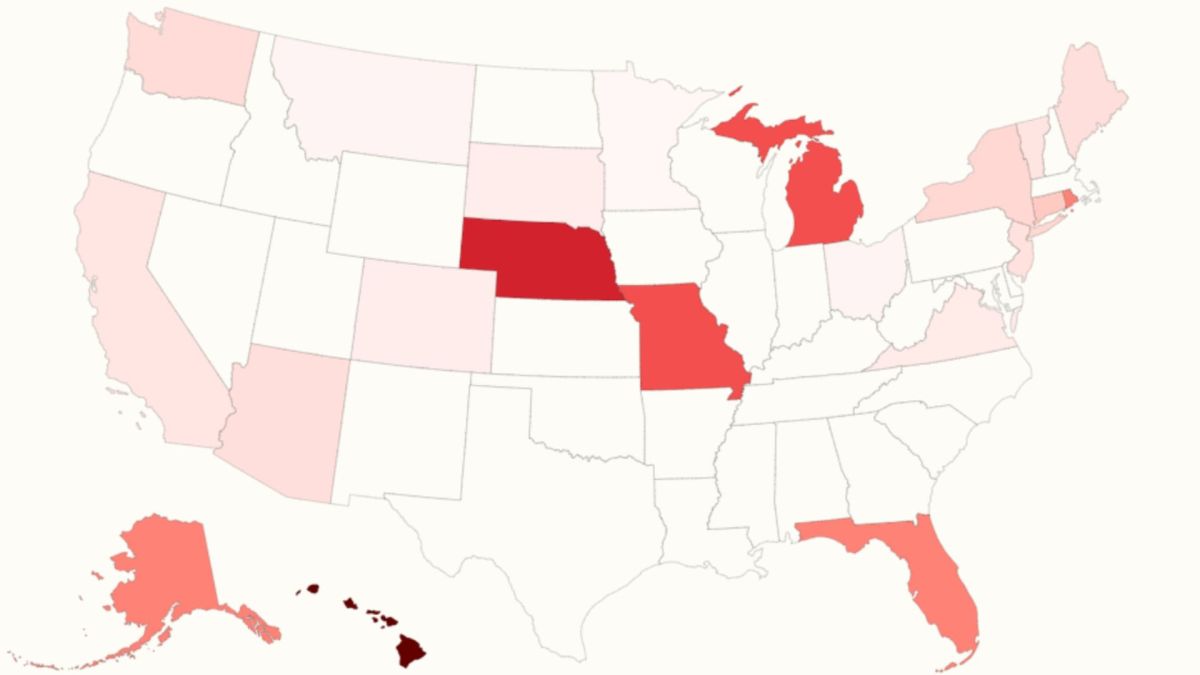
A number of states are increasing their standard minimum wage in 2026, with some seeing increases as high as $2 starting from January 1.
The federal baseline is still $7.25 per hour under the Fair Labor Standards Act, but many states have upped their minimum wage and are boosting their baselines even more in the new year.
There have been calls to change the federal baseline this year, as it has not changed since 2010—the longest period without an increase since the federal minimum wage was introduced in 1938.
Why It Matters
A minimum wage establishes a legally binding baseline pay for employees, although some businesses and workers may be exempt from minimum wage law due to a number of factors.
The intent is to ensure that even the lowest-paid jobs provide the employee with enough money to cover a basic standard of living.
With rising costs of living being felt across the country, from higher utility costs to higher health care costs, even a small increase in minimum wage will come as a relief to many Americans.
What To Know
According to data collected by Employer Pass, 19 states are increasing minimum wage from January 1, including: Arizona, California, Colorado, Connecticut, Hawaii, Maine, Michigan, Minnesota, Missouri, Montana, Nebraska, New Jersey, New York, Ohio, Rhode Island, South Dakota, Vermont, Virginia, and Washington.
The state seeing the highest increase in minimum wage is Hawaii. In the state, those previously being paid the baseline of $14.00 an hour, will now be paid $16.00.
In Nebraska, employees on minimum wage will also have a notable pay increase. Where previously their pay was set at $13.50, they will be paid $15.00 an hour from January 1.
Other states with higher minimum wage increases coming in on January 1 included Michigan (increase of $1.25), Missouri (increase of $1.25), and Rhode Island (increase of $1.00).
The other states have increases of less than $1.00 coming in on January 1, although Alaska and Florida both have increases of $1.00 coming in later in the year – on July 1, 2026, and September 30, 2026, respectively.
Oregon is also set to increase its minimum wage later in the year, but by how much is still to be determined, according to Employer Pass.
The action by multiple states to increase minimum wages – some now having minimum wages double the federal baseline – highlights the growing gap between the stagnant federal rate and the cost of living in the country.
Earlier this year, Representative Bobby Scott, the Democrat from Virginia, and U.S. Senator Bernie Sanders, the independent from Vermont, introduced the “Raise the Wage Act of 2025” on April 8 – legislation that would have increased the federal minimum wage to $17 an hour by 2030.
The lawmakers argued it would help lift millions of workers out of poverty and narrow racial and gender wage gaps, however no momentum has gathered to push the legislation through to final passage.
What Happens Next
On January 1, Americans on minimum wage in any of the 19 mentioned states will have an increase in their pay.