
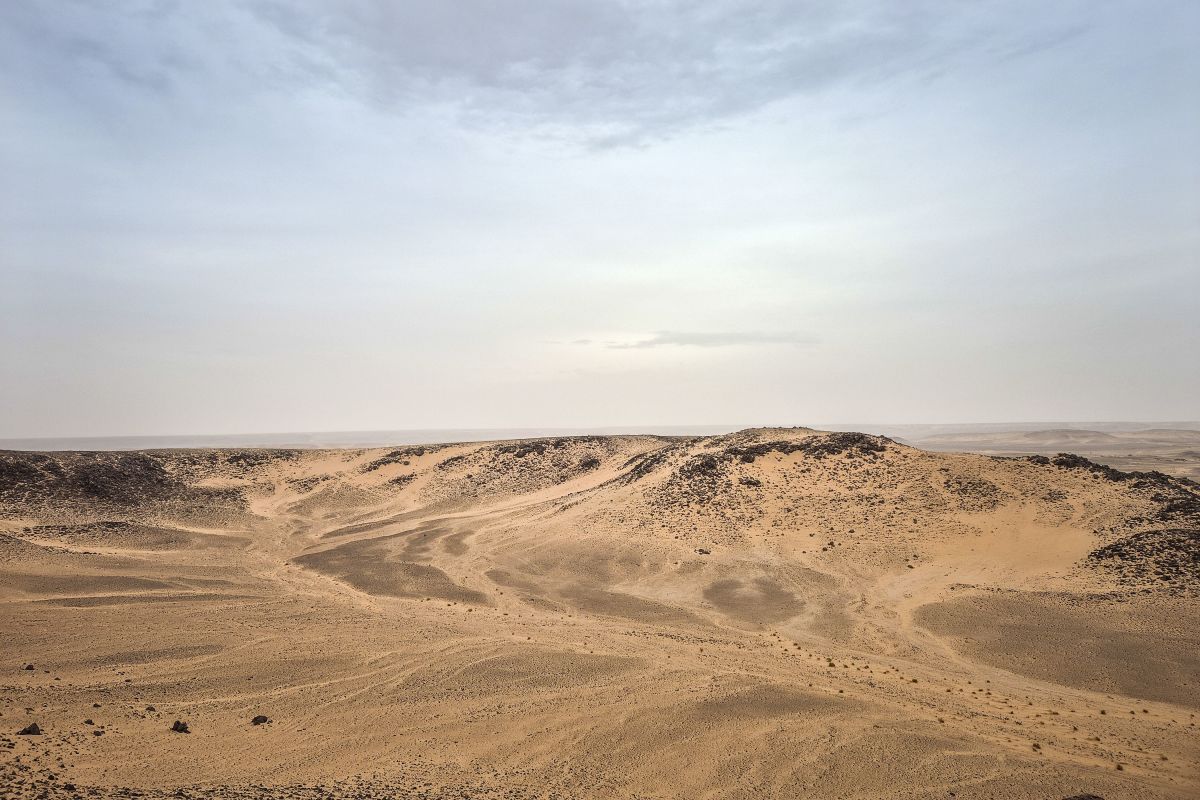
Scientists are excited over a recent discovery of “black mesas” in the Sahara desert that appear to be hundreds of millions of years old. The are was discovered in the southern Mauritania region of the desert in May 2023, and it they appear to be created by a combination of ancient geology and more modern forces of nature.
The formations are so massive, that even NASA has been able to capture a picture of them, giving researchers even more to consider as they try to uncover as much as they can about the mesas.
An astronaut took pictures of the formations from space
Scientists are getting a new view of the plateaus found in the desert, according to the Indian Defense Review, thanks to an astronaut who took a photo of the find while aboard the International Space Station.
The dunes stretch for several miles, and appear as three separate structures. However, when the original red and gold plateaus originally existed, they were likely part of one single structure instead. It’s believed that this likely took place between 541 and 252 millions of years ago.
Over time, wind and water caused the structure to erode into the three separate formations seen today, which are now covered in a naturally formed glaze made of iron oxides, manganese, and clay known as rock varnish. This mix, along with the microorganisms that call it home, can give the mesas a blue color, which makes them look like shadows when viewed from certain perspectives.
Related: Egypt’s $1 billion museum is finally open after two decades
How you can view the rock formations for yourself
Want to check out the structure that pre-dates the dinosaurs? You’ll need to fly into Mauritania’s capital city of Nouakchott. From there, you’ll need to hire an official tour guide who can take you into the dessert so you can see the formations for yourself.
While you’re there, you may want to visit some other must-see desert spots, which include:
Oualata, the oasis town that was once part of the Ghana Empire, but now mostly lies in ruins
Terjit Oasis, the watering hole is a beautiful place to rest during a desert trip
However, it’s important to remember to check local Travel Advisory websites before heading to the Sahara. That’s because the Sahara Desert is so large that it covers eleven different North African countries, including Morocco, Libya, Egypt, and Sudan.
Related: Tourism surges in country with ‘level 4’ travel warning
And while some countries are considered more dangerous to travel through than others—for example, as of the time of publication, Sudan is under a Level 4 – Do Not Travel warning, while Morocco is only under a Level 2 – Exercise Increased Caution warning—you should double check the U.S. Department of State’s website to ensure that you know what to expect when traveling to the Sahara, so that you can safely make it to your final destination.
This story was originally published by TravelHost on Dec 4, 2025, where it first appeared in the Attractions section. Add TravelHost as a Preferred Source by clicking here.