
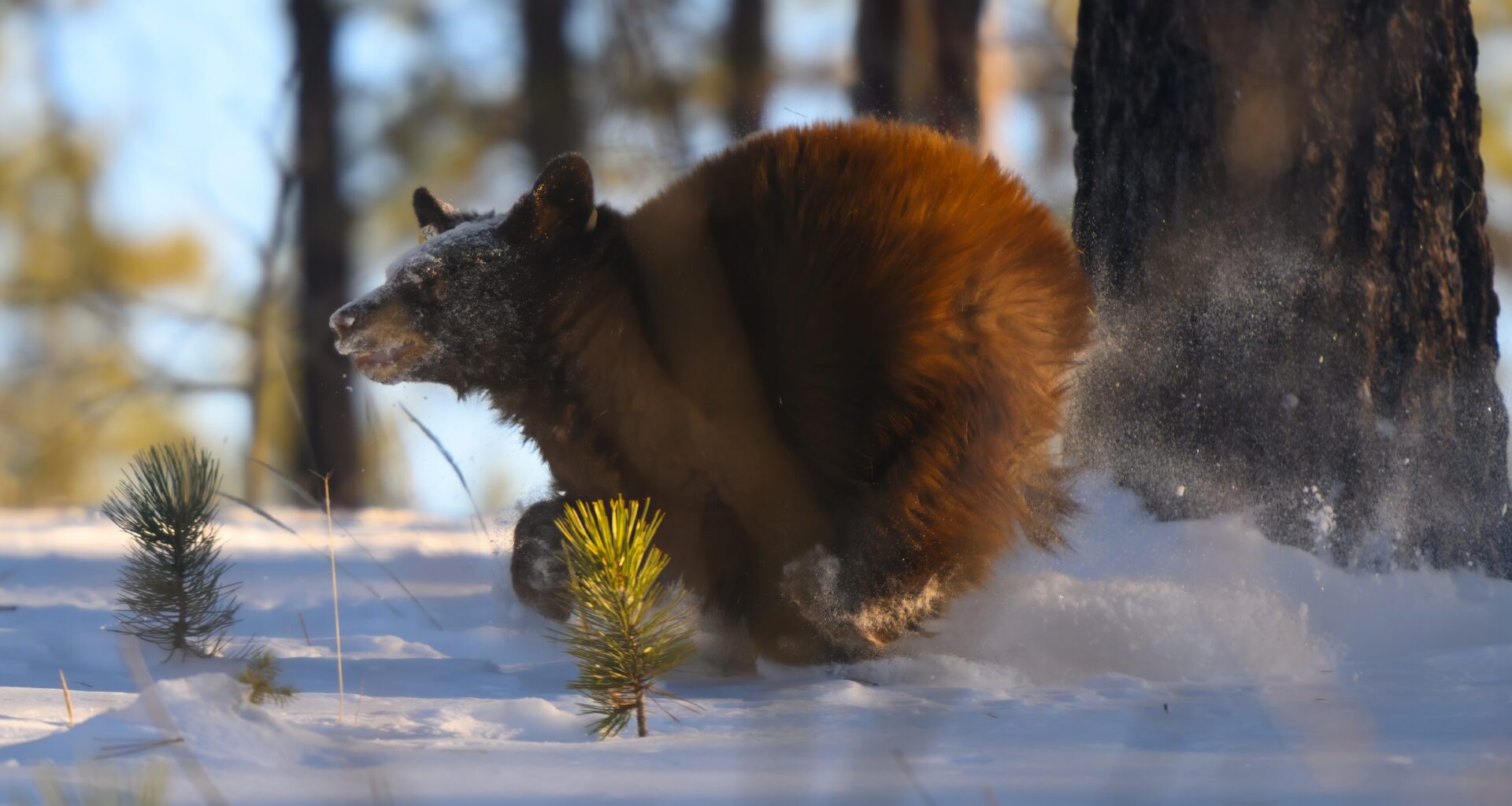
TELLER COUNTY — Hours after the season’s first big snowstorm, five orphaned bear cubs tumbled out of metal crates at the back of two truck beds, kicking up fresh powder as they bounded into the wild.
By the time wildlife officers opened the doors to release the cubs at 2 p.m. Thursday, the bears had traveled halfway across the state from Colorado Parks and Wildlife’s rehabilitation center in the San Luis Valley to a secluded patch of forest, north of Divide.
Here, the 11-month-old cubs will start a life of their own after months of rehab where they learned how to eat food from the natural landscape and were conditioned to fear people. The two groups of siblings were captured last summer in neighborhoods in Colorado Springs and Woodland Park after their mothers broke into homes looking for food.
Per CPW policy, wildlife officers euthanized the mother bears.
As urban bear-human conflicts increase, the rehabilitation of the cubs — and their release into the wild — marks a conservation success, said Travis Sauder, assistant area wildlife manager for the Pikes Peak region.
“Living here in the Front Range, it’s one of the great benefits that we have — there’s always wildlife around whether that’s deer or, in this case, bears,” Sauder said. “So we obviously have a responsibility to make sure that we reduce those attractants, so that we don’t come into conflict with them.”
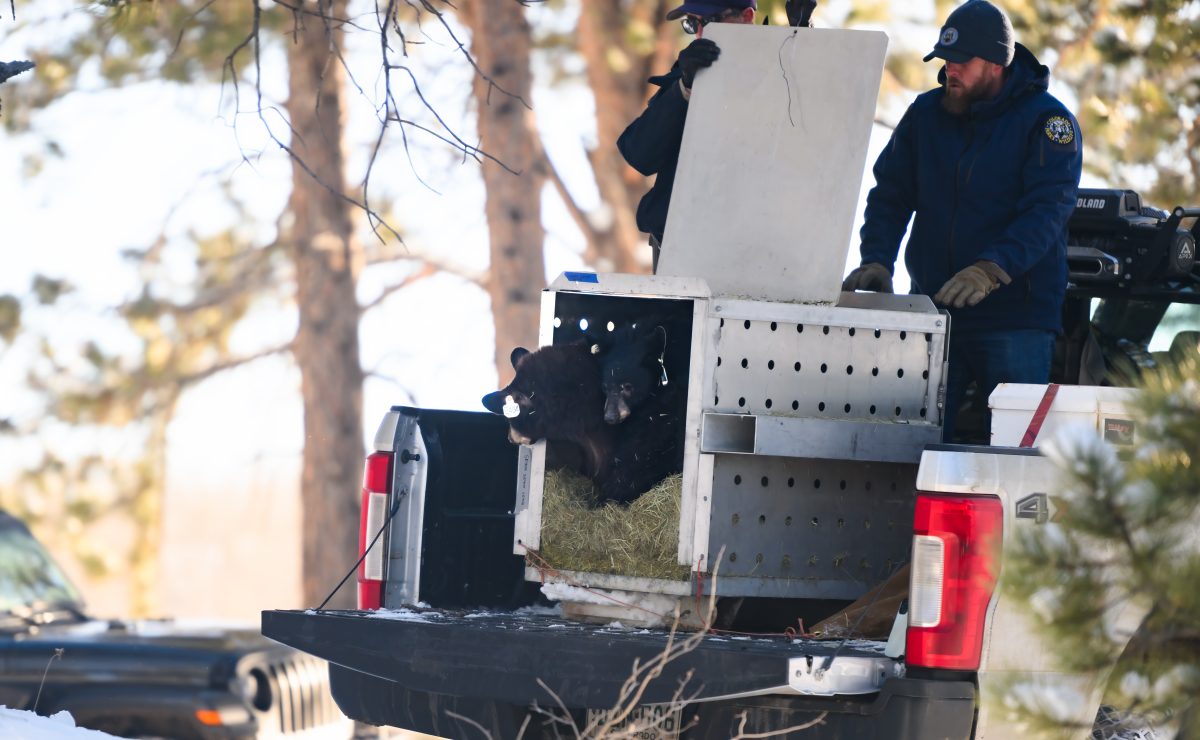 Colorado Parks and Wildlife staffers Travis Sauder, left, and Ty Woodward open a box containing three orphaned bear cubs for release in Teller County December 4, 2025 (Mark Reis, Special to The Colorado Sun)
Colorado Parks and Wildlife received 5,259 bear reports this year between Jan. 1 and Dec. 1, up from the 4,996 reports during the same period in 2024. This year’s total ranks as the highest since 2019 and exceeds the seven-year average of bear-related conflicts and sightings reported to the agency.
Experts estimate there are 17,000 to 20,000 bears in Colorado and the majority of incident reports involved bears trying to access human food sources. Accessible trash, bird feeders and pet food left outside can also lure bears.
“Food failure and food availability is what drives whether we have a lot of conflict,” Sauder said. “And so this year, the southwest had severe drought and so they had a higher conflict than what we did on the Front Range.”
This year, five cubs from the southeast region were placed into rehab, compared with none last year.
“So there’s a huge variation depending on food availability,” he said.
In Archuleta, Dolores, La Plata and Montezuma counties, CPW tracked a second consecutive year of high levels of human-bear conflict with wildlife officers working “around the clock” last summer through November. The incidents come after two winters with almost no low-elevation snowpack, below average snowpack in the high country and a hot, dry summer with little to no moisture until heavy rains came in the fall.
Two of the cubs released Thursday were fitted with ear tags that transmit GPS points. The data is uploaded every 10 to 14 days and will help wildlife officers track the bears’ movement once they emerge from hibernation in the spring and follow their progress as rehabbed adult bears.
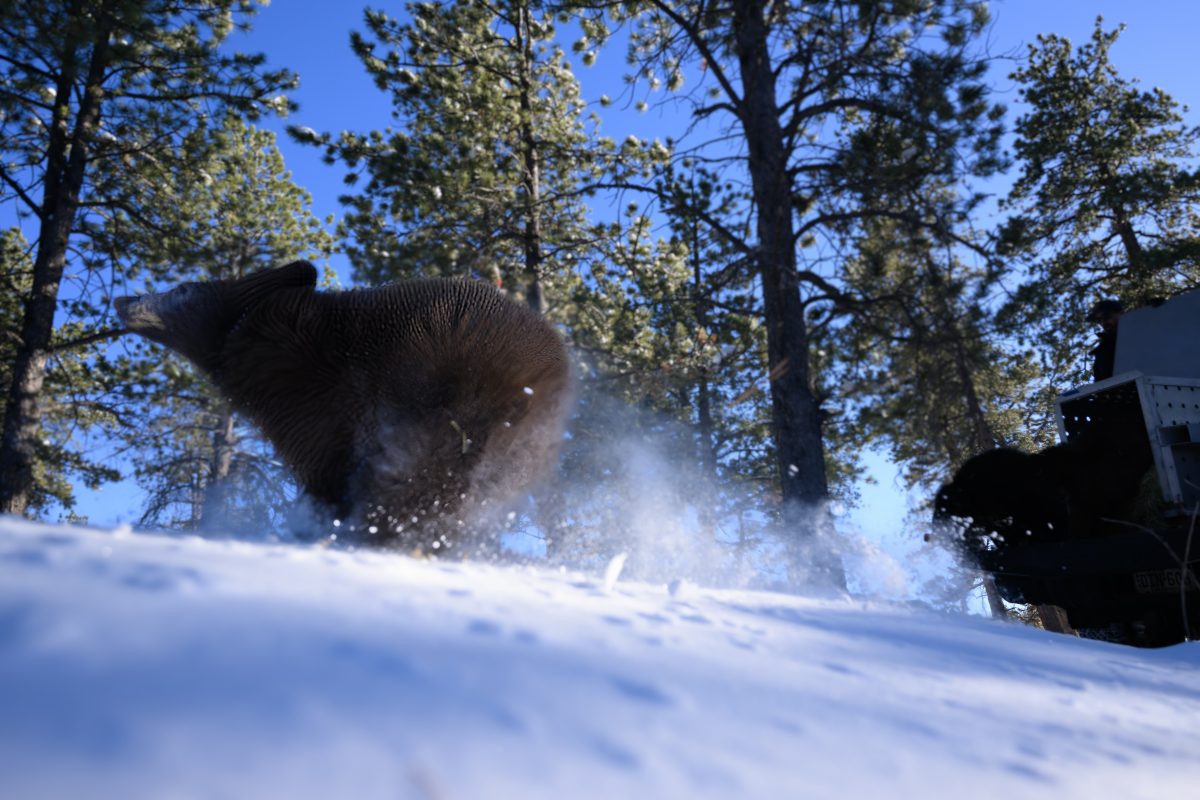 One of three sibling orphaned bear cubs sprints for nearby trees after being released in Teller County by Colorado Parks and Wildlife staffers December 4, 2025. (Mark Reis, Special to The Colorado Sun)
The chips, which cost $3,000 a pop, are funded through a partnership with the Cheyenne Mountain Zoo. While the partnership launched just in 2022, Sauder hopes long-term data will give insight into what rehabilitation efforts work best for bears.
CPW has built artificial dens and released cubs in the middle of winter in past years.
“Now we’re trying this kind of fall release, which has been done before, but we want to see here in Colorado, which one’s best for the bears, so that we’re setting them up for success,” Sauder said.
Black bears in Colorado aren’t true hibernators, but instead go into a very deep sleep, known as torpor. When they realize there’s no food in their natural habitat, their body signals it is time to den-up and snooze until spring, Sauder said.
At the rehabilitation center, wildlife officers started to withdraw food so the natural torpor instinct would start to kick in. The cubs released Thursday weren’t tranquilized but were getting sleepy, Sauder said.
Wildlife officers released the 90-pound cubs in two locations in Teller County, keeping the siblings together, where the bears could find natural food sources but far from homes.
“We want to get them as far away from people as possible. It’s very difficult to do in Colorado. If you think of all the mountain subdivisions we have, there’s just not a place in Colorado that’s free of human presence,” Sauder said. “But we do want to set them up for success as much as we possibly can.”
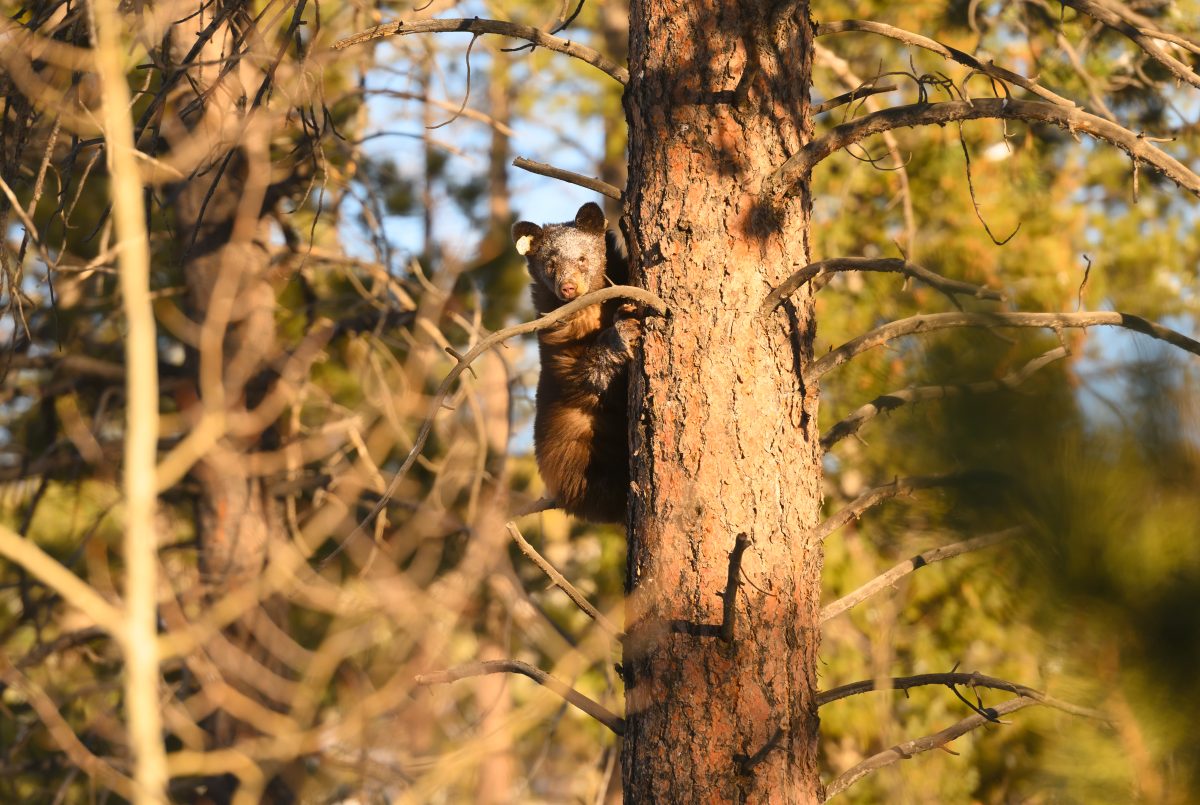 One of three sibling orphaned bear cubs climbs a tree after being released in Teller County by Colorado Parks and Wildlife staffers December 4, 2025. (Mark Reis, Special to The Colorado Sun)
Before the release, Sauder warned that the bears might hesitate before stepping into unfamiliar terrain.
But no encouragement was needed. The moment the crate opened, one cub tumbled into the snow and plunged forward, its two siblings bounding after it before all three scurried up a ponderosa pine.
“We want them to feel comfortable in this space,” Sauder said. “This is where we want these bears to stay.”
Type of Story: News
Based on facts, either observed and verified directly by the reporter, or reported and verified from knowledgeable sources.