
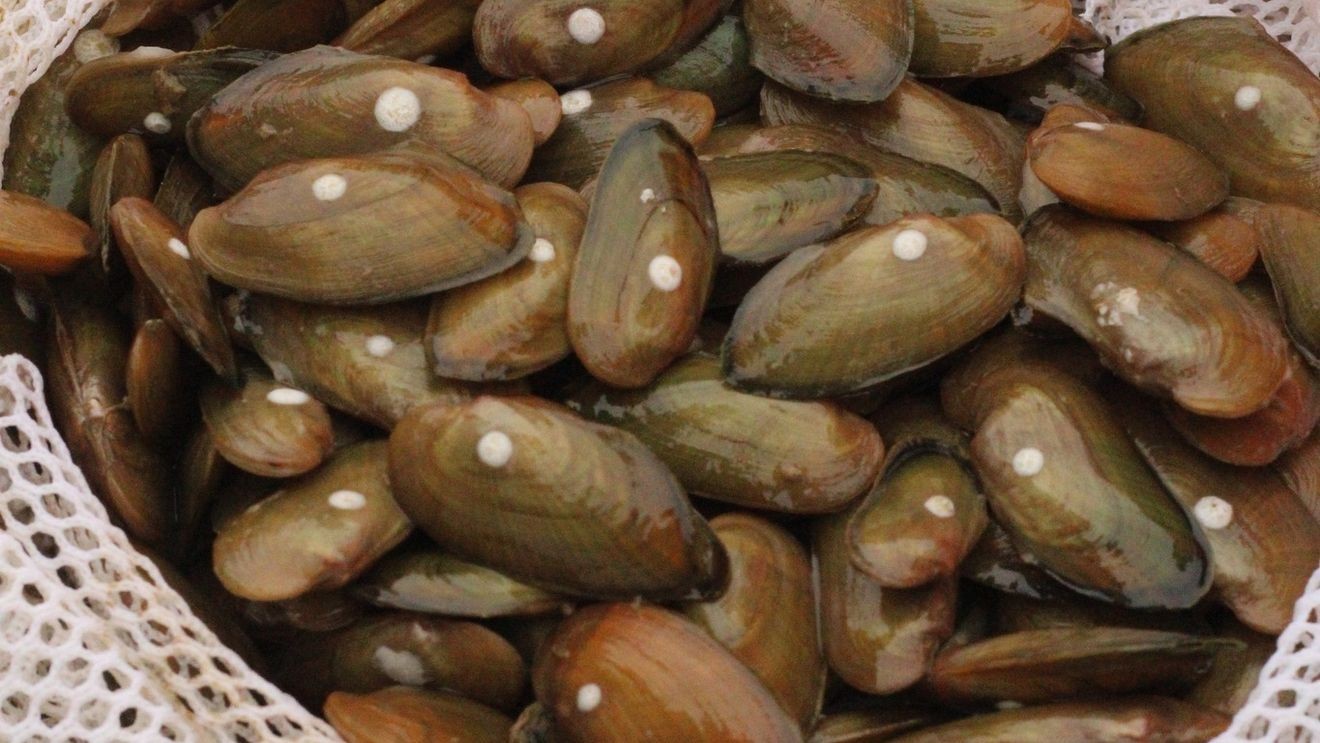
Fifteen thousand endangered scaleshell mussels were released into the lower Osage River this fall.
The Missouri Department of Conservation (MDC) had been working with Ameren Missouri, U.S. Fish and Wildlife Services (USFWS), and the U.S. Geological Survey Columbia Environmental Research Center (USGS-CERC) to conduct research on and management for the endangered scaleshell mussel.
According to the press release, for over two decades, research focused on understanding the distribution of the scaleshell in Missouri, the population genetics, and propagation methods with the intentions of restoring the species.
Since 2013, no live scaleshell have been detected in the Osage River.
Scientist were only able to find a recently dead scaleshell at a site that had a suitable habitat for the species in 2013.
Since then, MDC and their partners had determined propagation of the mussel from elsewhere in the state.
Broodstock was collected, propagated, and reared at the USFWS Neosho National Fish Hatchery and at USGS-CERC.
“Seeing the advancements and efficiencies in freshwater mussel husbandry is a game changer for recovery of this species,” Andy Roberts, USFW Fish and Wildlife Biologist with the Missouri Ecological Services Field Office, stated.
“In this case, we’re stocking offspring of parents collected last fall. With such success, it is possible to augment a scaleshell population in the Lower Osage River, bringing us closer to recovery of this species.”
With the release of 15,000 scaleshell mussels back into the Osage River, it marked the first time that the scaleshell were stocked in any location.
Over the next four years, efforts to augment the scaleshell population into the Osage River will continue in conjunction with monitoring of the mussels that have already been released.
“From funding efforts to the shared knowledge on mussel ecology and propagation, this project combined the expertise from the three cooperating agencies,” MDC Malacologist Stephen McMurray stated.
“This effort truly highlights how work from conservation agencies can have real impacts on the natural world in Missouri.”