

Top astronomy events for December 2025
From the best meteor shower of the year, the Geminids, to the changing seasons on the solstice, here are the top astronomy events for December 2025 calendar.
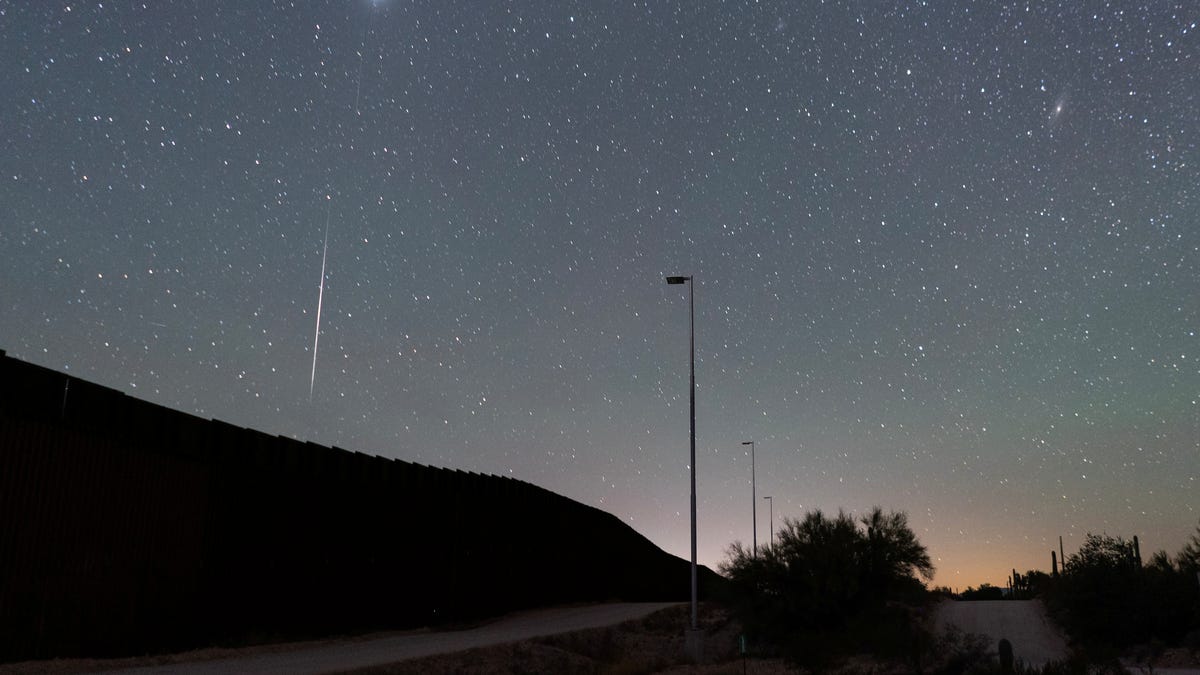
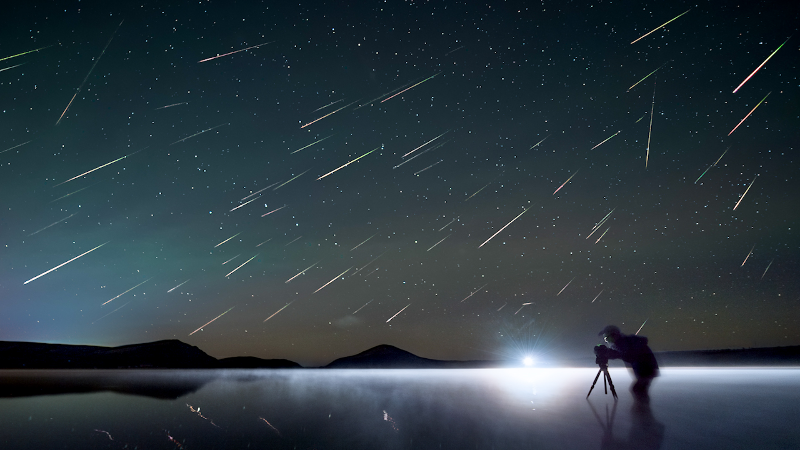
Two different meteor showers are happening in December 2025.The showers include the Geminids, followed by the Ursids.The Geminids first began appearing in the mid-1800s, according to NASA.
It’s cold outside, but stargazing is going to be heating up in December.
This month, people will have the opportunity to witness two different meteor showers, occurring at different times: the Geminid meteor shower and the Ursid meteor shower.
EarthSky.org stated that you won’t need any equipment to see these showers, but noted that heading to an area with minimal lighting is important in order to see the whole sky.
NASA stated that the Geminid shower is considered one of the best opportunities for young viewers since this shower starts around 9 or 10 p.m. on a nightly basis.
According to Space.com, the Ursid meteor shower is derived from the Comet 8P/Tuttle, a periodic comet that follows a 13.5-year elliptical orbit around the sun.
Do you want to see these two meteor showers?
Here’s more about them.
When is the Geminid meteor shower?
According to the Time and Date website, the Geminids can be seen from between Dec. 4-20, 2025, peaking on the evening of Dec. 13-14.
What to know about Geminids
The asteroid known as 3200 Phaethon is responsible for the Geminid meteor shower. This shower is unique because it derives from an asteroid, where most meteor showers come from broken-up comets.
The Geminids first began appearing in the mid-1800s, according to NASA, which added that Geminid meteors are bright, so they’re often easier to see than other meteors.
On a dark night, at the peak of the shower at around 2 a.m. (for all time zones), “you can often catch 50 or more meteors per hour,” EarthSky.org stated. “During an optimum night for the Geminids, it’s possible to see 120 meteors – or more – per hour.”
NASA states that the speed of the meteors are 79,000 mph, or 22 miles per second.
“The bold, white, bright Geminids give us one of the Northern Hemisphere’s best showers, especially in years when there’s no moon,” EarthSky.org noted. “The meteors are plentiful, rivaling the August Perseids.”
When is the Ursid meteor shower?
EarthSky.org stated that stargazers can look for these meteors between Dec. 17-26, 2025, with the peak of the shower happening on the evening of Dec. 21-22.
What to know about Ursids
“This low-key meteor shower – which always peaks around the solstice – is somewhat overlooked due to the holiday season,” according to EarthSky.org. “Its hourly rate is lower than that of the Geminid shower.”
The Ursids are pieces of a comet known as Comet 8P/Tuttle.
Will people need telescopes to see these showers?
EarthSky.org stated that you won’t need any equipment to see the spectacle, but that heading to an area with minimal lighting is important in order to see the whole sky.