
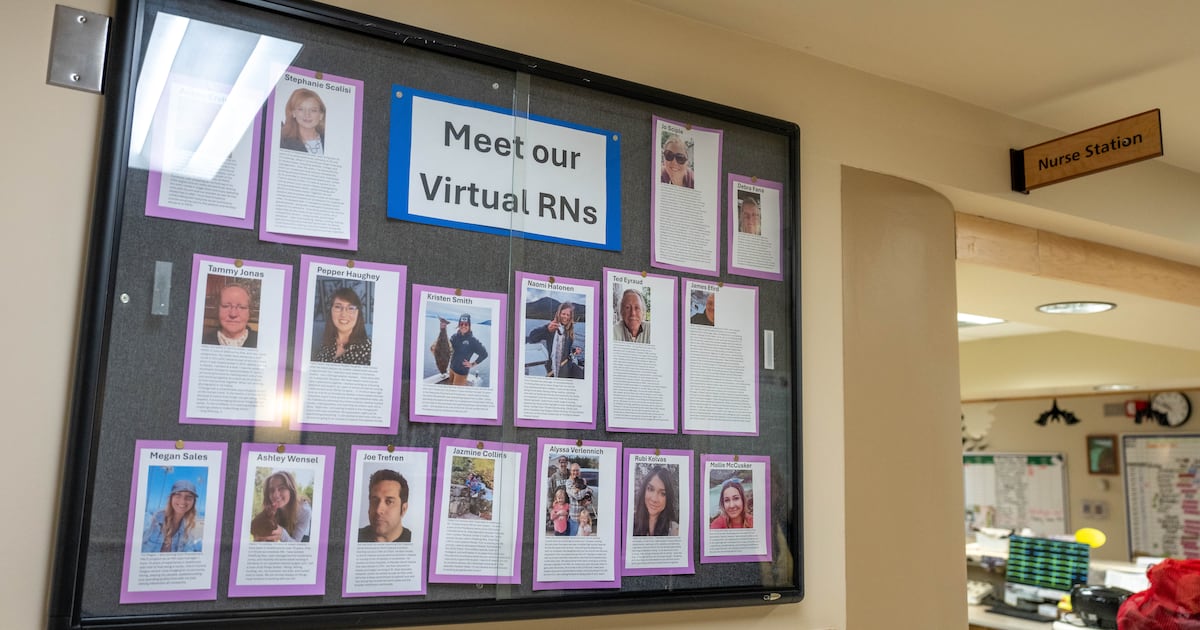
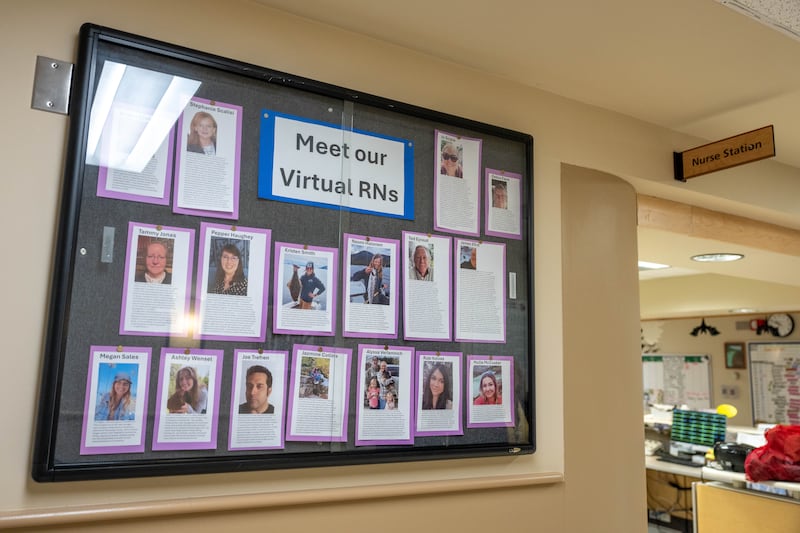
 A board next to a nurse station in a medical-surgical unit at Providence Alaska Medical Center in Anchorage introduces virtual RNs in 2024. (Loren Holmes / ADN archive)
As a registered nurse with 28 years of experience, I want to share how Providence Alaska Medical Center is maintaining the high-quality, compassionate care Alaskans expect while addressing challenges such as workforce shortages and employee burnout. By delivering care in a new way, we’re providing more — not less — nursing support for patients.
According to the Alaska Hospital & Healthcare Association’s 2024 Alaska Healthcare Workforce Analysis, an additional 1,412 registered nurses must be hired every year over the next decade to meet the state’s workforce needs.
In preparation, Providence introduced a new model of care known as Co-Caring a little more than a year ago. Created by nurses for nurses, this innovative approach includes telehealth technology to blend virtual (remote) nursing with traditional bedside care, redefining how health services are delivered.
[Related opinion: When hospitals choose cuts over care, communities pay the price]
With this team-based model, three caregivers support the care of each patient. Previously, a patient would have only one nurse assigned to their care, with a nursing assistant providing additional support for some higher-risk patients. With Co-Caring, now each patient will have three caregivers: a bedside nurse, a virtual nurse and a nursing assistant — all working for their care. Together, the number of nurses and nursing assistants caring for each patient is higher.
Virtual nurses do not replace bedside nurses. They are registered nurses who work remotely via telehealth to manage administrative tasks like answering patient and family questions, documenting symptoms, monitoring health and conducting discharge planning.
This alleviates the workload of bedside nurses, allowing them to focus on the high-value aspects of patient care that require their physical presence and expertise. Bedside nurses are then freed from many time-consuming administrative tasks and empowered to operate at the top of their license, enhancing both their professional satisfaction and the quality of care they provide.
With Co-Caring, an integrated team provides high-quality care to each patient safely and seamlessly. Providence’s virtual nurses have the same job description and work requirements as their bedside colleagues, and they must be licensed by the Alaska Board of Nursing.
While the model is relatively new at Providence Alaska Medical Center, its initial results across the Providence family of organizations are promising. Through Sept. 30, it has resulted in:
• A 50% reduction in patient falls with moderate to severe injury.
• A 20% reduction in average patient discharge time.
• A 5% reduction in hospital-acquired infections.
Since being partially implemented at Providence, virtual nurses have made valuable contributions to patient care. Just a few examples include:
• While giving discharge instructions, a virtual nurse noticed a patient had experienced clinical changes. The virtual nurse requested additional assessment by the bedside nurse, and the patient remained in the hospital for further treatment.
• When speaking with a virtual nurse, a patient mentioned a medication allergy not listed in their medical record. An active order for the patient to receive that medication was stopped, preventing a potential severe allergic reaction.
• A virtual nurse helped a patient recovering from a stroke with their speech, showing the patient items from their home environment and helping them recall words.
Simply put, Co-Caring has proven safe for patients and caregivers alike. During times of change and uncertainty, innovative solutions are crucial for creating a thriving health care environment. Co-Caring shows how health care can adapt to modern challenges while keeping the focus on what is most important: patient care.
Carrie Peluso, DNP, APRN, ACNS-BC, FCNS, FAONL, is chief nursing officer for Providence Alaska. She has served in nursing roles since 1997, including 25 years at Providence Alaska Medical Center.
• • •
The Anchorage Daily News welcomes a broad range of viewpoints. To submit a piece for consideration, email commentary(at)adn.com. Send submissions shorter than 200 words to letters@adn.com or click here to submit via any web browser. Read our full guidelines for letters and commentaries here.