
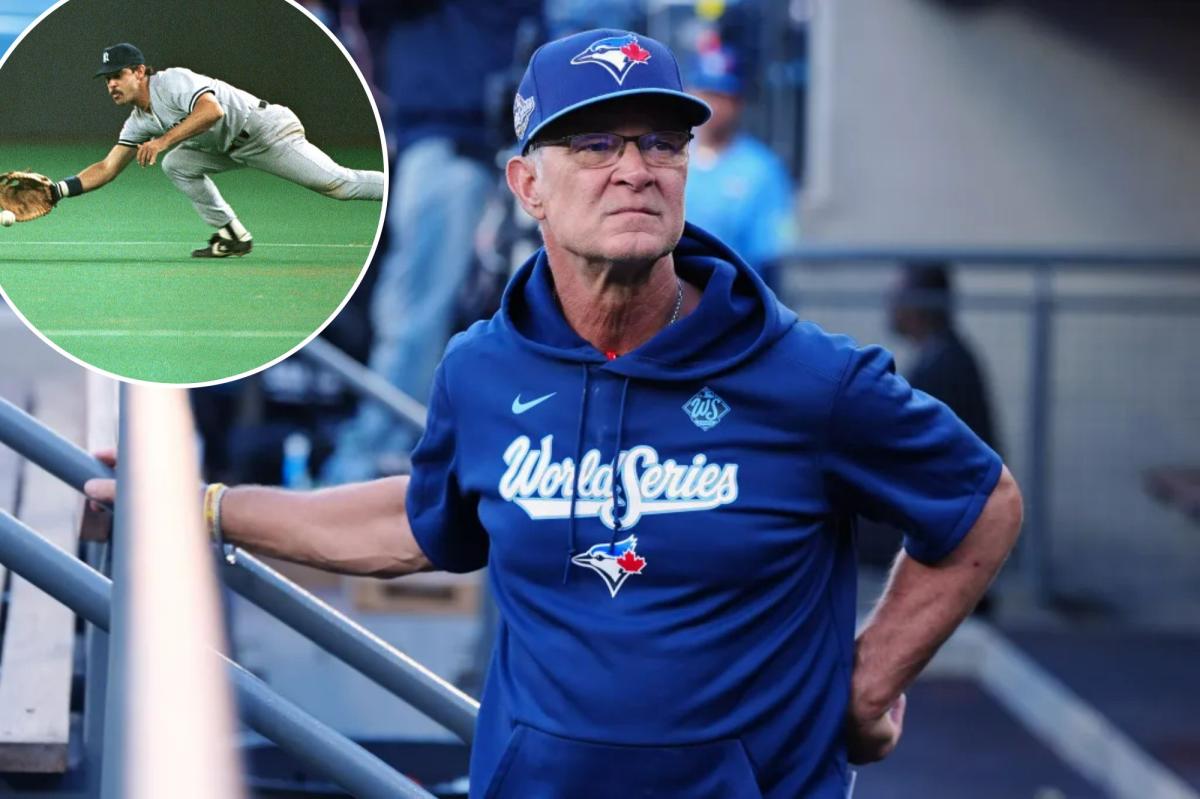
ORLANDO — A long wait just got a little longer for Don Mattingly.
The former Yankees first baseman once again fell short of induction into the Baseball Hall of Fame, coming up six votes shy on the Contemporary Baseball Era Committee ballot, the results of which were revealed on Sunday.
Jeff Kent was the only player elected from the eight-player ballot — which also included Barry Bonds, Roger Clemens, Carlos Delgado, Dale Murphy, Gary Sheffield and Fernando Valenzuela — after being named on 14 of 16 ballots. Mattingly received only six votes, two fewer than he garnered in his last time on the ballot, while Delgado placed second with nine votes.
“[I was] certainly rooting for him,” Yankees general manager Brian Cashman said Sunday night. “One of the game’s great players of his time, on both sides of the ball — obviously the back injury derailed him — and one of the great human beings. He obviously was a great baseball player, but he’s a great person, too.”
By getting more than five votes, Mattingly remained eligible for inclusion on the next Contemporary Baseball Era Committee ballot in 2028, but it will be another long wait until then.
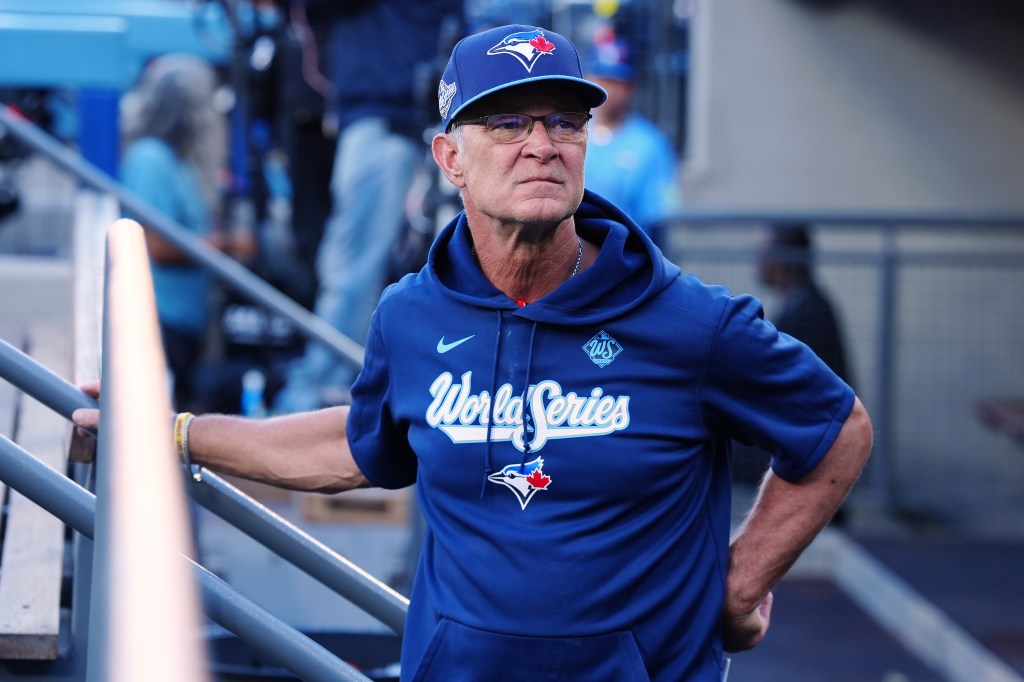 Don Mattingly is pictured Oct. 28. AP
This was the 19th time that Mattingly has been up for consideration for the Hall of Fame. Three years ago, he fell four votes shy, only receiving eight votes while Fred McGriff was unanimously elected for enshrinement. In his 15 years on the Baseball Writers’ Association of America ballot, Mattingly topped out at 28.2 percent of the vote, well short of the requisite 75 percent.
“If it doesn’t happen, it’s not going to change who I am, what I think about things,” Mattingly said recently on “The Show with Joel Sherman and Jon Heyman” podcast. “No bitterness is going to be in there. But you hope you get that opportunity.”
If not for a chronic back injury that cut his career short, the 64-year-old Mattingly may have had a smoother and quicker road to Cooperstown. In 14 seasons as a big leaguer — in which he was a six-time All-Star, nine-time Gold Glover and the 1985 American League MVP — the Yankee hit .307 with a .830 OPS, 2,153 hits, 222 home runs and 1,099 RBIs.
Much of that production came from 1984-89, when he was one of the game’s best players, before a degenerative disc in his back began to take its toll. In addition to winning the MVP in 1985 — when he hit .324 with 35 home runs, 145 RBIs and a .939 OPS — Mattingly also placed second (1986), fifth (1984) and seventh (1987) in MVP voting during his prime.
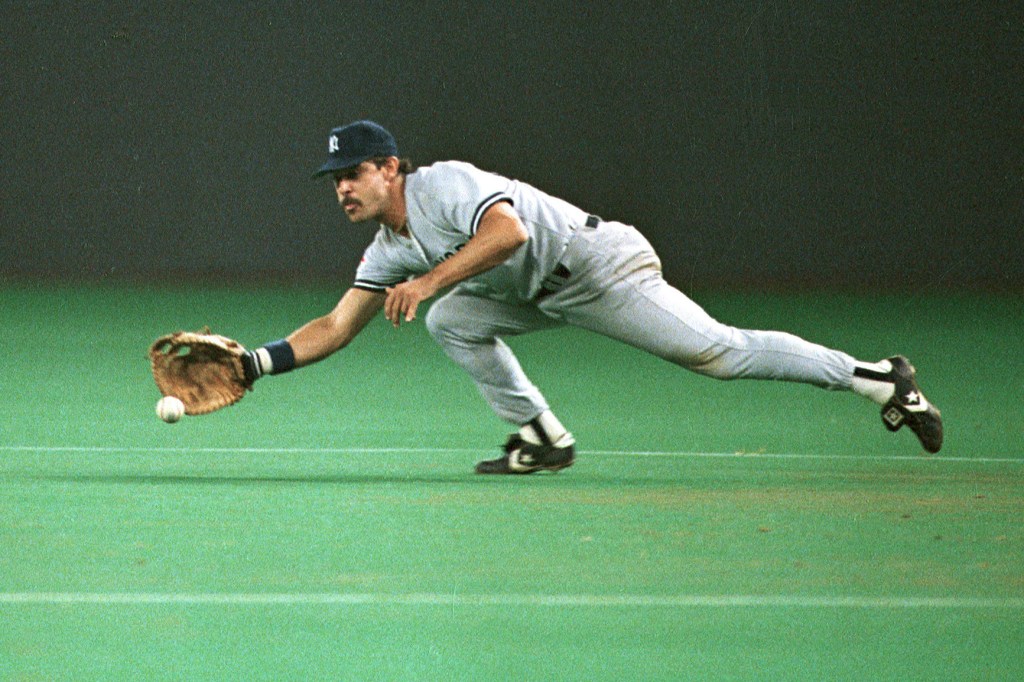 Don Mattingly is pictured during a 1988 game. AP
Mattingly finished his career with a 42.4 bWAR, accruing 33.0 of that from 1984-89. Using JAWS — Jay Jaffe’s WAR-based scoring system that evaluates players’ candidacy for the Hall of Fame — Mattingly’s 39.1 ranked 40th among all first basemen, just ahead of Gil Hodges, the former Mets legend who was elected posthumously in 2021 by the Golden Days Era committee. Mattingly’s seven-year peak WAR of 35.7 was tied for 33rd, just behind McGriff (36.0).
Following his injury-forced retirement after the 1995 season — made official in 1997, just before the Yankees entered their dynasty — Mattingly went on to serve as a hitting coach for the Yankees and Dodgers before managing 12 seasons with the Dodgers and Marlins.
He reentered the spotlight this fall as the bench coach of the Blue Jays, falling painfully short of what would have been his first World Series championship.
Go beyond the box score with the Bombers
Sign up for Inside the Yankees by Greg Joyce, exclusively on Sports+.
Thank you
This year’s Contemporary Baseball Era Committee — deciding on players whose greatest contributions came since 1980 — featured Hall of Fame members Fergie Jenkins, Jim Kaat, Juan Marichal, Tony Perez, Ozzie Smith, Alan Trammell and Robin Yount; major league executives Mark Attanasio, Doug Melvin, Arte Moreno, Kim Ng, Tony Reagins and Terry Ryan; and veteran media members/historians Steve Hirdt, Tyler Kepner and Jayson Stark.