
Wildlife conservation can look misleadingly straightforward, but as Oregon’s Rogue Valley Times reported, restoring nature’s balance can be unpredictable.
What’s happening?
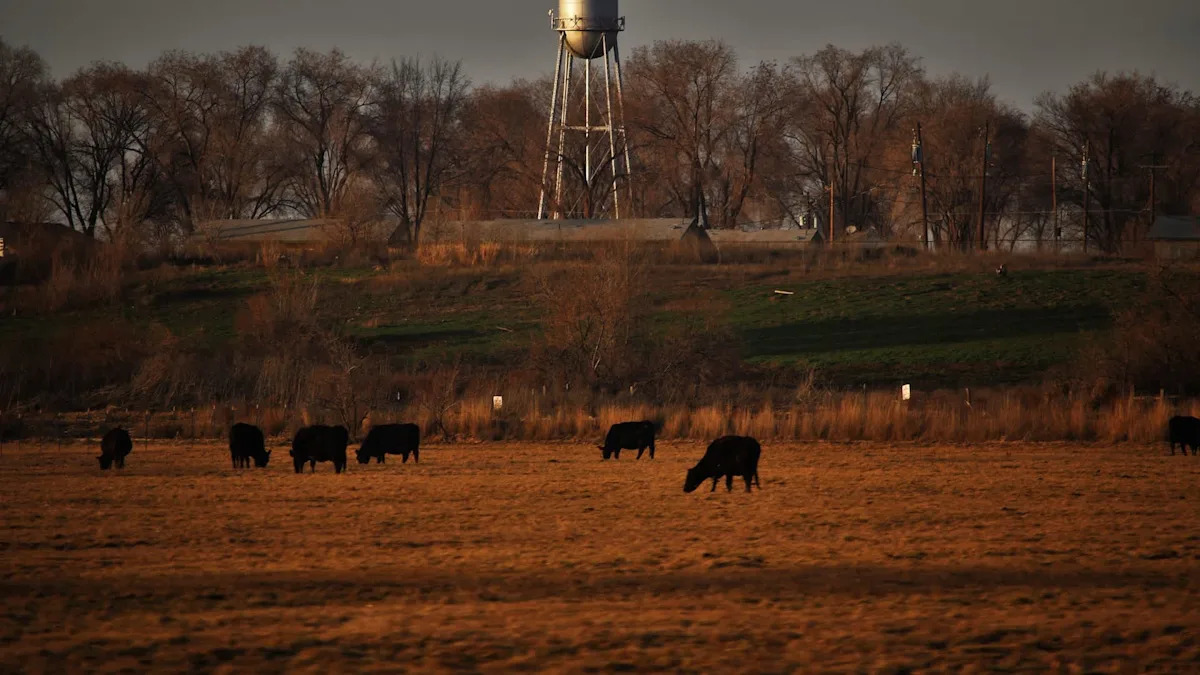
Rogue Valley is in southwest Oregon and is home to several cattle ranches.
According to the Times, local ranchers have been rocked by a series of “livestock depredations,” incidents in which wild carnivores attack domesticated farm animals.
Gray wolves are “reportedly are growing in both population and brazenness,” the outlet explained, after efforts to restore wolf populations in the West were undertaken in the 1990s.
Local rancher Ted Birdseye was the first to sustain consequential livestock losses from the local Grouse Ridge wolf pack. He admitted to a lifelong fascination with wolves, one that devolved into a “love-hate relationship” due to his recent losses.
“Now I guess I’m getting my comeuppance,” Birdseye conceded. Bob Anderson of Butte Falls claimed that between one and three wolf-related incidents occurred each night on his ranch, one just “steps away” from his front door.
Anderson has reported “dozens” of livestock losses and, like many ranchers, was frustrated that the wolves’ tendency to leave little behind made it difficult to obtain compensation. He also expressed concerns for human safety.
“Sometimes at night they go to howling, and it’s kind of an eerie feeling,” Anderson said “… They are considered an endangered species, which is crazy. We’re the ones that feel endangered.”
Why is this concerning?
Conservation efforts involving predator species like gray wolves can be fraught for wildlife management officials, as NOAA Fisheries explained.
As Anderson noted, gray wolves were listed on the Endangered Species Act (ESA) in 1978.
According to the Natural Resources Defense Council, gray wolves had “all but disappeared” in the United States, their numbers whittled by unfettered hunting and habitat loss.
Oregon ranchers enjoyed a wolf-free existence until around 2014, when gray wolves migrated to the area from Canada. Livestock depredations followed, and while attacks dropped between 2023 and 2024, ranchers are clamoring for the species to be delisted from the ESA.
Even Birdseye, who once raised a wolf pup, has softened to delisting the species he loved.
“I do hope they’ll delist them because at this rate, you’d get in more trouble for shooting a wolf than you would for a trespasser,” Birdseye admitted.
In April, Oregon Sen. Ron Johnson introduced a bill to require the Fish and Wildlife Service to delist gray wolves.
What’s being done about it?
Officials are trying to strike a balance between protecting gray wolves and safeguarding ranchers’ livelihoods.
Sam Dodenhoff, a regional wolves biologist for the Oregon Department of Fish and Wildlife, acknowledged that it wasn’t easy.
“We’re trying to navigate that line between wolf recolonization, conservation, and management, but also trying to minimize conflict issues with ranchers. It’s a pretty delicate process,” he said.
Ultimately, Dodenhoff said, the renewed presence of wolves in Oregon after a century caused understandable frustration.
Ranchers have “never had to deal with wolves before until they came down and started recolonizing in Southern Oregon,” Dodenhoff conceded.

��
Get TCD’s free newsletters for easy tips to save more, waste less, and make smarter choices — and earn up to $5,000 toward clean upgrades in TCD’s exclusive Rewards Club.