

Launched in 2004 to study gamma-ray bursts, Swift has been a crucial asset in understanding some of the most energetic events in the universe. However, over time, the spacecraft’s orbit has been decaying due to the drag from Earth’s atmosphere. As the orbit continues to degrade, the telescope is set to fall from its current 249-mile altitude unless action is taken. The problem is that Swift lacks onboard thrusters for orbit adjustments. With no replacement mission in the pipeline, NASA has turned to the private sector for a solution, and Katalyst is stepping in with a bold plan.
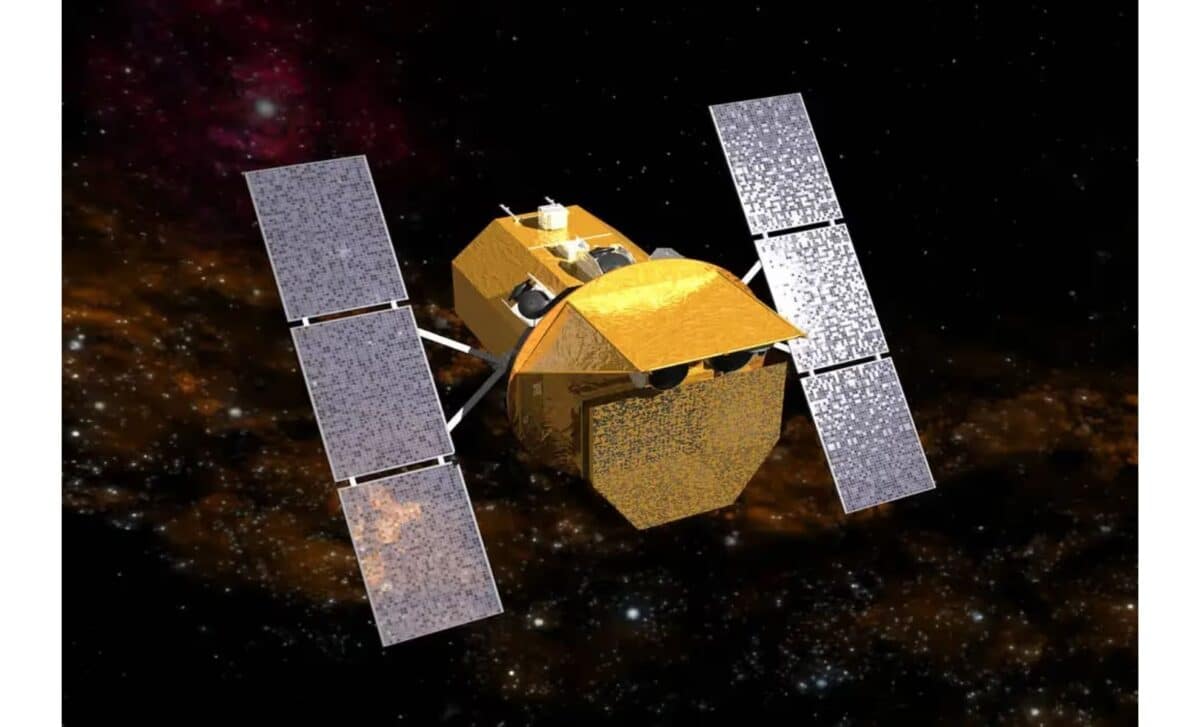 Neil Gehrels Swift Observatory – © NASA
Katalyst, based in Arizona, has been tasked with executing a mission unlike any other. The company will use the Pegasus XL, an air-launched rocket from Northrop Grumman’s L-1011 Stargazer aircraft. Dropped at an altitude of 39,000 feet, the Pegasus XL will fire its engines and carry Katalyst’s robotic spacecraft into space. Once the spacecraft reaches Swift’s location, it will carefully approach the telescope, using three robotic arms to capture and secure it before boosting it back to its original orbit of 373 miles, restoring its ability to continue its mission for another 10 years.
An Uncrewed Satellite Rescue
This mission marks a historic moment in space exploration, as it will be the first-ever instance of a private spacecraft capturing and boosting a U.S. government satellite. In the past, NASA has conducted similar missions with the Hubble Space Telescope, but those were crewed operations. For Neil Gehrels Swift Observatory, however, no astronauts will be involved. Instead, Katalyst will perform the rescue entirely remotely.
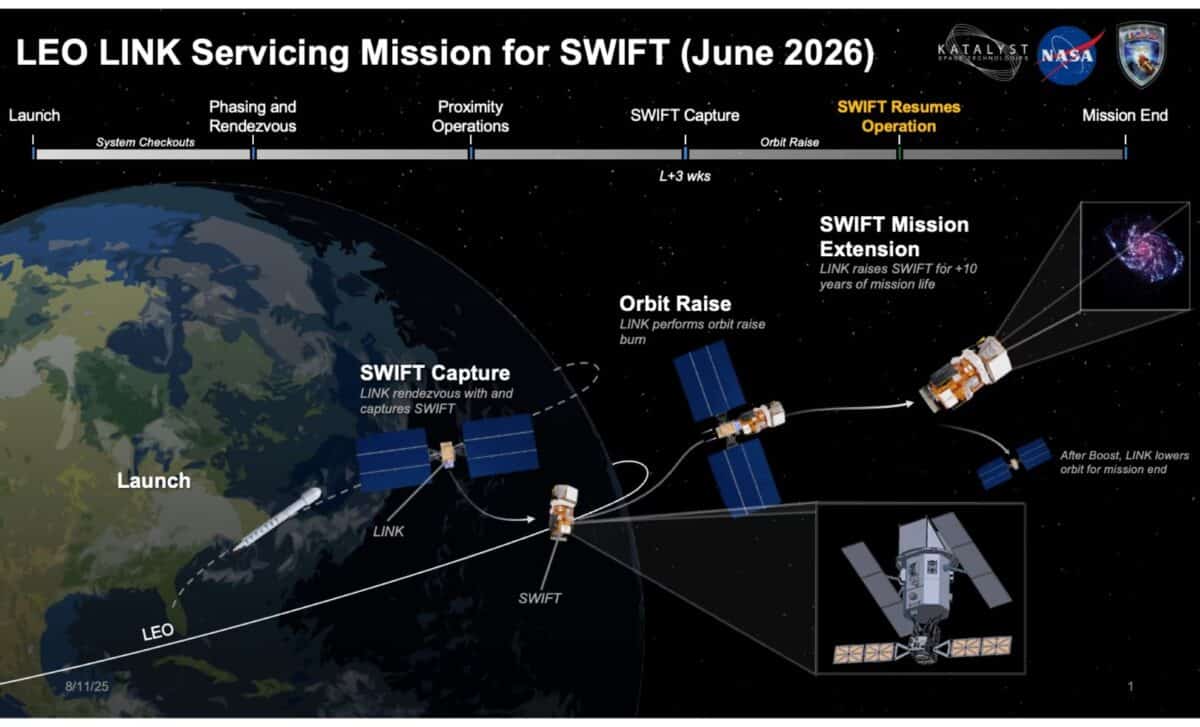 The rescue mission – © Katalyst Space Technologies
According to Katalyst’s vice president of technology, Kieran Wilson, the company is rigorously testing various methods to ensure the rescue operation is safe and successful, consulting with NASA and Northrop Grumman to identify the best points on Swift for capture.
The rescue mission’s challenges are compounded by Swift’s delicate instruments, which require careful handling. As the telescope’s optics are sensitive to sunlight, Earth, and the moon, the spacecraft must avoid exposure to these elements during the capture. Despite these difficulties, Katalyst is confident that its approach will work, as the company has been thoroughly reviewing prelaunch images of Swift and collaborating with various teams to determine the safest method for capture, according to Space.com.
Pegasus XL: A Reliable Launch Vehicle
The Pegasus XL rocket, which will carry Katalyst’s spacecraft, has a proven track record of reliability. Having launched 45 missions since its debut in 1990, the rocket has been used to deploy a range of payloads into low Earth orbit. Its most recent mission in June 2021 successfully launched a space domain awareness satellite for the U.S. Space Force.
The rocket’s long history of success makes it a suitable candidate for this critical mission, and the team at Northrop Grumman has confirmed that the hardware for the Swift rescue mission is nearly ready. Final integrations and adjustments are ongoing, but the rocket is expected to be fully prepared for the June 2026 launch, as reported.
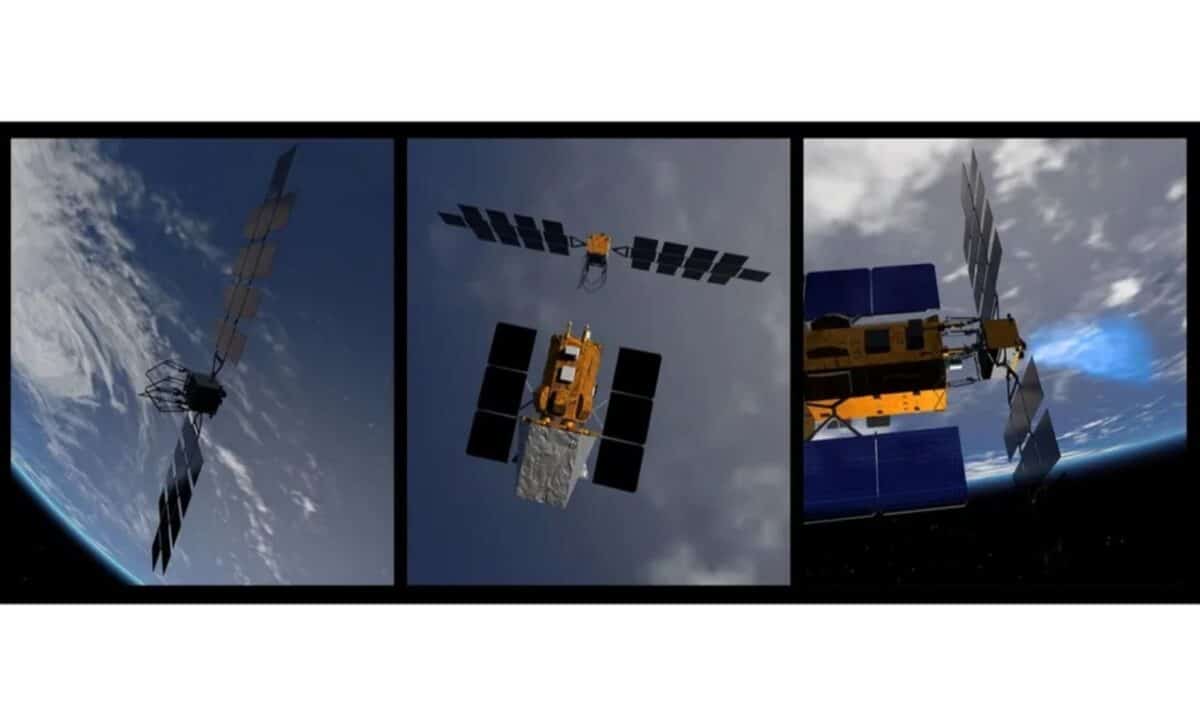 Artist’s illustration of Katalyst Space Technologies’ servicing spacecraft approaching and capturing NASA’s Swift space observatory on an orbit-boosting mission – © Katalyst Space Technologies
Pegasus XL’s ability to carry payloads weighing up to 1,000 pounds to low Earth orbit further enhances its suitability for the mission. With a streamlined launch process that starts with the L-1011 Stargazer aircraft, the rocket’s air-launched configuration ensures a precise and efficient trajectory into space. As noted by Kurt Eberly, director of space launch at Northrop Grumman, the company is well-equipped to finalize the mission’s trajectory and guidance systems, ensuring a successful launch.
A Modest Budget for a High-Stakes Mission
The Swift rescue mission is an example of how private industry can efficiently support government space endeavors. The total budget for the mission is just $30 million, a fraction of what it would cost to build and launch a replacement telescope.
Swift, which cost $500 million to develop, has provided invaluable scientific data over the past two decades, and extending its life for a fraction of the cost is seen as a wise use of resources. Katalyst’s mission, which will be conducted entirely by private contractors, highlights the growing role of commercial companies in space exploration, as detailed by both Futurism.
Katalyst’s success could serve as a blueprint for future missions in space servicing. Traditionally, servicing missions for satellites and telescopes have been complex and time-consuming, requiring years of planning. However, Katalyst’s ability to complete the Swift mission in less than a year after securing the contract suggests that more responsive missions could be developed in the future. Katalyst is already planning further missions, including a planned launch to geostationary orbit in 2027, demonstrating its long-term vision in space operations.