
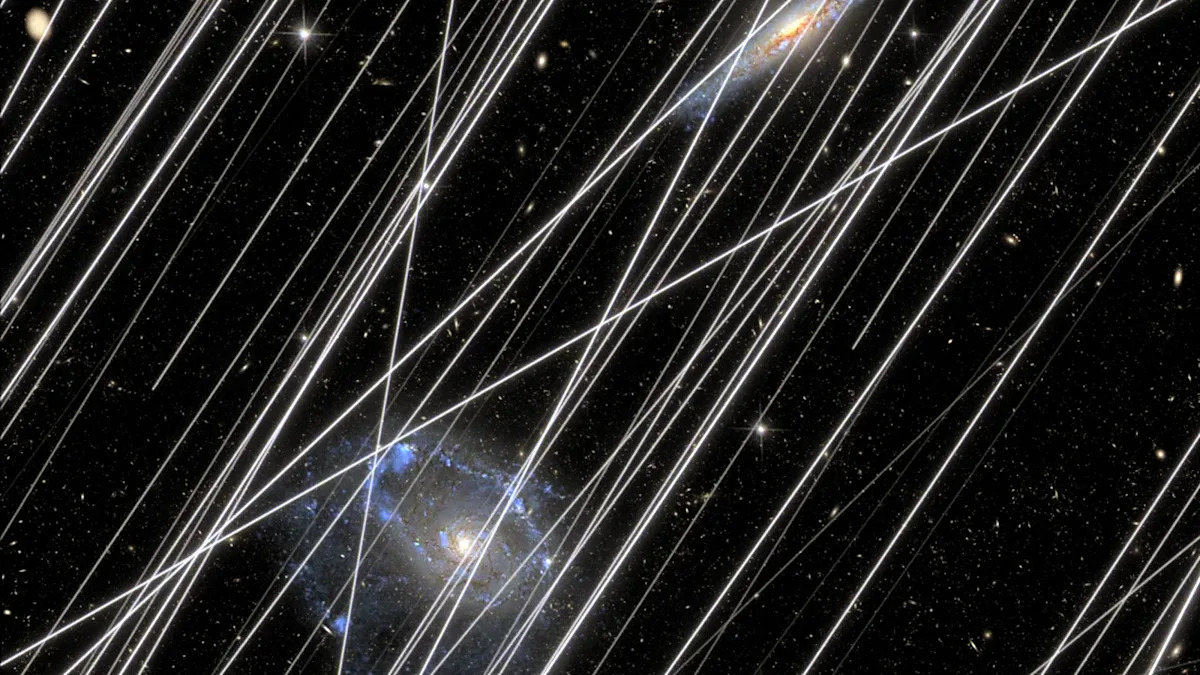
Space telescopes are facing increasing difficulties in realizing accurate, unpolluted images of the cosmos due to the growing number of internet satellites in low Earth orbit (LEO). The problem is so severe that only 60% of Hubble’s imagery may be usable over the coming decade, according to a new NASA study. Other telescopes could lose up to 96% of their images due to satellite-related light pollution.
Light pollution has always been a struggle for astronomers. As more of the world is electrified and cities expand, it’s harder and harder to get a clear view of the sky, but the problem is now extending well into space. Starlink satellites now interfere with a third of low-frequency radio astronomy, and astronomers have called on governments to investigate how constellation satellites are disrupting other space-based experiments and observations. NASA is now raising the alarm, too.
“My career has been focused on trying to make telescopes see better…try to make the telescopes more sensitive, more precise, getting better images,” says Alejandro Borlaff, a NASA research scientist and lead author of the study (via TechCrunch). “For the first time, we found something that may actually be worse in the future.”
Simulated Hubble telescope image.
This is how a Hubble image might look in a few years if constellation satellites aren’t better managed. Credit: NASA
This issue is only going to worsen, too. As it stands, SpaceX has over 8,600 active Starlink satellites in orbit, while its competitors in China and Amazon’s Leo project only have a couple of hundred between them. In the coming years, though, we could see multiple constellations of thousands—or even tens of thousands—of satellites circling the globe, making it hard to imagine how some space telescopes will be able to function at all.
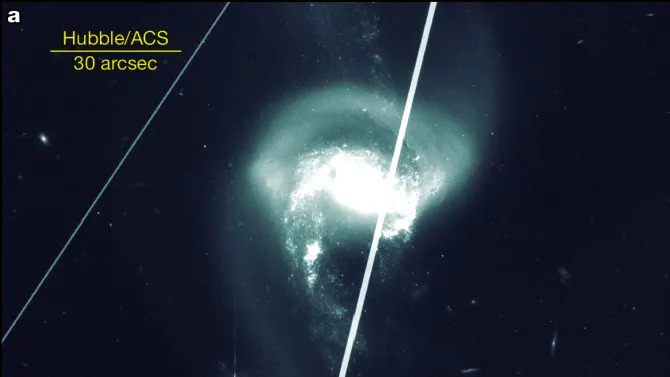
NASA has simulated how this might look with Hubble and a few other telescopes. The agency found that while Hubble’s images may still be unaffected some 60% of the time, 40% of them may be completely unusable due to light trails from satellites crossing its field of view. Larger telescopes designed to peer deeper into the cosmos, such as the James Webb Space Telescope, will be unaffected.
But telescopes in LEO, like the planned Chinese Space Station Telescope, Xuntian, set to launch next year, might find it unavoidable. Up to 96% of its images may be non-viable because of these satellites crossing its field of view.
NASA proposes some solutions, such as designing darker, non-reflective satellites (though those get hotter and shed more infrared light), and coordination between satellite and telescope firms to avoid exposure. There’s also some discussion of staggered deployment heights.
“There has to be an optimal way to place constellations and space telescopes…so we can coexist in a sustainable way,” Borlaff says.