
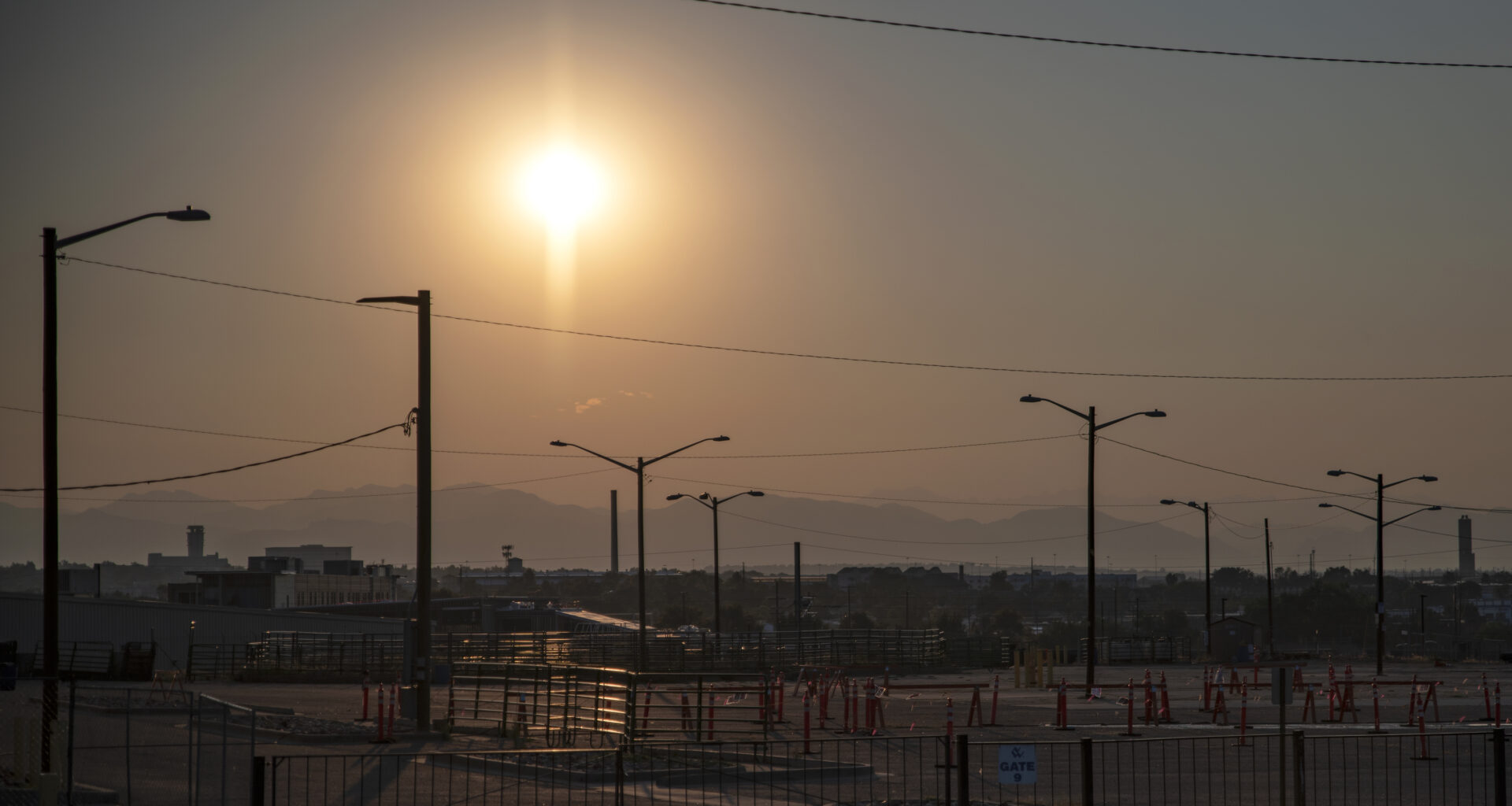
The Trump administration has reversed another Biden-era environmental policy hard-fought by health experts and advocates, a tighter cap on the soot particles created by vehicle and power plant emissions called PM2.5.
But this time, Colorado officials are not sounding alarms, saying the state has already met the healthier standard and that they will double down on further reductions.
Such particles are 2.5 microns in diameter, or 2.5 millionths of a meter, about one-thirtieth of a human hair. They are produced directly by burning fossil fuels in vehicle engines or power plants, through industrial emissions and wood burning. More are produced indirectly when chemicals from those emissions interact in the atmosphere.
The particles inflame lung tissues and are small enough to enter the bloodstream. Health experts put them at the top of the list of most damaging air pollutants.
The Biden administration had finalized a rule in 2024 limiting PM2.5 measurements to an annual average of 9 micrograms per cubic meter of air. EPA leadership told reporters in 2024 the new standard was “grounded in the best available science and will undoubtedly save lives.”
The EPA said the lower limits would save up to 4,500 premature deaths when fully implemented, among other health benefits.
Colorado air quality officials have long agreed, and in January asked the Air Quality Control Commission to declare the state in compliance with the stricter Biden standards. Colorado’s Air Pollution Control Division says it monitors PM2.5, among other major pollutants, at 18 state-run monitoring stations, and the readings are publicly available at air pollution status and forecasting sites.
Some business interests and state attorneys general have challenged the tighter national standards, calling them a threat to manufacturing and other jobs in states that would be forced to limit or alter economic activity to lower their contributions to PM2.5.
The Trump EPA has told a U.S. appeals court that it will abandon the rule because it was not developed by Biden in the rigorous process required by law. That would revert the PM2.5 standard to the previous 12 micrograms per meter average.
“The entire state of Colorado is in attainment with the National Ambient Air Quality Standard for fine particulate matter (PM2.5). Regardless of any federal changes to the standard, we remain committed to reducing fine particulate matter pollution in order to protect public health,” the air quality division’s Leah Schleifer said in email responses to questions.
That is in contrast to the state’s status on health-damaging ozone. The northern Front Range counties are considered severely out of attainment of EPA standards for ozone, and must continue filing improvement plans for EPA approval.
“State policies such as those to address ozone pollution, greenhouse gas, and regional haze have kept us within federal standards” for PM2.5, Schleifer said. State rules to attack the other pollutants, such as leak controls in the oil and gas industry and shifting vehicles to electric motors from fossil fuels, should further progress on PM2.5 as well, state officials say.
Environmental groups that work in Colorado said they will still fight to maintain the federal, Biden-era standard, and that the Trump administration declaring the policy dead in late November does not make it so.
“The Trump administration’s actions to abandon the PM2.5 standards doesn’t mean the standards are gone—that’s up to a court to decide, and why Earthjustice and states including California and Arizona are in the case to defend the tighter standards,” said Alexandra Schluntz, senior attorney at Earthjustice’s Colorado office. “Even if we’re currently in attainment with a standard, the Clean Air Act requires attainment areas to take steps against worsening pollution. In other words, with a weaker standard, new and modified pollution sources could be allowed to pollute more than they otherwise would be. A stronger federal rule holds polluters to a higher standard, even in attainment areas.”