
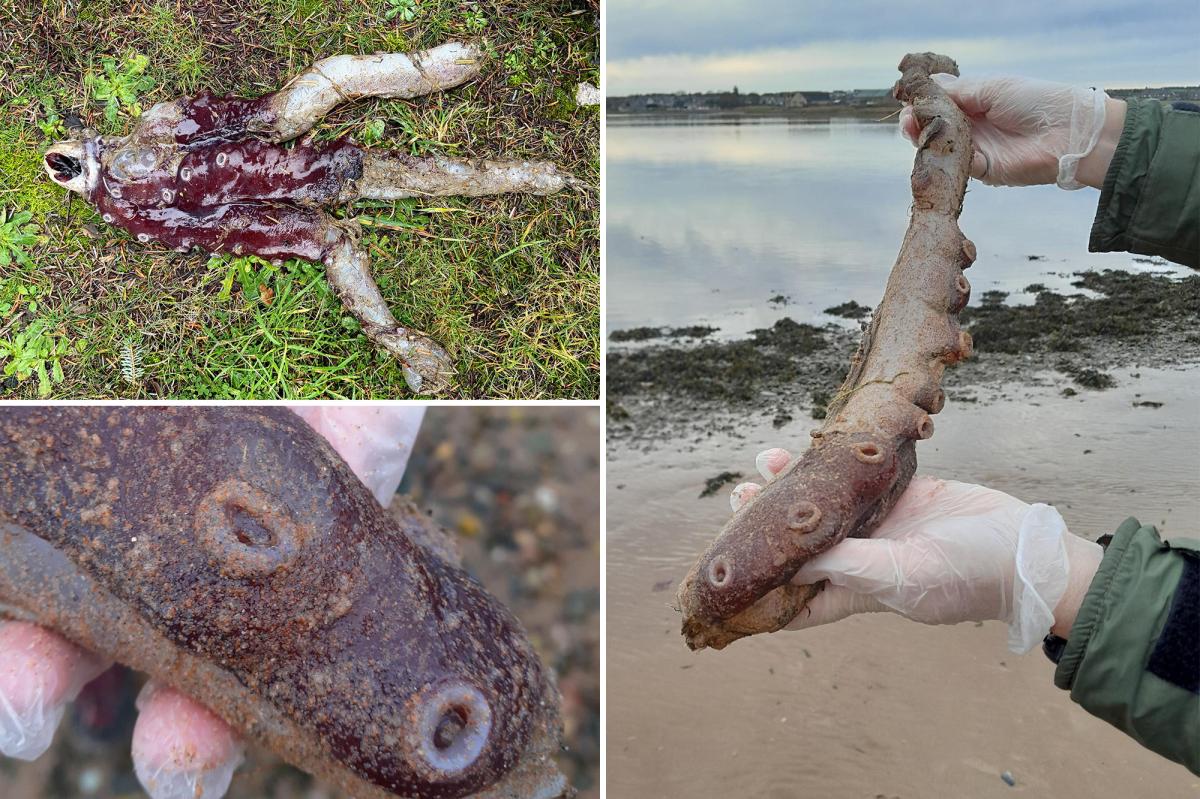
It’s a Sep-olopod.
Researchers were flabbergasted after the remains of an ultra-rare seven-armed octopus washed ashore in Collieston, Scotland, as seen in photos making waves online.
“These were something we clearly hadn’t seen before,” Catriona Reid, manager of the Forvie National Nature Reserve where the odd-legged critter was found, told the BBC.
A beachcomber had reportedly stumbled upon the tentacles of the anomalously appendaged critter on Aberdeenshire beach on November 30.
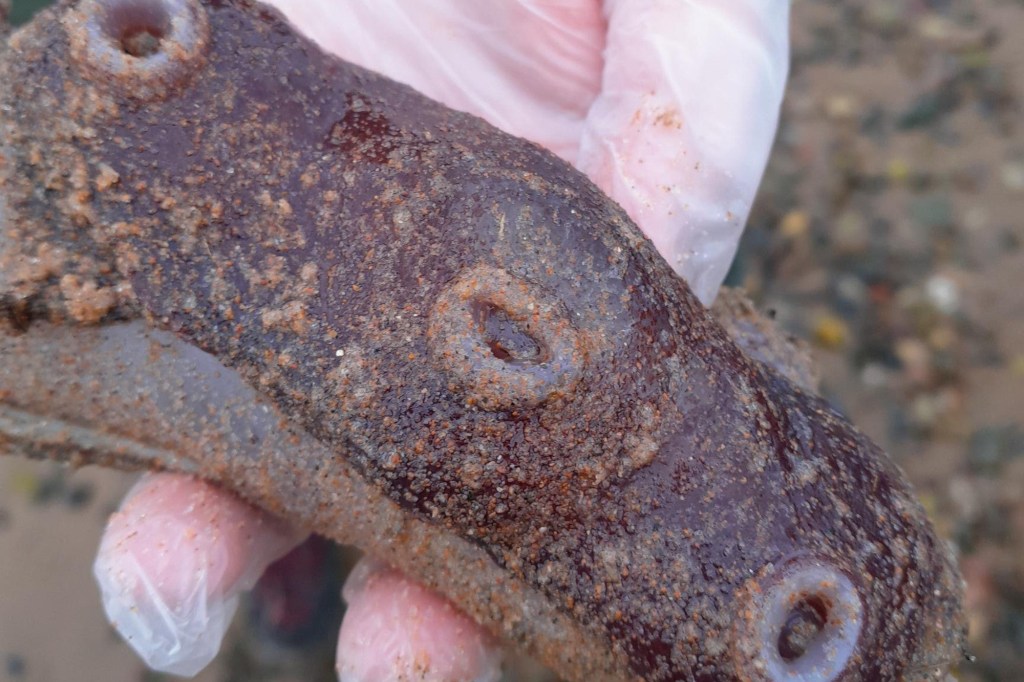 The cartoonishly big tentacle was found at Forvie National Nature Reserve in Collieston, Scotland. Catriona Reid/NatureScot / SWNS
They alerted the reserve’s staff, per Reid, who noted the maritime oddity’s “large diameter and big suckers,” which were “far too big for the common curled octopus” generally spotted in the area.
In fact, there was initially some speculation that the suckers belonged to the elusive giant squid.
After sending photos of the mystery critter to several institutions, including Aberdeen University’s zoology department, the team was able to identify it as a seven-armed octopus.
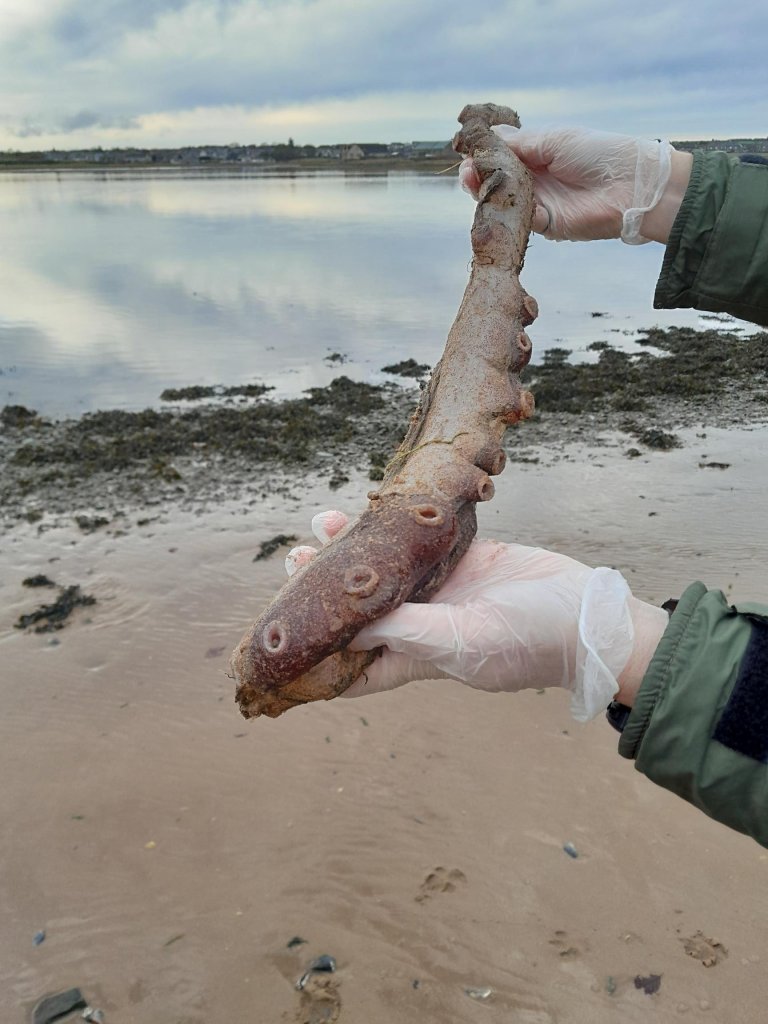 “It may have been trawl-caught and thrown back, or predated on by a whale,” said Dr. Lauren Smith. Catriona Reid/NatureScot / SWNS
Also known as the blob octopus or septopus, the mollusk is one of the largest octopuses on the planet, capable of attaining lengths of around 11 feet long, Livescience reported.
They reside in deep waters below 1,640 feet beneath the surface and are so rare that only four have been seen alive in the last 40 years — the most recent was filmed by a remotely-piloted vehicle in Monterey Bay, California, last month.
The septopus’s name is a bit of a misnomer, as they actually do have eight limbs. But the males generally hide their eighth limb — a reproductive organ used to fertilize eggs — in a sac behind their right eye.
Dr. Lauren Smith, a marine biologist at research organization Saltwater Life, called the flotsam “an extraordinary find,” although she remained perplexed over how such a denizen of the deep washed ashore.
“It may have been trawl-caught and thrown back, or predated on by a whale,” she told the Daily Mail. “Or somehow it found its way into the shallow waters and become disoriented then predated on.”
Smith said that the “recovered remains have been frozen down for further study, with some potentially being preserved as museum specimens.”