
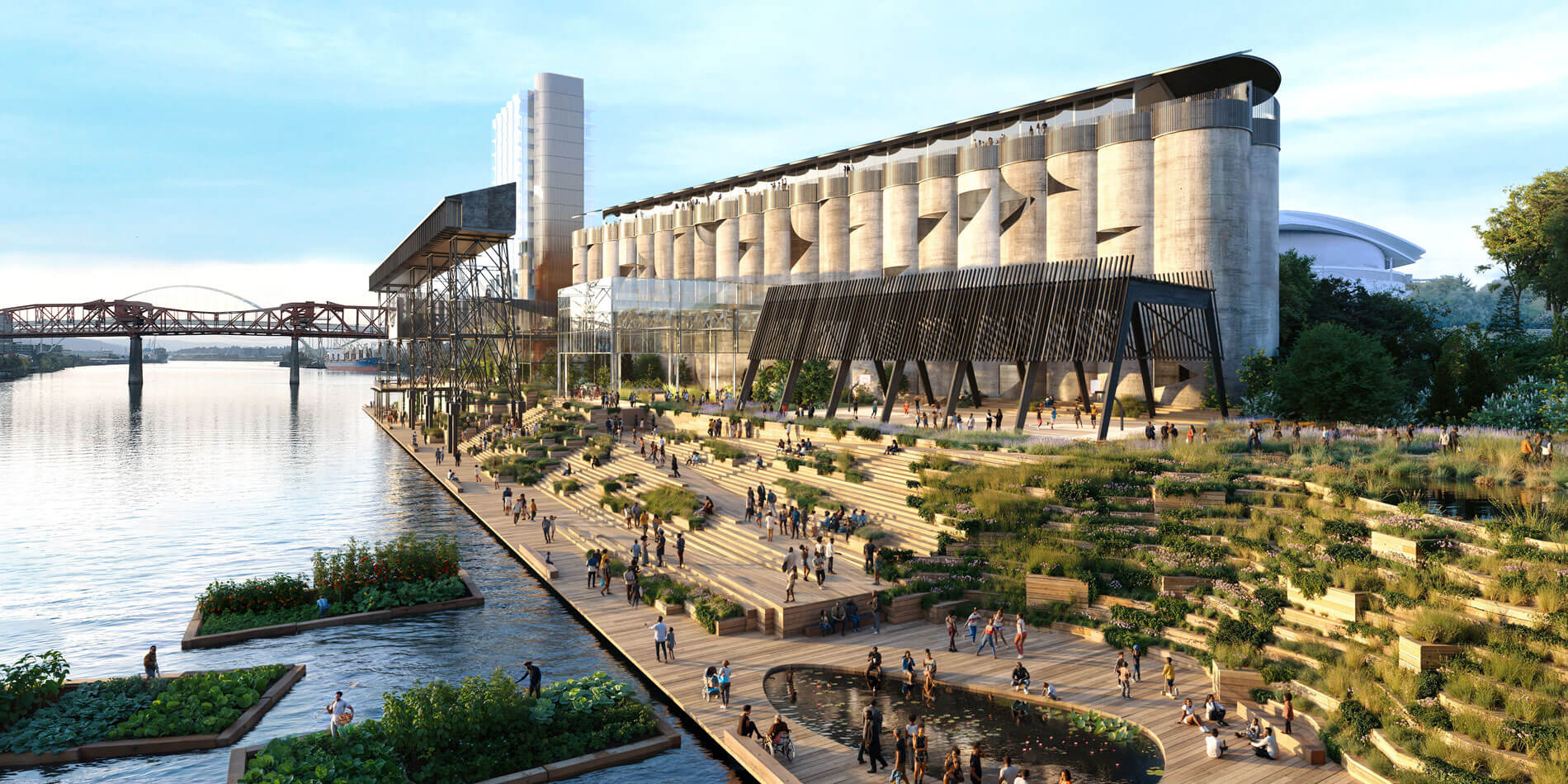
Since 1914, the Louis Dreyfus Company grain terminal on the Willamette River functioned as a key export point for the Pacific Northwest. The 3-acre property in Portland, Oregon, south of the Moda Center was listed on the market for $6.5 million last year.
The 1803 Fund, a real estate group founded in 2023 whose mission is regenerating historically Black neighborhoods in Portland, more recently bought the site, and partnered with AD—WO, MALL, Wayside Studio, Amen, Amen. Studio, and Natanya Jones to transform it into a new public riverside park, dubbed Albina Riverside.
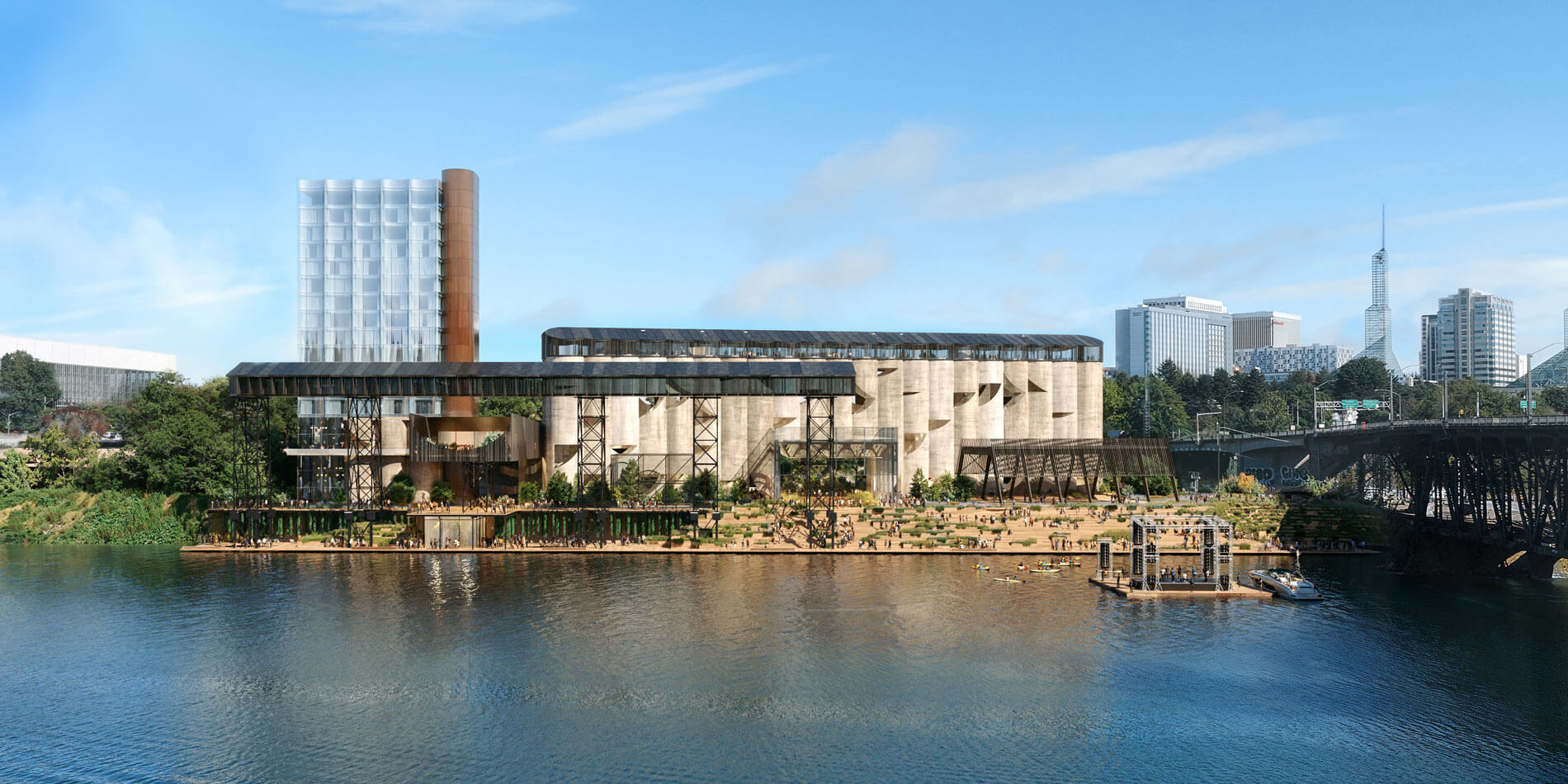 The project reuses old silos and the industrial docks along the Willamette River. (The Light We Make)
AD—WO is will be responsible for the public space, arts programming, and sports and landscape design. Jennifer Bonner, of MALL, will design the hotel and hospitality components. Wayside Studio, Curry J. Hackett’s transdisciplinary design and research practice, is behind conceptual consulting and visioning. Amen, Amen. Studio will handle the graphic design, and Natanya Jones—head of global brand merchandising at Nike—is the project’s community strategist.
A “Thousand-Year” Investment
Albina Riverside is in north Portland. It takes its name from a historically Black neighborhood, Albina, where over 80 percent of Portland’s Black residents lived by the 1960s, stemming from redlining. Interstate-5, a north-south freeway, and Emanuel Hospital were completed in the 1970s in Albina, displacing hundreds of Black families.
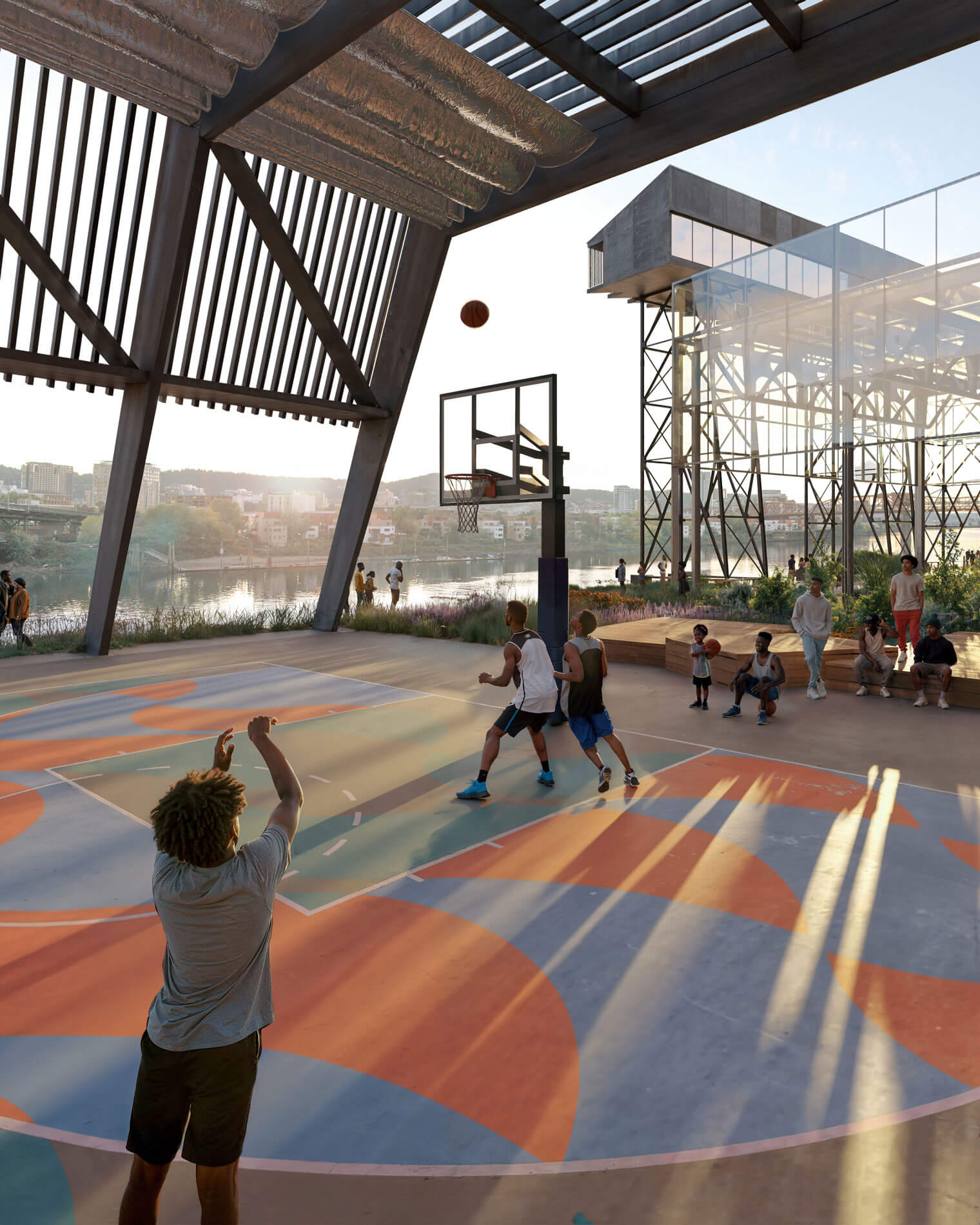 A mass timber basketball shed will host year-round play and public events. (The Light We Make)
The interdisciplinary design team has been tasked by the 1803 Fund with helping revitalize the area. Drawing from Black spatial traditions, the grain terminal site will be repurposed for art sheds, concrete platforms as sloughs and courts, and industrial docks as terraced wetlands.
“These are thousand-year investments,” Rukaiyah Adams, 1803 Fund CEO, shared in a statement. “We are investing in Albina not as an artifact of the past, but as a promise to the future. Our goal is to build something enduring, grounded in the people who have always called this neighborhood home.”
A sloped terrace designed by AD—WO will provide leisure space overlooking the Willamette River; benches and plant boxes are pictured in renderings, brimming with vegetation. From afar, Albina Riverside will stand out thanks to a 16-story hotel, designed by MALL. Guest rooms will be sited above a three-level public podium. On the ground floor, the Silo Gallery will transform six silos into a flexible venue for cultural programming.
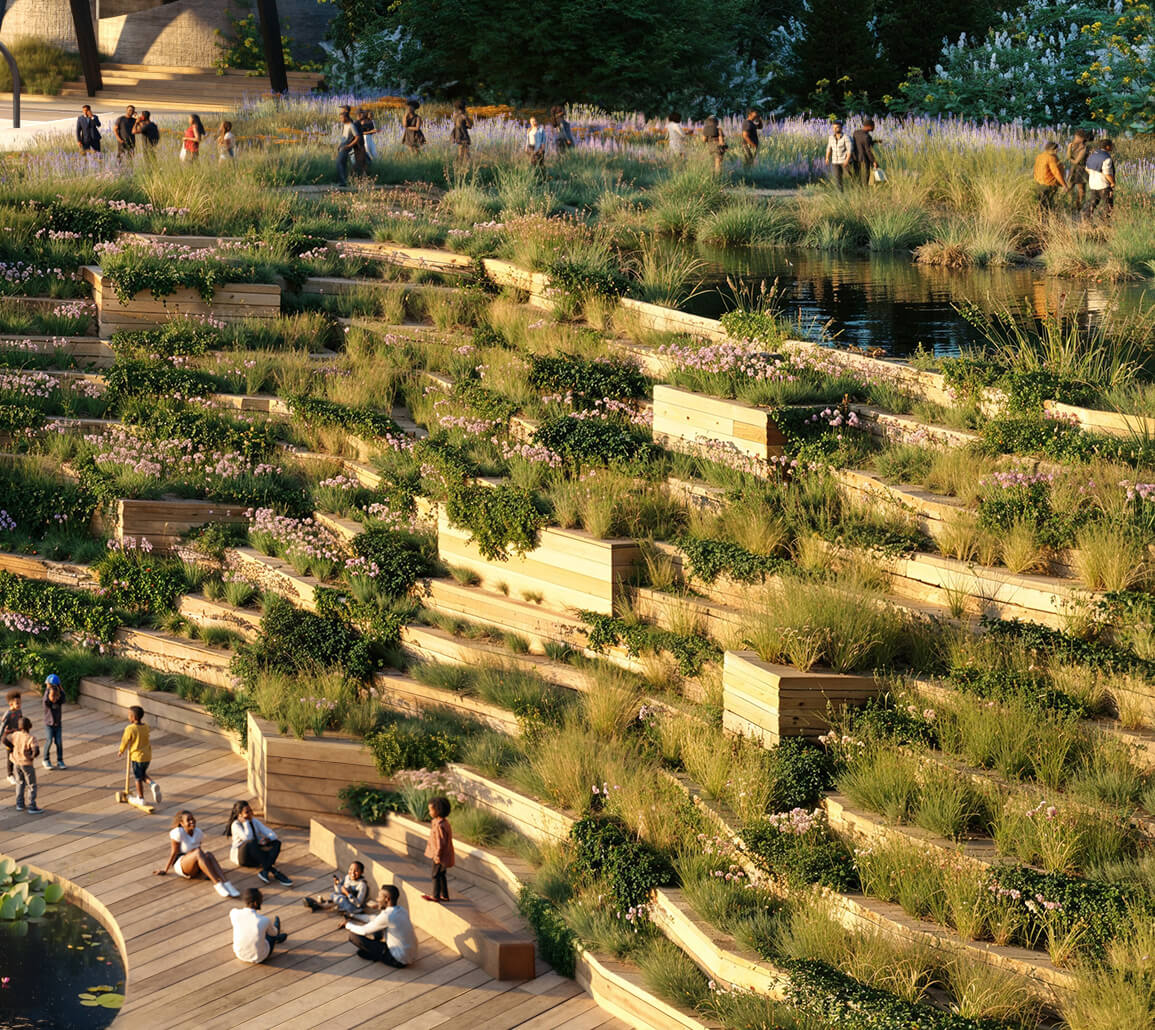 A sloped terrace by AD—WO will provide leisure space overlooking the Willamette River. (The Light We Make)
A 27,500-square-foot crossing will be Albina Riverside’s primary pedestrian access point, connecting an elevated roadway to the riverfront. This feature will link directly to the hotel and the site’s Art Shed, a 13,000-square-foot public venue built out of the existing silo head house.
Architects are reinforcing the silo head house’s steel moment frames, and adding two new circulation cores to the historic structure. An operable wood-slat screen will adorn the facade. A separate, freestanding, 2,700-square-foot pavilion, the Art Cube, will facilitate rotating public sculptures, installations, performances, and artist residencies.
A 9,900-square-foot basketball shed made of mass timber will be topped by a movable canopy. Play and public events can take place there. Nearby, a 53,000-square-foot bi-level dock will better connect visitors to the waterfront.
A construction timeline hasn’t been released. The 1803 Fund said more properties included in the project will be shared in the coming months.