
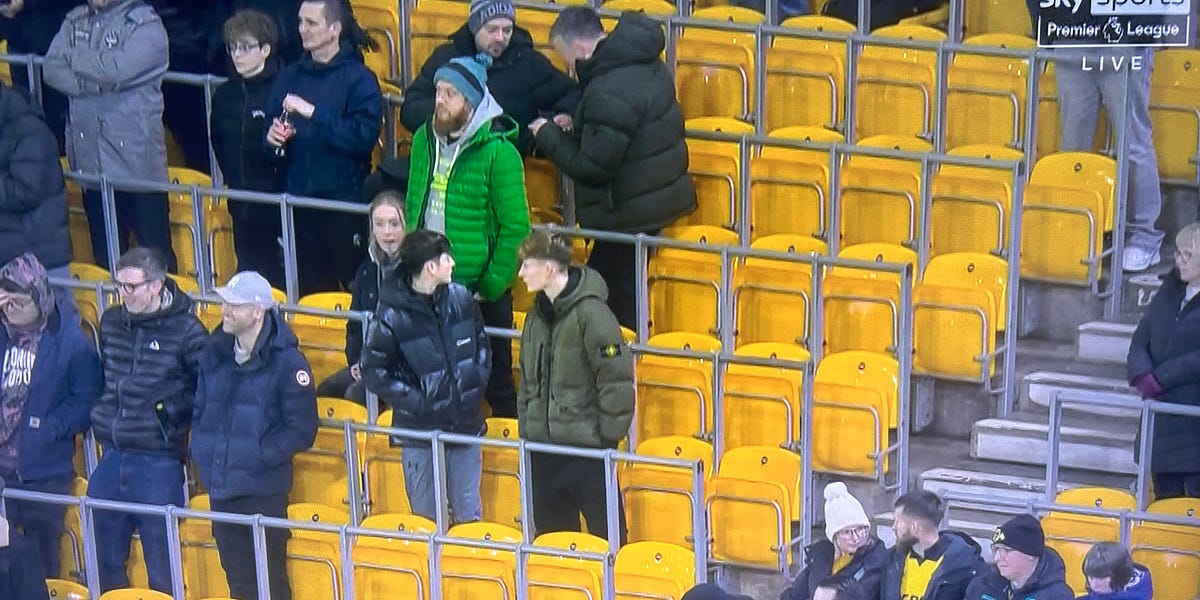
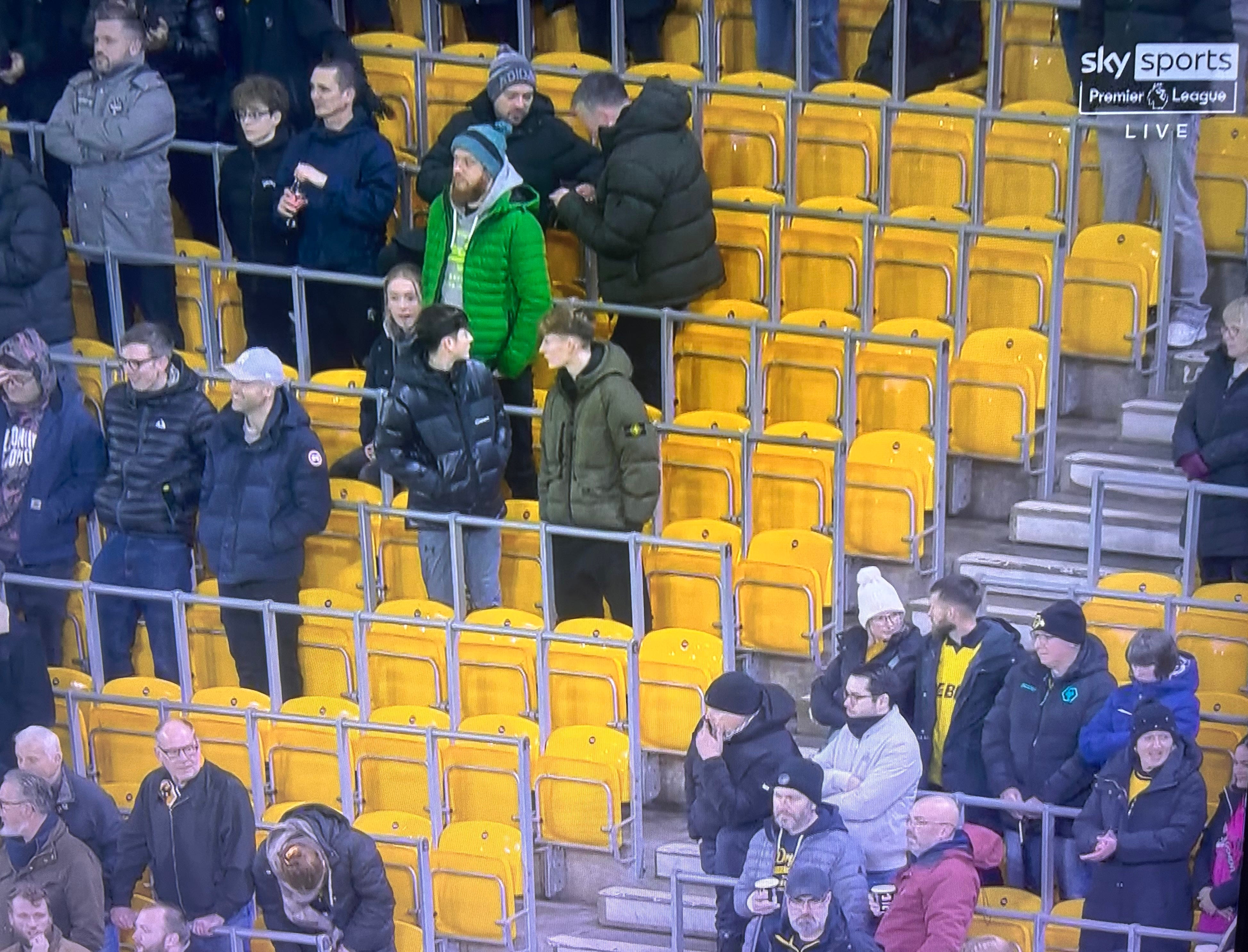
Fundamentally, all that Wolves supporters wanted was to be recognised. Over the recent months and years the sense of helplessness in the face of challenging times on the pitch and rising prices off it has left many feeling they have no voice. When the television coverage of Monday night’s match against Manchester United cut to the camera shots of empty seats in the opening minutes, and then again to supporters filing in after quarter of an hour, it felt as if they had been heard.
The right to protest is a basic civil liberty in our society, despite continuous attempts from recent governments to undermine the act. Nobody should be denied the opportunity to voice dissent in its purest form; peacefully and without offence. Of the various measures discussed by supporters’ groups, the idea of boycotting the first 15 minutes clearly gained traction and it was designed to maintain the moral high ground. The numbers involved were enough to garner national attention. As a first step, it was evidence that fans can come together in times of difficulty and make their point.
There were other forms of protest on the night, too, including a substantial gathering on the Waterloo Road in what is becoming a toxic matchday atmosphere. While dialogue with the club appears nothing more than perfunctory, there was a sense that the balance of power was not weighted entirely one way.
“They’ve not seen their team win for ages, so I get the anger and frustration completely,” said Rob Edwards when we spoke in the tunnel after the match. “If I was a supporter, I’d be angry myself because we all want to see our team competing.”
The lack of competitiveness in the 4-1 defeat was frightening. In so many aspects of the match, Wolves were out of their depth.
“It was like watching maybe a kids’ game for elements of the first three goals that we gave away”, the head coach added. Bruno Fernandes’ opener was possibly the worst goal ever witnessed in the Premier League era. Bereft of confidence and quality, it is becoming harder to see positives with each passing week.
There was one, though. The addition of Rui Pedro Silva to the coaching staff, confirmed on Tuesday, had been in the pipeline for several days. The Portuguese is an elite coach and had most recently been working with Nuno Espirito Santo at Nottingham Forest, but since his departure from the City Ground he has been staying back at home in Porto. Silva spent several hours on Monday at Compton Park then watched the United game from the Billy Wright Stand, before meeting up again with Edwards and his coaches in the managers’ office around an hour after full-time.
Silva is acutely aware that this is not the same club he left four and a half years ago. Aside from the off-pitch rancour, the dressing room has none of the ingredients that made it such a unified pack under Nuno, when a core of British and Irish players with strong voices helped foster a spirit that enabled the many gifted European stars to thrive.
Aside from knowing how to improve players on the training pitches and create a strong dressing room ethos, Silva will add strength to the support network the manager needs if he is to survive this season. There is a genuine fear that Edwards has come into this role too soon. A talented and adaptable coach with a strong body of work at Forest Green and Luton alongside an impressive start to his time at Middlesbrough, he is needed for the rebuild in the summer ahead of the Championship next season. But so much can happen between now and May that he may not even get that far.
To witness his exasperation and despair on the sidelines during the more hapless moments of the defeats at home to Forest and United brought home how nothing can be taken for granted. Edwards needs to make it through these remaining months in one piece, and with the supporters still prepared to give him a chance.
This is probably going to get a lot worse before it gets better. The collateral damage that accompanies defeat after defeat is already being felt. It was churlish of Jorgen Strand Larsen to react in the way he did when he left the pitch on Monday evening, whatever the provocation, but the Norwegian is a good character who genuinely cares. This is no bad egg showing his true colours. That Strand Larsen had been reduced to such a reaction is indicative of the environment he is working in.
During his post-match interview for Sky Sports, which was not broadcast, Ladislav Krejci became quite emotional trying to explain the poor performance. Only the harshest of critic could lack sympathy for a group of honest professionals who have been left high and dry by the summer recruitment work. And it’s a trip to leaders Arsenal next.
In so many respects, the immediate task of picking up points is the least of the problems. This season is over, it is the prospect of longer-term damage which is more concerning. The January transfer window could well bring more discontent, with several players looking to move on and very few potential recruits keen to clamber aboard. Preparations for the Championship should already have begun but given how the squad has been so damagingly dismantled over the course of the past few windows, dropping down a division will not necessarily bring a reset. And, besides, fans have had enough of those already.
The uncertainty of what lies ahead is also contributing to supporters’ fears. If there was a crystal ball that could point to the downward trajectory flatlining out – no matter how low that might be – then at least there would be some clarity. It is not knowing where this will all lead that is adding to the anxiety and anger. Any trust that the club is in safe hands has disappeared.
Long into Monday evening I joined a group of dedicated and loyal Norwegian Wolves supporters for a drink and a chat. They had travelled over from Bergen for their latest Wolves fix. The trip had taken in Wolves Women’s 5-1 victory over Liverpool Feds at Buck’s Head the previous afternoon, a 16th straight win. The Norwegians had, it transpired, met up with manager Dan McNamara and several players after the game. They enjoyed sharing their stories of the previous day in those late hours after the United defeat.
It is – and always will be – the fans who give any club its identity. Wolves, through its illustrious history and one club city landscape, is a focal point for so many from near and far. It is about more than just the results on the pitch. Monday’s fledgling protest tapped into the sense of togetherness that will always remain no matter how much their resolve is tested. By leaving those seats empty – even just for 15 minutes – the message was clear.
For anyone wanting to read more about Rui Pedro Silva’s first spell at the club then ‘Revolution of Wolves’, co-authored with writer Paul Berry, is available at Waterstones, WHSmith and Amazon. An ideal Christmas present for the Wolves fan in your life.
https://www.amazon.co.uk/Revolution-Wolves-Premier-Trilogy-2003-2023/dp/1801506450