
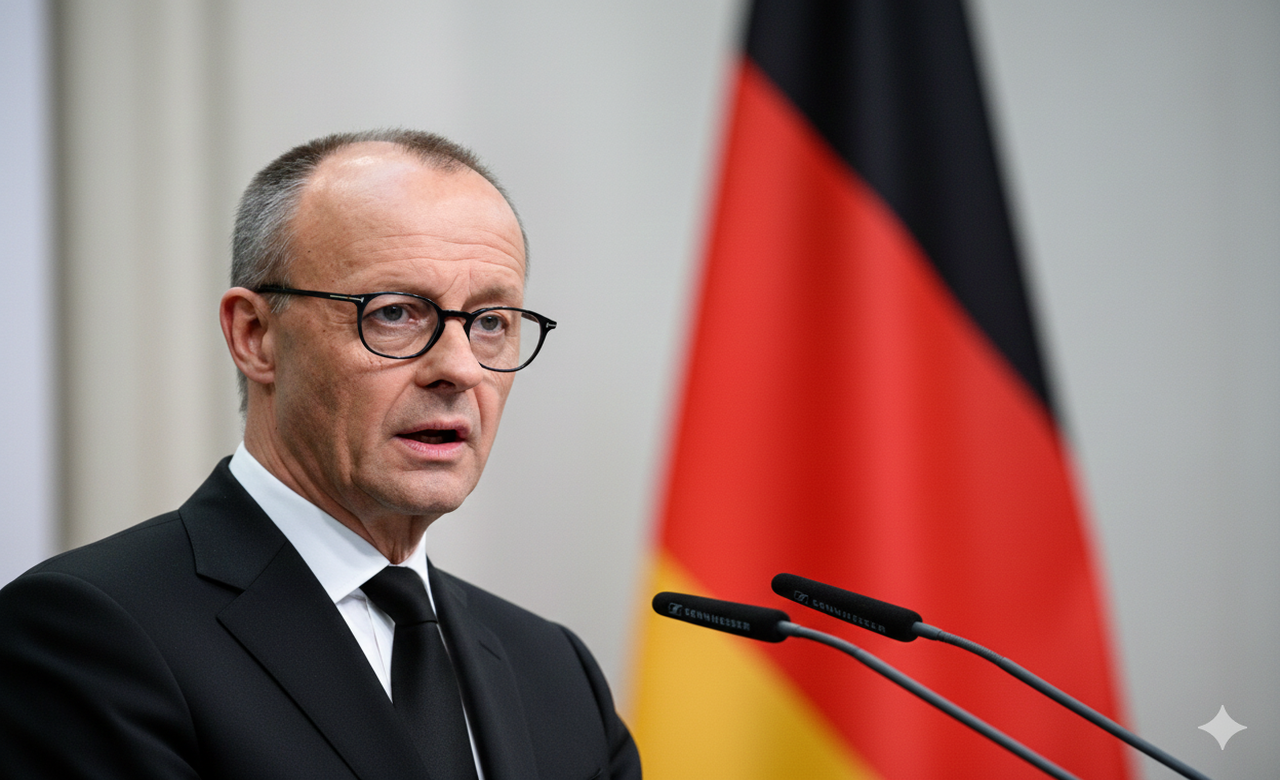
The publication of the new U.S. National Security Strategy in December 2025 opened a public rift between Berlin and Washington, one with immediate implications for European defense policy. In Berlin, Chancellor Friedrich Merz firmly rejected the notion that “the Americans now want to save democracy in Europe,” insisting that if such a moment ever came, “we would fix it ourselves.” His remarks were not symbolic: he made them after reviewing sections of the strategic document that, in his view, portray Europe as weakened and cast doubt on the reliability of the transatlantic umbrella.
The rhetoric contained in the document and in the U.S. president’s public statements, which have labeled Europe “weak” or even “in decline”has set off alarm bells in European capitals and reignited a longstanding debate over strategic sovereignty. For many leaders, including Merz, the lesson is clear: the era of assuming automatic American leadership in matters of security is over, and Europe must accelerate the development of its own defense capabilities.
Germany’s pushback does not amount to a break with the transatlantic alliance but rather a call for recalibration. Merz emphasized the need for greater European military autonomy without abandoning the relationship with the United States a stance that reflects the practical tension between historical dependence and strategic urgency. Politically, striking that balance will be difficult: boosting defense spending and deploying joint capabilities requires budgetary and structural consensus across a continent divided by national priorities.
The clash also carries symbolic and normative weight. The suggestion explicit or implicit in certain passages of the U.S. strategy that Washington might intervene politically or ideologically to “save” allied democracies was perceived in Europe as a form of paternalism that undermines partners’ political autonomy. That perception is fueling internal demands to redefine Europe’s security architecture: more domestic defense industry, greater operational integration, and less subordination to foreign decision-makers.
With European leaders torn between defensive urgency and fears of alliance fragmentation, a practical question remains: can Europe, within a reasonable timeframe, build a credible capability that complements but does not depend entirely on the United States? The answer will shape not only defense policy but the geopolitical landscape of the continent in the years ahead.