
Coho salmon have pushed more than 90 miles up California’s Russian River, reaching the watershed’s upper basin for the first time in more than three decades – the latest of many recent milestones for the endangered fish.
State wildlife officials confirmed Thursday that a handful of young coho were spotted over the summer in Ackerman Creek, a tributary of the Russian River near Ukiah, in Mendocino County. The juveniles are believed to have been spawned by adults that migrated from the Pacific Ocean on a course rife with human-imposed obstacles, including sediment washed in from forest clear-cuts and water reductions due to agricultural pumping.
Coho, among the most threatened of California fish in the iconic salmon family, have been steadily returning to the lower reaches of the Russian River as state and federal money has poured in for improving river conditions. The fish’s latest advance into the upper basin is inspiring fresh hope of recovery, even as coho numbers in California remain just a fraction of what they once were.
“It’s been pretty amazing to see the fish when you think about how hammered they’ve been,” said Jeff Mount, a senior fellow at the Public Policy Institute of California’s Water Policy Center and an emeritus professor of earth and planetary sciences at UC Davis. “We need to remember to celebrate these successes when we get them.”
As a historical stronghold for coho, the 110-mile Russian River is seen as vital for any statewide rebound.
The recent success of salmon on the river, as well as on other California waterways, is likely the result of myriad factors, say Mount and other scientists. First and foremost, three consecutive wet or moderately wet years has provided ample water for fish. Secondly, ocean conditions, including food supplies, have been favorable. And thirdly, efforts to restore waterways and improve habitat for fish have begun paying off.
Gov. Gavin Newsom lauded the coho’s progress Thursday, praising the long-running restoration work on rivers and creeks across the state.
“The return of this species to the Russian River demonstrates a new win in our strategy to preserve a healthy and sustainable future for all,” Newsom said in a statement. He said restoring salmon populations was “about honoring tribal sovereignty, protecting the ecosystems that define this state, and doing the hard, generational work to make sure these rivers still run for our kids and grandkids.”
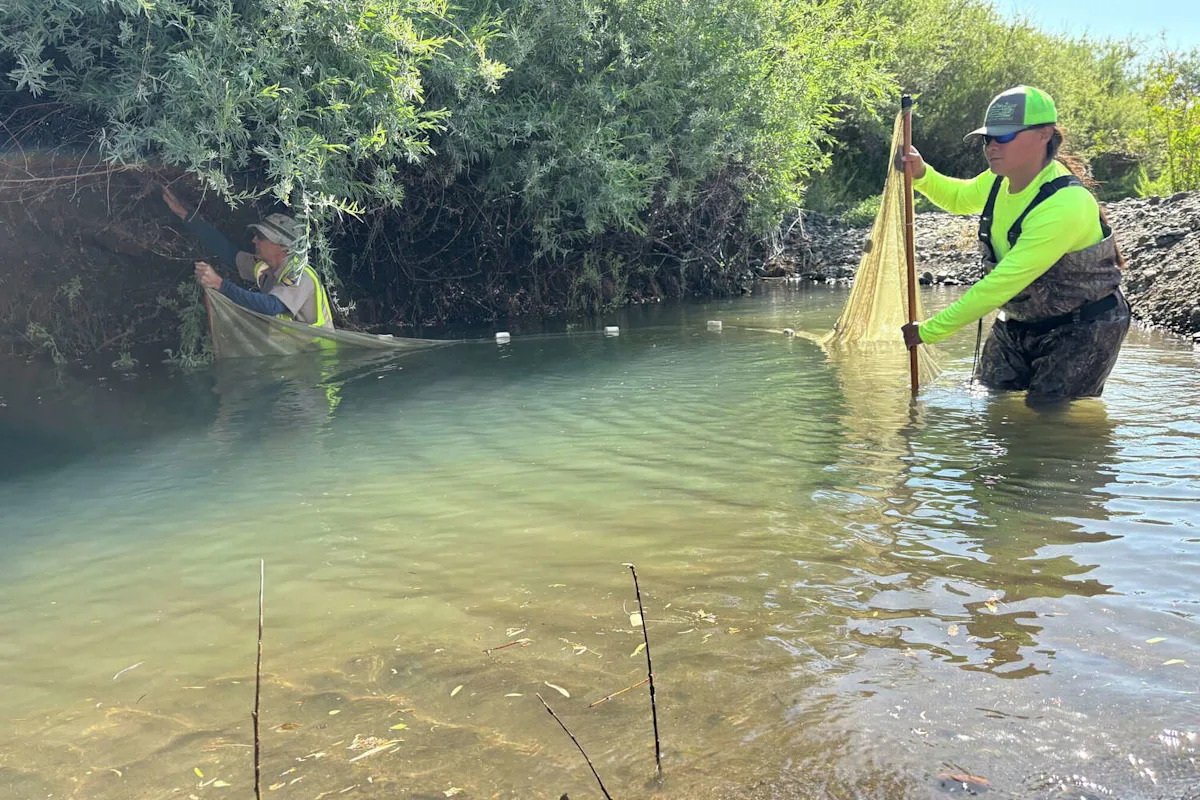
The coho at Ackerman Creek were discovered in June by a water resources specialist for the Pinoleville Pomo Nation. Between two and four juveniles, according to state officials, were stranded in shallow pools that were drying up. The tribe worked with the California Department of Fish and Wildlife to net the salmon and move them to flowing water.
State officials say the fish mark the first observed natural reproduction of coho in the Russian River’s upper basin since at least 1991. The river runs from north of Ukiah, southward along the Highway 101 corridor and then west to the oceanside community of Jenner, draining about 1,500 square miles of redwood forest and coastal mountains.
Coho salmon are anadromous fish, hatching in freshwater and then swimming to sea for about two years before returning to their natal stream, or beyond, to spawn and die.
The fish, distinguished by their silver bodies and spotted backs, are generally smaller than chinook salmon and similarly anadromous steelhead trout. They were once plentiful in the coastal watersheds of Central and Northern California. Since the 1940s, however, their numbers have plummeted as rivers and streams have been ravaged by logging, mining, farming and housing development.
The hotter climate has also dealt a blow by bringing warmer waters and longer periods of drought.
At the beginning of this century, it was unclear whether coho salmon would endure in the Russian River basin. To boost their population, the California Department of Fish and Wildlife began operating the Warm Springs Fish Hatchery in Geyserville in 2001, where they bred fish, which slowly helped increase their numbers.
In addition to the Russian River, coho salmon have been reported to have made recent inroads on the Noyo, Big and Navarro rivers in Mendocino County as well as the East Branch Russian Gulch in Sonoma County.
Chinook salmon also appear to be doing better this year. Chinook, which are the mainstay of California’s commercial fishing industry, benefited from closed fishing seasons over the past three years.
In a rarity, chinook were observed last month swimming 20 miles up Alameda Creek, from San Francisco Bay, where they hadn’t been seen in at least 70 years. Chinook have also made huge progress on the Klamath River, aided significantly by the removal of four dams on the river in 2023 and 2024.
While salmon returns have been good, scientists say it will be a long time before any major comeback. Many believe that the state and federal government should be doing more to regulate waterways and restrict pollution and pumping to help the fish. The Trump administration this year has sought to cut many fish restoration programs.
“Keep in mind, coho salmon, in particular, go through boom and bust cycles,” said Mount. “But we’re pointed in the right direction.”
This article originally published at ‘Pretty amazing’: Salmon seen in upper reaches of a California river for first time in decades.