
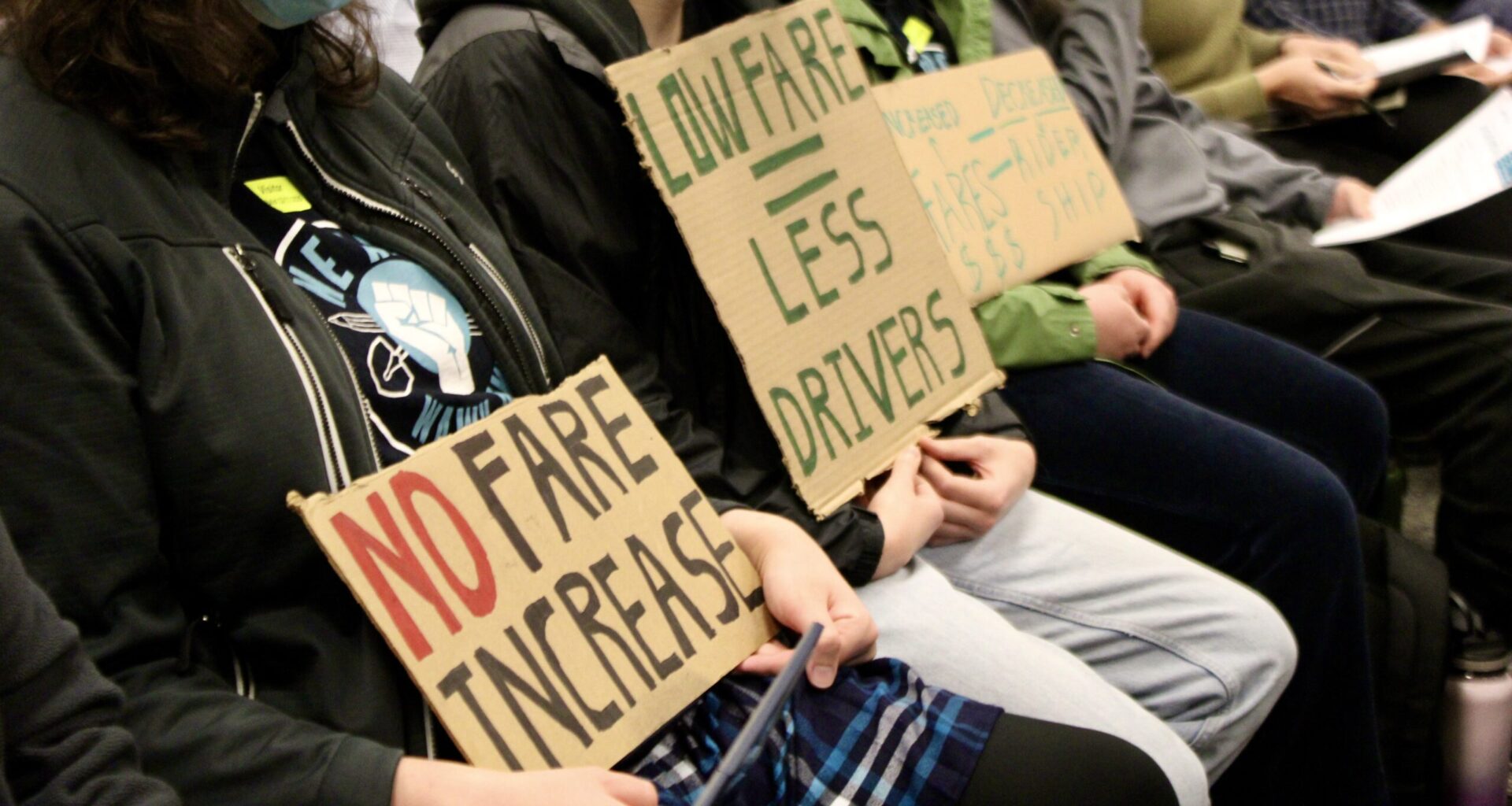
Bus fares in Whatcom County will increase next fall.
Whatcom Transportation Authority’s board approved the increases on Thursday, Dec. 11 in a 6-2 vote, with Bellingham Mayor Kim Lund and Whatcom County Councilmember Todd Donovan voting against. The fare increases will double fixed route bus fares from $1 to $2, and increase paratransit fares from $1 to $3. The proposal also introduced a fare capping system, with a daily fare cap of $6, and a monthly fare cap of $60.
The new fares will go into effect in on Sept. 1, 2026. It’s the WTA’s first fixed route fare increase since 2008.
Other changes include the elimination of the Gold Card, which provided free fares to seniors over 75, and the expansion of the reduced fare program. Now, people 65+, paratransit eligible, veterans, those who meet disability or income-based requirements, and students will be eligible for half-price rides.
The WTA received more than 900 comments on the fare increases, most of them expressing concern for low-income, disabled and elderly riders.
Les Reardanz, WTA’s general manager, told a packed board room on Thursday that the transit authority has to close a growing gap between operating expenses and operating revenues.
The WTA already reduced discretionary spending by close to 20%, but it is trying to avoid significant reductions in service, Reardanz explained. He said the WTA doesn’t have a lot of options when it comes to raising revenue: contrary to some suggestions from public commenters, the WTA can’t raise property taxes, tax parking or raise car tabs.
Increasing sales tax is one avenue, but that would have to go to the voters.
“These decisions are never popular, never fun, but we owe a fiduciary duty to this organization into this community, try to run the best service that that we can,” Reardanz said. “We have to look out into the future to be able to do this.”
Audra Stiles, grants and revenues manager at WTA, provided some additional context on the elimination of the Gold Card, a move that riled many seniors. She said many people use it to get free paratransit fares.
“What has ended up happening is that a third of our rides – and growing – on paratransit are completely free,” Stiles said. Paratransit costs the WTA about $96 a ride. With increases in ridership, having free riders is unsustainable, she said.
Dan Darwin, the non-voting labor representative on the board, urged members to listen to public comment and vote against the increases.
“I’ve heard from many of the operators out in the field who drive these paratransit routes,” he said. “All of these riders are scared of what’s going to happen for them.”
Lund proposed an amendment to bring the daily fare cap down to $3, to make it more affordable for less frequent riders. But Stiles said a $3 fare cap would also apply to paratransit riders, and they could hit the cap after just one ride. She said they don’t know the “downstream effects” of that, given that paratransit services are already “at capacity.”
The amendment failed with four opposed and three in favor.
Ahead of the final vote, Donovan urged the WTA to seek out a sales tax increase. But other board members, mainly from other areas of the county, spoke against the suggestion.
“For us out in Everson, in Nooksack and Sumas, who are getting a small bit of service, to ask us to pay more to subsidize riders is not where I would go at this point,” said board member Jen Lautenbach.
Western and WTA to continue discussions
More than 100 Western Washington University students also showed up to recent public hearings after news broke that WTA doesn’t plan to renew its existing $600,000 per year contract with Western Washington University to provide unlimited fares to students and staff. Students contribute to this through a $33 transportation fee assessed quarterly. The contract expires in September 2026.
The WTA is still open to negotiating a new contract with Western, said Maureen McCarthy, WTA’s director of communications and government relations, last week. But WTA won’t continue with the contract as it is currently written.
Western and WTA are likely set to begin discussions about a potential new contract this week, said Joyce Lopes, Western’s vice-president of business and financial affairs in an update to students.
“As with any complex negotiation, the timeline is uncertain,” Lopes said. “There is no set end date for these discussions. Talks may continue into Winter and Spring quarters, but both Western and WTA remain committed to meeting regularly and making steady progress.”
Charlotte Alden is CDN’s general assignment/enterprise reporter; reach her at charlottealden@cascadiadaily.com; 360-922-3090 ext. 123.