
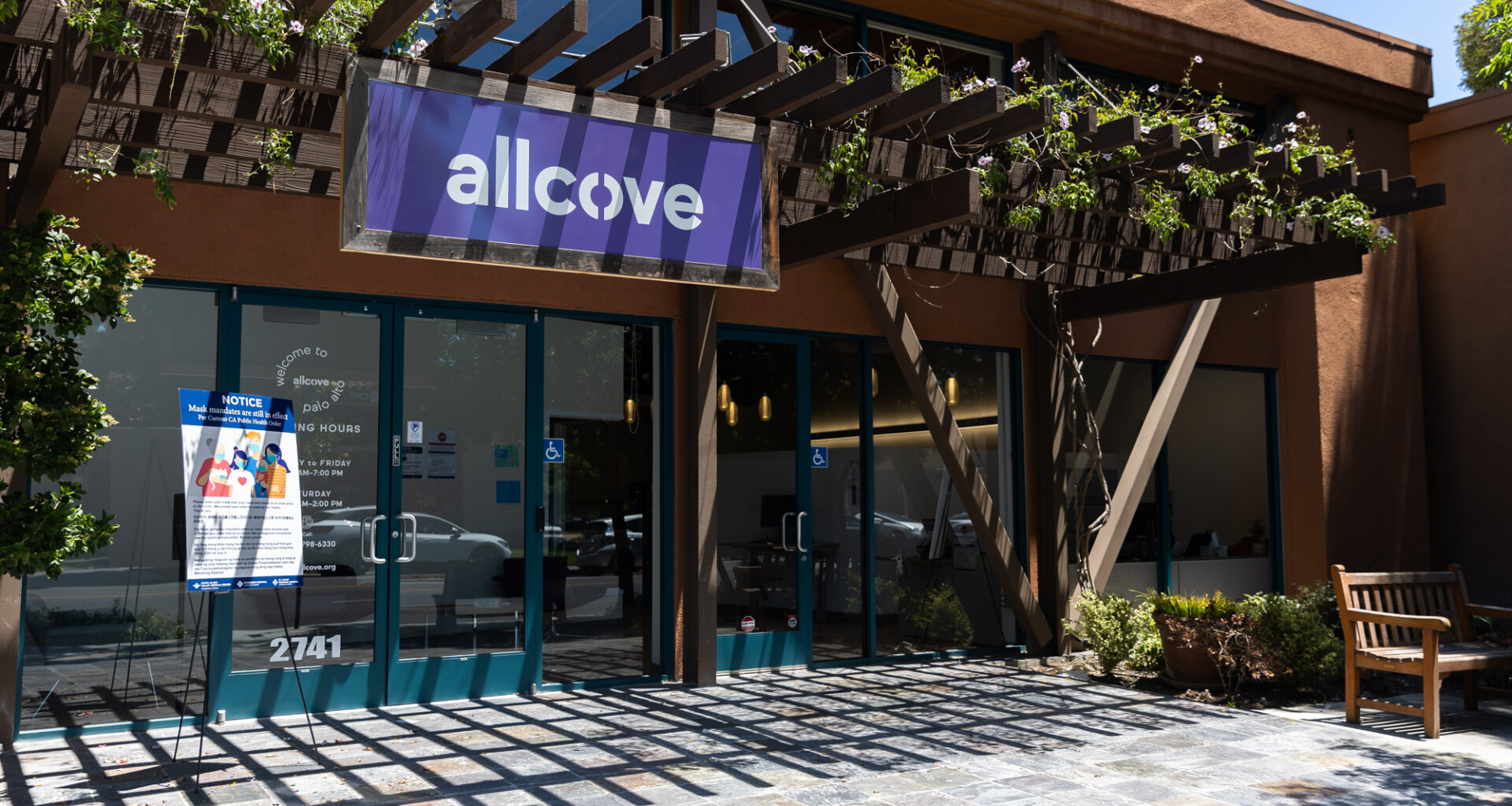
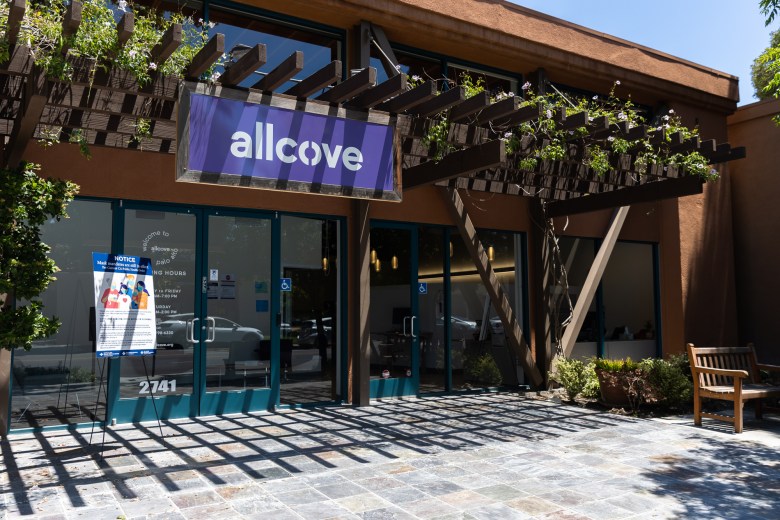
 The exterior of allcove Palo Alto on June 30, 2021. Photo by Magali Gauthier.
Editor’s note: Resources for any person who is feeling depressed, troubled or suicidal are listed at the bottom of this article.
During a busy school finals season, local high school senior Nico Fischer has something else on his mind.
As a youth reporter, advisory member at the Stanford Center for Youth Mental Health and Wellbeing and chair of the Santa Clara County Youth Task Force, Fischer is well-acquainted with local student needs. And amid another Palo Alto youth suicide cluster, a period when multiple deaths by suicide occur in a short time frame, he wants more people to know mental health services are on the county’s chopping block.
Allcove Palo Alto, a youth wellness center that students say is indispensable to suicide prevention work, as well as other health centers may face a reduction in funding as the county buckles under President Donald Trump’s One Big Beautiful Bill.
A former youth advisor with allcove, Fischer noted some kids traveled from across the bay to access the Palo Alto wellness center, which was the first model of its kind in the state.
“That’s what made me realize that this is a resource we need to protect,” he said.
Fischer and a band of local students formed a group to advocate for allcove Palo Alto’s continued funding, as the county prepares to discuss budget cuts at a Health and Hospital Committee meeting on Dec. 16.

How will you give back this season? Create a lasting impact close to home — help local journalists uncover the stories that matter.
The group, which created a social media account on Instagram, has a couple main goals: educate more students on possible cuts to their health care and keep allcove afloat. They hope to garner more student members after finals season ends.
“The big goal is just to keep the center open, to show the county that this $4 million a year commitment is well worth it,” Fischer said.
Allcove Palo Alto, which allows students to access free therapy, health care and peer counseling without the permission of their parents, is county-funded and may face staff and service reductions as the federal administration looks to cut $800 million from the Santa Clara County health budget. County officials said the loss could be devastating, but Palo Alto teens have made it clear that student need for the services is greater.
Various students said the wellness center is a one-stop shop, designed by youth, where all can receive non-judgmental care, according to a recent allcove survey of nearly 40 kids. Students commonly used the words “safe,” “accessible,” “confidential,” and “inclusive” when describing the service.
In the survey, youth said the variety of resources spanning from substance abuse to sexual health servicing, make the center what it is and don’t want to see any cuts.
“I don’t believe it’s fair to select one over the other,” one student wrote. “I find the importance of a center like allcove is youth can visit feeling unsure about the support they need. With the help of adult allies and peers in this space make the best educated decisions in what may support them at that time.”
Adversely, students said they sometimes struggle while accessing other forms of support. Students expressed apprehension while working with school counselors and hospital systems due to long waitlists and fear of parent notification. Other traditional therapy models can also feel too “clinical” and expensive, students wrote.
The existence of allcove alone sends a message that the county supports youth health and needs, Fischer said.
“It is potentially a life saving thing,” he said. “I think it’s pretty absurd – I think we can all agree it’s pretty absurd that the county is trying to cut the service when we are in a suicide cluster.”
Palo Alto faced suicide clusters in 2009, 2014 and health experts say, the city is in the midst of a third.
In recent months, local residents have reunited to advocate for greater youth support through programs like Palo Alto Track Watch, a community-run program that assigns volunteers to monitor local railroad crossings. In a city where many people are impassioned to join suicide-prevention efforts, Stanford Health experts say Project Safety Net can be a covening body for all who want to help.
Created in 2009, Project Safety Net is a coalition of volunteers that works to educate the public, provide training and connect people with resources. The collaborative has hosted two recent community meetings to discuss better ways to serve youth and formally requested that the Santa Clara County Board of Supervisors explore new options to fund allcove.
“We respectfully ask that the County approve a proposal to preserve allcove’s core operations by transitioning management to Alum Rock Counseling Center (ARCC), an existing allcove service provider, while preserving County funding at $2 million annually, instead of completely defunding allcove,” according to the letter.
Project Safety Net believes this proposal would allow allcove the time to find new sustainable funding models while continuing to provide service, according to the letter signed by nine local nonprofits including the Palo Alto Educators Association and various local officials like city Council member Pat Burt.
“Allcove’s work is more vital than ever,” the letter reads.
Help is available:
Any person who is feeling depressed, troubled or suicidal can call 988, the mental health crisis hotline, to speak with a crisis counselor. In Santa Clara County, interpretation is available in 200 languages. Spanish speakers can also call 888-628-9454. People can reach trained counselors at Crisis Text Line by texting RENEW to 741741.
Most Popular