
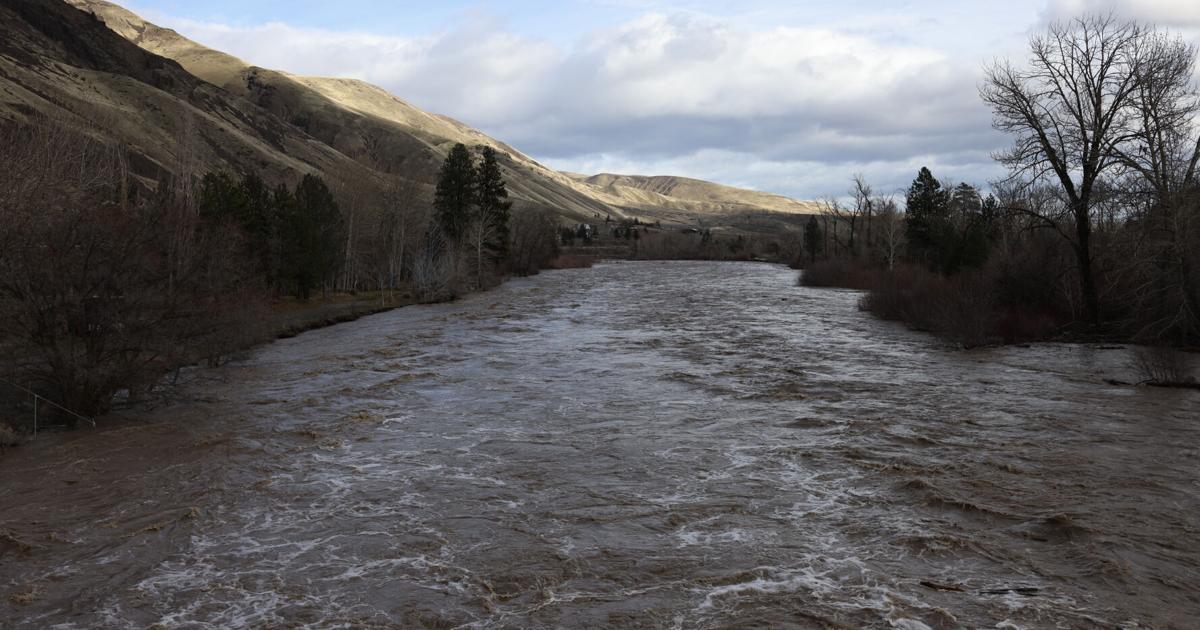
This week’s rain has offered gains to the Yakima River basin’s reservoir system after three years of drought conditions.
The five reservoirs of the Yakima Project have collectively picked up just over 36 inches of rainfall since Dec. 7, said Doug Call, Yakima River operator for the U.S. Bureau of Reclamation.
Precipitation at the five reservoirs between Dec. 1 and Thursday morning was 47 inches, or 125% of average for December, according to Reclamation.
Keechelus, Kachess, Cle Elum, Bumping and Rimrock were collectively at 413,285 acre feet, or 39% capacity. That’s 83.7% of average. Storage was about 120,000 acre feet this time last year.
Yakima Basin water leaders emphasize cooperation amid unprecedented shutoff
Precipitation at the reservoirs since the water year began on Oct. 1 has been 101 inches, or 144% of average.

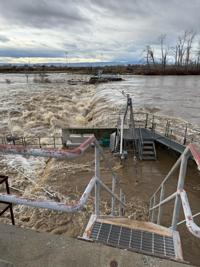
High flows on the Yakima River from intense rain are pictured at the Sunnyside Diversion Dam near Parker, which supplies water to the Sunnyside Valley Irrigation District on Dec. 11, 2025.
David Feldman / Contributed
The rising storage levels marked “great gains” but it is too soon to predict if that means that reservoirs will reach full capacity for next spring and end a three-year drought, said Chad Stuart, Reclamation Yakima Field Office manager. That will largely depend on continuous winter precipitation, especially snowfall.
“We’re not back to normal,” Stuart said. “We need snow, but it doesn’t help when its 60 degrees at night.”
Record highs of 72 degrees in Yakima and 63 in Ellensburg were set on Wednesday, according to the National Weather Service. Precipitation at the Yakima airport since Oct. 1 has been 2.36 inches, higher than the average 1.93 inches.

Headlines, puzzles and death notices from the Valley delivered to your inbox 7 a.m. daily.
The forecast calls for snow level to drop in elevation from 6,500 to 2,000 feet in the coming week, Call said.
The Roza Irrigation District and the Kittitas Reclamation District have sent messages to their water users explaining that Reclamation is capturing all the water in storage it can, after fielding phone calls about the high river levels.
Most precipitation in the basin will not flow into a reservoir. The five reservoirs are higher up in the Cascades.
“Everything you are seeing now is water we cannot physically capture,” Stuart said.
David Feldman, manager of the Sunnyside Valley Irrigation District, said that flow rates at the Sunnyside Diversion Dam were about 29,000 cubic feet per second Thursday morning.
Normally this time of year, they might be 1,500 to 3,000 cubic feet per second.
The fish ladders have been entirely submerged. He does not expect any permanent damage to infrastructure, but problems could happen if water were to crest over their gate and get into their canal.
Feldman said he is optimistic to see the steep increase in reservoir storage, but times like this also highlight the need for additional lower elevation storage. The district is looking into creating a re-regulation reservoir to help with system flows.
Questen Inghram is a Murrow News Fellow at the Yakima Herald-Republic whose beat focuses on government in Central Washington communities. Email qinghram@yakimaherald.com or call 509-577-7674.
This story can be republished by other organizations for free under a Creative Commons license. For more information on this, email news@yakimaherald.com.