

LONDON — The winners of the first ever Global Space Awards were revealed in a glamorous ceremony hosted by physicist and author Brian Greene on Dec. 5, during which the family of Apollo and Gemini astronaut James Lovell accepted an award honoring the late explorer’s legacy.
“It’s incredibly exciting, it’s about time that there’s an awards focussed on the next and final frontier,” Greene told Space.com as the event got underway. “When the public is behind something, ultimately governments recognize that they need to fund it and so if people are excited about life in the universe, or the beginning of time, or the beginning of space, this is vital for the funding of basic research that fuels everything.”
Honoring Gemini and Apollo astronaut James A. Lovell
The event culminated with the presentation of the inaugural James Lovell Legacy Award to the late astronaut’s family in recognition of his historic achievements in pioneering human spaceflight.
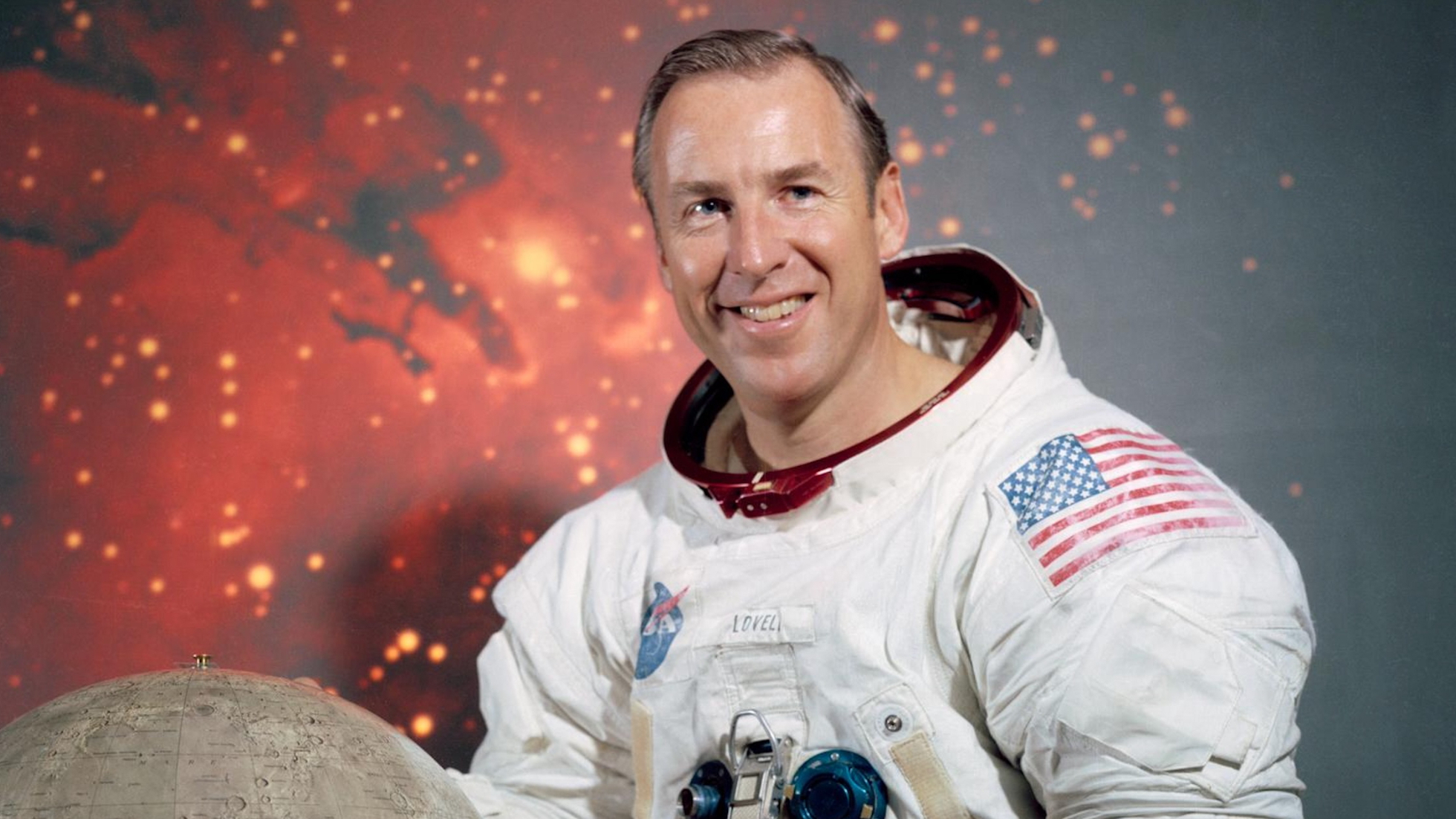
Official NASA portrait of Apollo 8 and Apollo 13 astronaut Jim Lovell. (Image credit: NASA)
“My dad always had a saying, ‘nothing ventured, nothing gained,’ and [he] was all about satisfying mankind’s curiosity,” Jeffrey Lovell, the youngest son of astronaut James Lovell told Space.com on the red carpet. “He was at the right place at the right time, growing up and becoming a test pilot and eventually becoming an astronaut and he just wanted to take that career and exemplify what we can do as mankind. We can do so much if we really put our minds to it.”
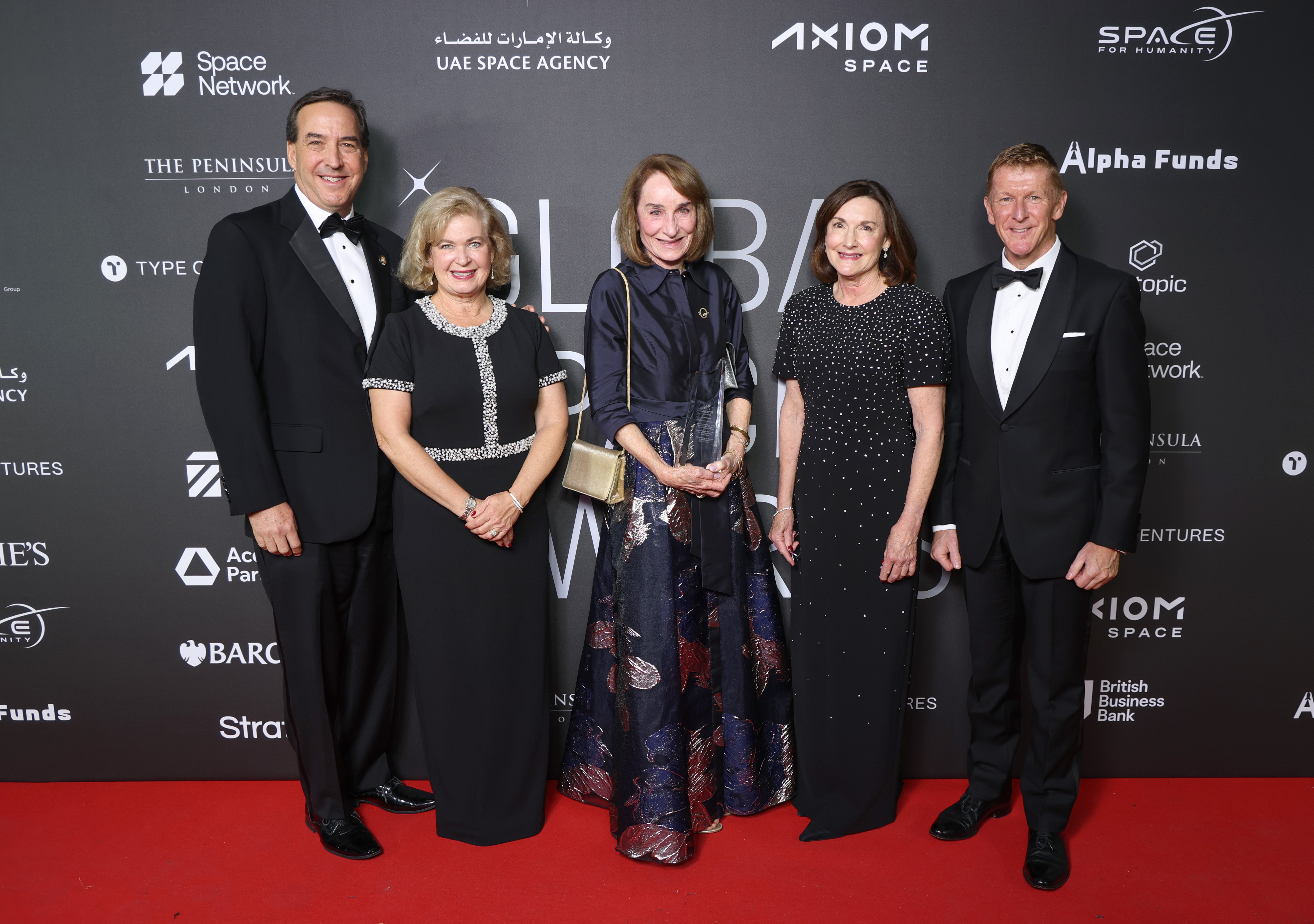
From left to right Jeffrey Lovell, Annie Lovell, Barbara Lovell Harrison, Susan Lovell and astronaut Tim Peak attend the Global Space Awards 2025. (Image credit: Photo by Mike Marsland/Getty Images for Global Space Awards.)
In future years, the award will be bestowed upon individuals who honor the spirit of James Lovell, who, with Frank Borman and Bill Anders, was one of the first humans in history to orbit Earth’s moon, and witness its far side during the Apollo 8 mission.
Read on to see the full list of every winner from the first Global Space Awards.
The winners of the Global Space Awards 2025Playmaker of the Year Award — Tahara Dawkins
Why you can trust Space.com
Our expert reviewers spend hours testing and comparing products and services so you can choose the best for you. Find out more about how we test and review products.
The inaugural Playmaker of the Year award was bestowed on Tahara Dawkins, a member of the White House National Space Council and Director of Policy at Astroscale for her work driving U.S. policy breakthroughs and advancing bipartisan legislation to tackle orbital debris.
Innovation Breakthrough Award — Skylo Technologies
The first Innovation Breakthrough award went to Skylo Technologies for the company’s work facilitating direct-to-satellite connectivity for smart devices and vehicles with tools including the Skylo Voice Gateway, along with efforts to improve emergency services via satellite SOS services.
“This year we really introduced some breakthrough innovations such as the Voice Gateway over satellite on smartphones, bidirectional messaging on smartwatches and real-time automotive hazard alerts,” Nisha Malhan of Skylo Technologies told Space.com. “These milestones are a testament to our team’s restless innovation and our partner’s trust. Together we’re making global connectivity and safety a reality.”
Science Breakthrough Award — Beatriz Sánchez-Cano (M-MATISSE)
Beatriz Sánchez-Cano took home the Science Breakthrough award for her work on the proposed Mars-Magnetosphere ATmosphere, Ionosphere and Space weather SciencE (M-MATISSE) mission, which would employ dual spacecraft to explore several aspects of the Martian environment.
“It’s a mission for understanding how the planet evolved, the climate, its history and whether it’s habitable or not,” Sánchez-Cano explained to Space.com. The “medium-class” mission is currently under consideration by the European Space Agency and would seek to answer questions related to how the Red Planet‘s atmosphere dissipates energy from the solar wind and how space weather influences surface activity.
Partnership of the Year Award — Starlab Space
The Starlab Space initiative — a partnership between Airbus, Voyager Space, Mitsubishi and others — won the partnership of the year award for its work securing funding, infrastructure and industry expertise towards the development of a commercial successor to the International Space Station.
“After three years only [we are] already at the end of the design phase of this complex station,” Airbus’s Manfred Jaumann, managing director of Starlab Space Europe told Space.com. “This is only possible because of the compliment-heavy partners that we have in four continents.”
The joint venture aims to heft a complete station to orbit in just four years time using a single superheavy rocket launch, with no further construction required in orbit and a minimal four-week commissioning period prior to being certified operational.
Sustainability for Earth Award — Space Forge
Space Forge also snagged an award in part due to its work in pioneering sustainable semiconductor manufacturing in the microgravity environment, which according to a statement from the Global Space Awards, used 60% less energy than its terrestrial equivalent, while cutting CO2 emissions.
Sustainability for Space Award — Astroscale
Astroscale was also recognized for its efforts to promote a sustainable space environment, by maturing and testing systems to refuel, repair, or remove satellites in low-Earth orbit. The company has a number of demonstration missions in the pipeline, which will see it attempt to remove the upper stage of a rocket from orbit and, separately, refuel a spacecraft belonging to the U.S. Space Force.
“This will create a little bit more inspiration to continue to push what we’re doing, which is building spacecraft that can safely, reliably, repeatedly get very close to other spacecraft and dock with other spacecraft not just to remove debris but also to set things up for that future in-orbit economy, where people are assembling things and manufacturing things in space,” said Andrew Faiola of Astroscale after accepting the award. “It’s a finite resource, it’s a global commons and it needs to be protected as such.”
Space Investor of the Year Award — Space Capital
The venture capital firm Space Capitol netted a Global Space Award after executing a number of strategic investments across the aerospace sphere, which, according to the panel, enabled industry hiring while encouraging growth in its portfolio.
SuperScaler of the Year Award — CubeSpace Satellite Systems
Satellite attitude control manufacturer CubeSpace Satellite Systems was recognized after opening a new EU facility and securing investment for automated production equipment, alongside expanding operations beyond nanosats to cater to the 50–1,000 kg class.
“The goal is really to build the space infrastructure for the space industry of the future,” explained CubeSpace CEO and Co-Founder Mike-Alec Kearney to Space.com. “As the industry scales we’re going to have to start thinking differently about how we manufacture satellite components.”