
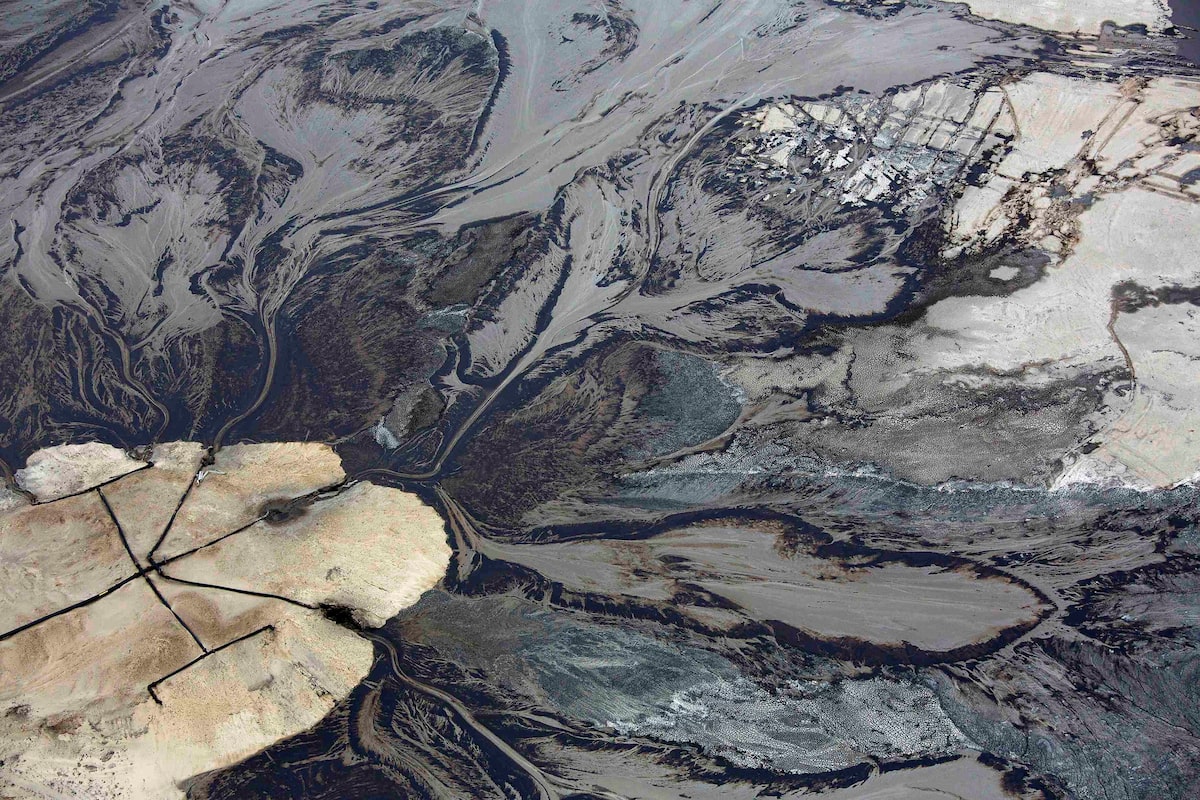
Oil processing waste goes into a tailings pond at an oil sands operation near Fort McMurray, Alberta, September, 2014.Todd Korol/Reuters
Albertans risk being on the hook for billions of dollars’ worth of cleanup of the oil sands under current rules that govern security payments for the massive mining operations, according to a new report from the province’s Auditor-General.
The funds held through the Mine Financial Security Program amounted to just $1.8-billion as of September. Meanwhile there is an estimated reclamation liability of $51.9-billion, the Office of the Auditor-General found in a report released Thursday. That amount represents the potential cost to clean up mines at the ends of their lives.
But the province said it won’t pursue what it called a “flawed recommendation” by Auditor-General Doug Wylie to revisit how asset values are calculated under the MFSP. Instead, a statement from the office of Environment Minister Rebecca Schulz said that the program is “stronger than ever.”
The MFSP is administered by the Alberta Energy Regulator using policy guidance from the Environment Ministry. The AER collects funds from oil sands and coal mine owners as security to ensure that the companies can cover the cost of cleaning up their messes, rather than foisting the bill onto taxpayers.
Insufficient disclosure obscuring billions in Alberta oil sands liabilities, advocates say
But in his latest report, Mr. Wylie said that the way that the program calculates the value of assets risks overstating their economic worth, and therefore the companies’ ability to cover cleanup costs.
“If MFSP assets are overstated, operators might not pay the necessary security, leaving Albertans at risk of bearing the financial costs of oil sands mine reclamation or the mines being unreclaimed,” he wrote.
The government rejigged the MFSP last year in response to earlier investigations by the Auditor-General’s office. Under the changes, companies will no longer be able to use off-site mine reserves as collateral to backstop reclamation responsibilities and the valuation of some oil reserves was adjusted to better ensure companies can cover future cleanup costs.
But critics argue the MFSP remains flawed for various reasons, including that it doesn’t require operators to post full security until six years before the end of mine life, even when assets risk losing value.
Where mines in other jurisdictions often require full security to cover a project’s eventual cleanup costs, that’s not the case for the oil sands under the MFSP, Eric Leonty, assistant auditor-general, said in an interview Thursday.
The calculation under the MFSP should ensure the fund’s assets are sufficient to cover the liabilities over the long term and are “as reflective of reality as possible,” he said. But as it stands, “there’s a greater risk that you might need more security; that if those asset values are overstated, it’s less likely that you’re collecting and getting security when you need it.”
In his Thursday report, Mr. Wylie repeated an earlier recommendation that the Environment Ministry make changes to asset calculations used by the program.
“The risk of overstatement remains high,” Mr. Wiley wrote. While the ministry argues that formulas used by the MFSP “are reasonable and that the MFSP is functioning as intended,” he added, “we found no evidence to support these claims.”
Ms. Schulz’s office responded that the program’s calculations “make sure that Albertans are protected at all times.”
“The OAG is recommending an approach that is different from how assets are calculated in any other industry. It would make the program less effective and more volatile, without increasing protection for taxpayers.”
Alberta vows to implement new standards for releasing treated oil sands mine water
Andrew Leach, an energy and environmental economist at the University of Alberta, said the problems with the MFSP run far deeper than just how the value of mining assets are calculated.
“It allows companies to use the value of Crown resources as security against a future liability to the Crown. That’s completely backwards,” Prof. Leach said.
The way the MFSP is set up means that the government will come asking companies for a security deposit well into the future, he said, “when they get much closer to bankruptcy.”
“That should raise red flags,” he said.
The MFSP was at the heart of a lawsuit launched by the Athabasca Chipewyan First Nation in April. The community argued that the province had failed to address a host of fundamental flaws in the program, thus undermining the eventual cleanup of oil sands sites and putting the environment at risk.
Athabasca Chipewyan argued in its lawsuit that the MFSP is “grossly inadequate for achieving its intended purpose.” The claims have not been proven in court.