
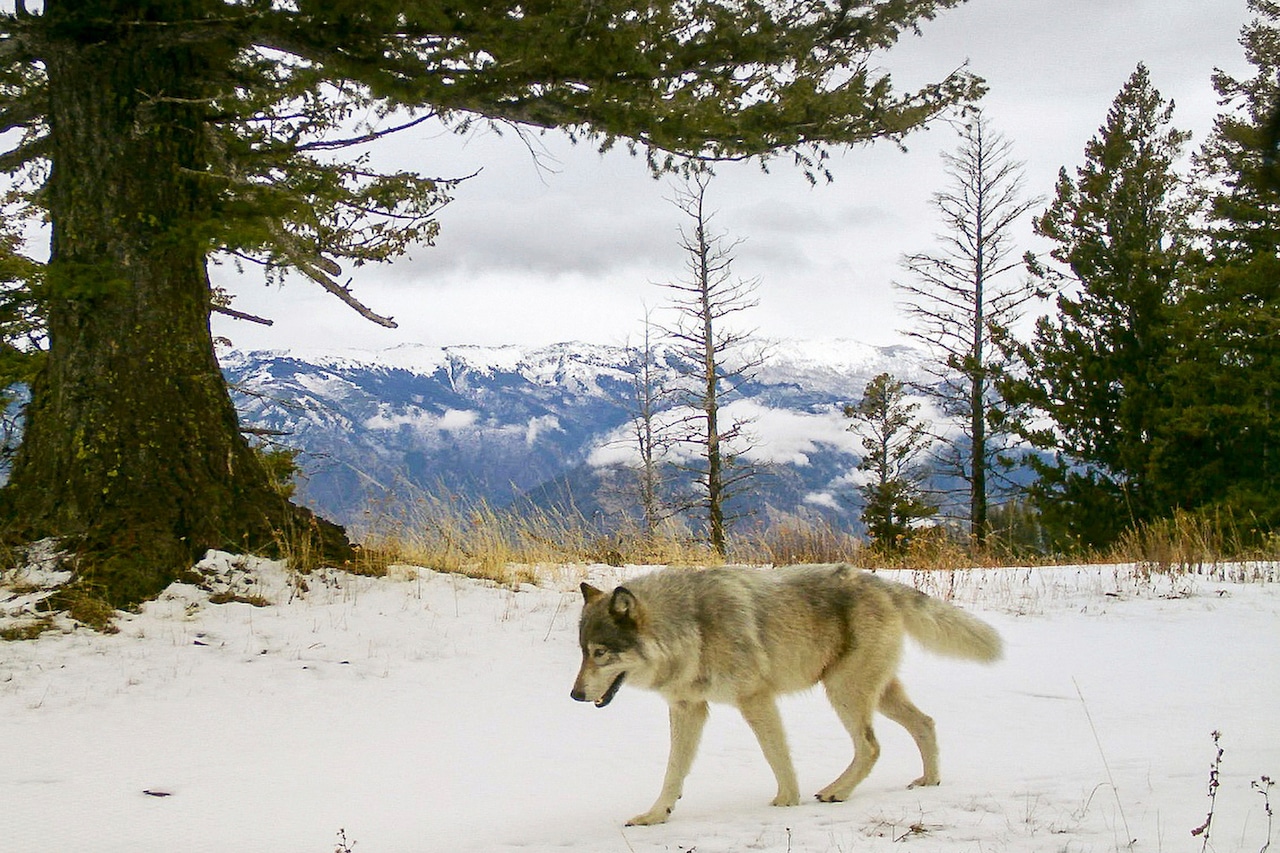
U.S. Rep. Cliff Bentz once again is pushing to remove the gray wolf from the Endangered Species Act.
The Oregon Republican, whose district covers the entire eastern half of the state, said Wednesday that enforcement of the federal law when it comes to the gray wolf has thrust “injury and injustice” upon Oregon ranchers whose livestock are being attacked and killed by wolves.
“This injustice is apparent in the federal government’s inability to manage and control the killing and maiming of livestock and in the failure of governments to properly pay the cost of its decision to reintroduce the wolf,” Bentz said during a speech on the House floor.
As Bentz spoke, a staffer showed some graphic images of livestock that had been attacked by wolves. Bentz was voicing his support for a bill introduced by Rep. Lauren Boebert, R-Colo., that would delist the gray wolf from endangerment. The Pet and Livestock Protection Act is set for a committee meeting next week.
The House narrowly passed a similar bill by a vote of 209-205 in 2024, with Bentz speaking in favor of it then and voting for it. But that measure, also sponsored by Boebert, stalled in the Senate.
In Oregon, three highways form the demarcation line for whether gray wolves are federally protected as endangered. They are federally protected and managed west of U.S. 395, Oregon 78 and U.S. 95, but delisted and managed by the state east of that dividing line.
State law prohibits hunting or trapping wolves anywhere in Oregon, but ranchers are allowed to haze or scare wolves to protect their livestock.
In the eastern zone, ranchers are permitted to shoot a wolf if it is caught in the act of biting, wounding, killing or chasing livestock. If ranchers experience repeated wolf attacks, the Oregon Department of Fish and Wildlife also can issue permits to use lethal force.
Bentz, who was raised on cattle ranches in Harney County, said that Congress should allocate money to ranchers and farmers who have been hurt financially by the reintroduction of the wolves. He said wolves cost the cattle industry $128 million a year as of several years ago, but said that figure is higher now because cattle prices have gone up.
He acknowledged recent efforts at both the federal and state levels to reimburse ranchers but said those measures don’t offset all of the financial losses.
“Wolves are natural born killers,” Bentz wrote in a social media post Wednesday. “The growth population of gray wolves through out the Western U.S. poses significant challenges for ranchers, farmers and outdoorsmen alike.
“Delisting the gray wolves is the only way that we are going to be able to allow our state fish and wildlife agencies to effectively manage wolf populations through following the science.”